
Thought Leaders
Personality Science: Finally, the Bridge Between AI and Humanity

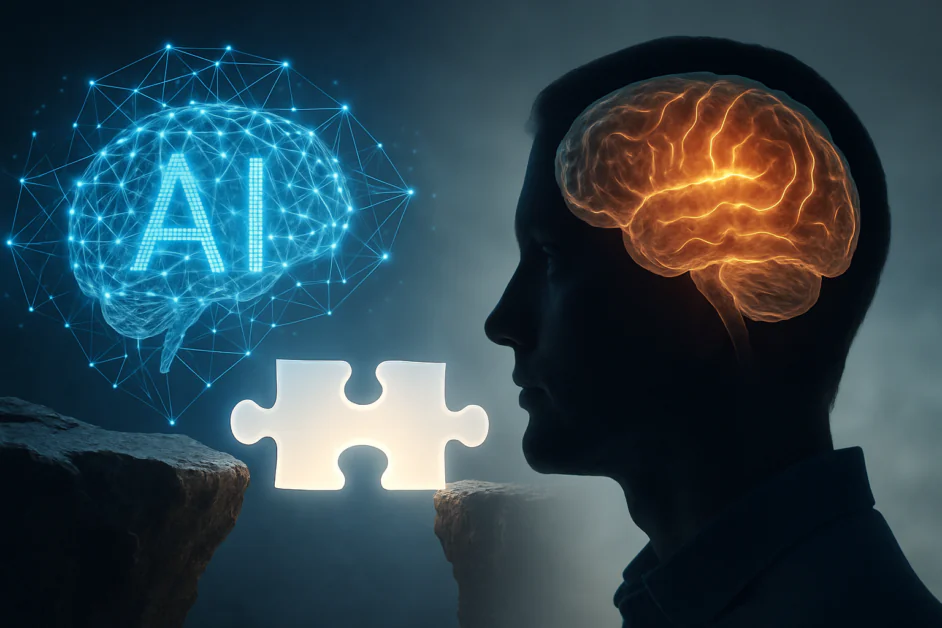
Artificial intelligence has woven itself into nearly every corner of modern life. We rely on it to draft emails, analyze spreadsheets, summarize meetings, and parse complex situations. In fact, a recent survey of 1,000 adults found that 57% of respondents are using AI for personal purposes. As these tools scale, something unexpected has happened: productivity has surged while connection has quietly eroded.
That’s because most AI systems treat people as interchangeable, creating pattern-matching prose and producing one-size-fits-all guidance. That works for a travel itinerary but not for advice for a difficult conversation with a colleague, a moment of crisis with a family member, or a nuanced coaching session with a professional navigating change.
And yet people increasingly do turn to AI for those deeply human needs. Chatbots are now informal mediators, therapists, decision advisors, and relationship coaches. But generic advice can be more than ineffective, it can be harmful for delivering emotional advice. That’s because generic AI advice tends to flatten nuance, instead, telling people what they want to hear, over-indexing on positivity, lacking situational awareness, missing interpersonal dynamics entirely, and treating every conflict as a communication script rather than a relationship. Without an understanding of personality traits, histories, cognitive patterns, and interpersonal differences, AI lacks the empathy, nuance, and contextual insight required to give responsible interpersonal guidance.
This is where personality science becomes essential. When integrated with AI, it offers a long-missing dimension: the ability to understand each person not just as a user, but as a unique individual.
Personality science is not new. The Five-Factor Model has been validated for decades, and its 30 measurable facets offer one of the most reliable windows into how people communicate, make decisions, respond to stress, resolve conflict, and form relationships. By combining advanced AI with personality science, people have access to the ability to communicate more effectively, build authentic connections, and resolve conflicts before they escalate.
Professional and Personal Adoption: Why Personality Matters More Than Ever in the Age of AI
AI excels at logic but sometimes humans don’t. We misunderstand one another for reasons that have nothing to do with intelligence and everything to do with personality differences. For example, a highly conscientious person might perceive a spontaneous colleague as disorganized, a conflict-averse employee may interpret direct feedback as hostility, or an extroverted leader may mistake a reflective teammate’s silence for lack of engagement. These mismatches are predictable, and fixable, when you understand the personalities involved.
Personality science gives AI a lens into who it is helping and the person with whom they are trying to reconcile conflict. Instead of assuming everyone responds the same way, it accounts for traits like emotional volatility, assertiveness, trust, self-discipline, imagination, openness, risk tolerance, and more. Early adopters across sectors, from social work and professional coaches, to nonprofits and corporations, are already showing how transformative personality-aware AI can be.
For example, social workers face extraordinary emotional and cognitive load. They balance crisis response, trauma-informed care, resource coordination, safety planning, and relationship building, often with limited time and overwhelming caseloads. Steve Huff, PhD, Founder of THRiVE Coaching and a social worker with three decades of experience in marginalized communities, describes personality-AI as a “game changer.” At his organization clients and staff use AI together during sessions to clarify stories, organize complex situations, and identify next steps. The tool supports reflective practice, helping social workers regulate cognitive load and reduce burnout by offloading mental organization tasks.
Mike Walker, Executive Leadership Coach and Founder of Dynamic Decisions Coaching describes his work this way: “Ninety-seven percent of coaching sessions involve transition or decision-making. But making decisions is cognitively demanding. When complexity exceeds capacity, people default to impulsivity, decisions with negative consequences, or avoidance. “Personality-aware AI helps coaches understand how individuals naturally process decisions; tailor guidance based on motivation, attention needs, stress responses, and communication styles; surface blind spots, biases, and interpersonal patterns; and support conflict resolution grounded in scientifically validated traits
One example: a coaching client was struggling with her new athletic director hire. Using personality insights, she realized the conflict stemmed not from competence, but from mismatched needs for structure and attention. Adjusting her approach diffused the situation before it escalated. Walker sees this not as replacing human coaching but strengthening it: AI frames complexity; humans make the decisions.
Modern organizations lose countless hours, and money, to avoidable conflict: miscommunications, mismatched expectations, unclear feedback, employee burnout, and interpersonal friction. Personality-aware AI helps leaders deliver feedback in ways that others can actually hear, anticipate sources of tension before they become problems, coach diverse teams based on individualized preferences, and frame decisions in ways that resonate with different personality profiles
Outside of work, people increasingly turn to AI for relationship support, conflict navigation, self-reflection, and mental wellness. Personality-aware AI can help individuals understand how their traits shape interactions; communicate more effectively with partners, family, and friends; navigate conflict with empathy; break habitual thinking patterns; and notice cognitive distortions before acting on them
As Huff notes, after consistent use, people begin internalizing healthier thinking patterns: “What used to feel like ‘Oh no…’ becomes ‘let’s go!’”
Why Personality Science Is the Missing Link for Ethical AI
As AI becomes more intimately involved in personal decision-making, the stakes get higher. Ethical AI requires context, self-awareness, Interpersonal understanding and avoidance of synthetic emotional dependence. AI should support human connection, not replace it. Personality science helps maintain this boundary. It keeps AI grounded in individualized guidance without creating false intimacy.
The next era of AI adds understanding to efficiency to advance our engagements, personal and professional interactions, and yes, a sense of humanity. In fact, within five years I believe we will see:
- Every leadership or coaching program integrating real-time personality insights into their business processes
- Social services using AI to help triple client success rates (something Huff’s early data suggests is possible)
- Conflict prediction tools that spot interpersonal friction before it surfaces
- Household AI that adapts communication to each family member’s temperament
- AI companions that help people reflect, regulate, and contextualize emotions without pretending to be human
With personality science, AI can make us less robotic and more human; more self-aware, empathetic, connected, and indeed, capable of understanding one another. This was the thinking behind why we created Personos – to be a bridge between behavioral science and everyday life, and as a way to bring powerful psychological insight to professionals, organizations, and individuals who have historically never had access to it.
Because the future of AI will deliver more value than accurate answers. It will bring about deeper human understanding. And this understanding will be rooted in personality science.



