
Artificial Intelligence
AI as Infrastructure: Why Intelligence Will Be the Next Utility

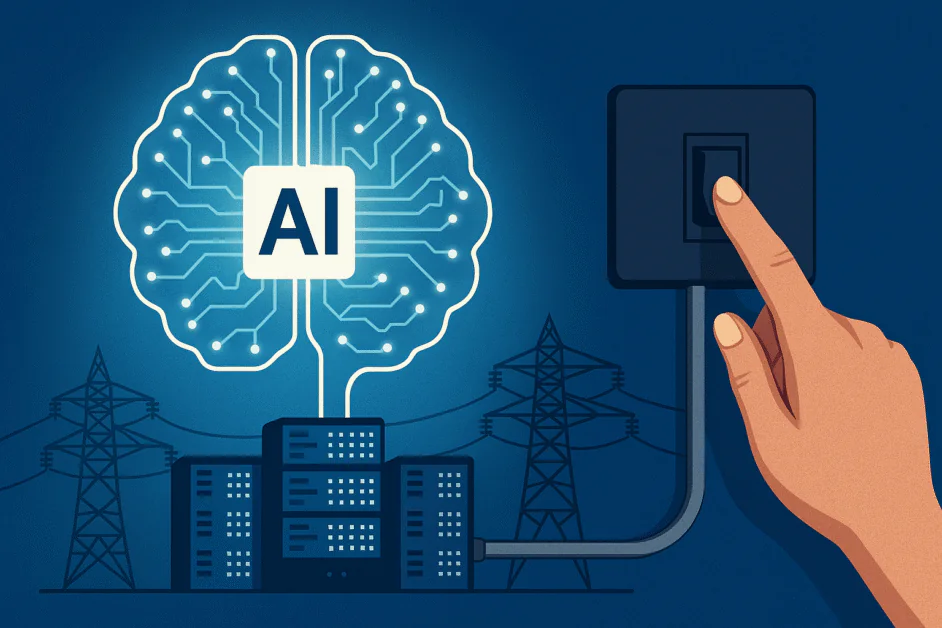
When you walk into a dark room, you hit a switch. You do not wonder where the electricity comes from. You do not think about the coal plant, the nuclear reactor, or the miles of copper wire that carry the current. You simply expect the light to turn on. It is reliable, it is cheap, and it is everywhere. This is what a utility looks like. It is a resource so fundamental to our lives that it becomes invisible.
For the last decade, Artificial Intelligence (AI) has been highly visible. It feels like magic that quickly grabs attention. We chat with conversational agents, we play with image generators, and we read headlines about how it will change the world. But these demonstrations of AI capabilities are not where the real change lies. The real shift is that AI is moving from being a product we buy to a utility we consume much like electricity or the internet. In other words, it is becoming an infrastructure.
AI in Historical Perspective of Utility
To understand where AI is going, we must look at where electricity comes from. In the early 20th century, if a factory owner wanted electricity, they often had to build their own generator. It was expensive, complicated, and required specialized engineers to build and maintain. The factory’s competitive advantage depended on how well they could generate power. Then came the electric grid. Centralized power plants began delivering electricity to everyone through a standardized network. Suddenly, a shoe factory did not need to be an expert in power generation. They just plugged into the wall and paid for what they used. The competitive advantage shifted from making power to using power to make better shoes.
AI is following the same pattern today. Just five years ago, if a company wanted to use machine learning, they had to hire a team of data scientists, build their own servers, and train their own models. It was like running a private generator. Today, we have the “grid” of AI. Companies like OpenAI, Google, and Anthropic are the new power plants. They spend billions of dollars to build massive “intelligence reactors” (foundation models). Businesses connect to this grid via an API (Application Programming Interface). They pay for intelligence by the “token,” just as we pay for electricity by the kilowatt-hour.
The Economics of Cheap Intelligence
The most important aspect of a utility is that it drives down the cost of the resource. When a resource becomes cheap, we stop rationing it and start using it for everything. Since late 2022, the cost of high-quality inference has dropped dramatically. Some estimates suggest a drop of over 200 times for the same level of capability. This is a deflationary trend that is faster than Moore’s Law.
When intelligence is expensive, you only use it for high-value problems. You might use AI to search for a cure for cancer or to predict a stock market crash. But when intelligence becomes cheap, you begin to use it even for mundane tasks. You use it to sort your spam folder. You use it to summarize a boring meeting. You use it to write a polite rejection email. This is the sign of a utility. We use water to drink, which is vital, but because it is cheap, we also use it to wash our driveways. As the cost of AI continues to fall, we will begin applying intelligence to equally trivial tasks. It means the infrastructure is working.
The Rise of Agentic AI
As this infrastructure matures, the way we interact with AI is changing. Currently, most people use AI as a “chatbot.” They type a prompt, and the AI replies. This is like using a hand pump to get water. It works, but it requires effort. The next phase is “Agentic AI.” These are AI systems that run in the background. They do not wait for you to type a question. They are given a goal, and they work autonomously to achieve it. Because the cost of intelligence is dropping, these agents can afford to “think” for a long time. They can loop, correct their own errors, and take multiple steps to solve a problem.
For example, today a supply chain manager have to ask ChatGPT that “How do I optimize this route?” In the future, an AI agent will simply be embedded in the logistics software. It will monitor the weather, traffic, and fuel prices 24/7. When it sees a delay, it will automatically reroute the trucks and send a notification to the warehouse. The manager does not “use” AI; the AI is just part of the plumbing of the software. It is always on, flowing through the business logic like electricity flows through a circuit board.
The Physical Reality of Virtual Utility
While AI may seem like magical software, it is built on massive capital investments. The so-called “cloud” is actually millions of tons of steel, silicon, and copper. To build this utility, tech giants are constructing some of the largest infrastructure projects in history. We are witnessing the rise of gigawatt-scale data centers that consume as much electricity as a small city. The demand for GPUs (Graphics Processing Units) is continuously increasing. In many ways, this is the modern-day equivalent of laying railroad tracks or stringing telegraph wires.
However, this new utility also creates a new set of challenges. Just as the electric grid can face blackouts, the AI grid faces constraints. There is a shortage of high-end chips. There is a shortage of energy to power the data centers. We are witnessing a collision between the digital world and the physical limits of our power grids. If AI is the next utility, then energy is the utility that powers this utility. We cannot have one without the other. This is why we see major tech companies investing in nuclear power and renewable energy. They realize that their digital empire relies on physical electrons.
The Friction of Legacy Systems
The shift toward AI as a core utility will not be easy for everyone. The main obstacle is not the technology itself, but the outdated systems we expect it to work with. Governments and large, mature corporations often rely on legacy IT infrastructure which was built decades ago and never fully upgraded. These systems are like old houses with outdated wiring. You cannot just plug a modern appliance into them. You cannot easily connect a cutting-edge AI agent to a database that was built in 1995 and runs on a server hidden in a basement.
This gap creates a new kind of digital divide between organizations. “AI-native” companies, built in the last few years, have modern systems in place. They can connect to intelligence almost instantly. Older organizations will struggle. They must replace outdated infrastructure before they can fully adopt AI. This transition is costly and disruptive, but it is unavoidable. In the 1920s, factories that kept using steam engines eventually went out of business. The same will happen to organizations that cannot integrate AI into their operations.
The Societal Shift
The final stage of any technology becoming a utility is psychological. It is when we stop being impressed and start getting annoyed when it doesn’t work. Today, if ChatGPT writes a good poem, we applaud. In five years, if our word processor does not automatically fix the tone of our letter, we will be frustrated. We will view “dumb” software the same way we view a broken escalator as an inconvenience.
This shift will change the labor market. It does not necessarily mean the end of jobs, but it means the end of tasks. When electricity came, we stopped needing people to wash clothes by hand or light gas lamps. We moved to higher-level tasks. With AI as a utility, we will stop doing the “cognitive labor” such as data entry, the basic scheduling, the routine analysis.
The Bottom Line
We are still early in this transition where AI will act as a utility. The AI utility is not yet finished. The grid is still being built. The connections are sometimes loose, and the power sometimes flickers. But it is clear that we are moving in a direction where intelligence will become a commodity. It will become a resource that will be piped into every home, office, and device on the planet. For business leaders, the question is no longer “How do I build AI?” The question is “How do I plug into this utility to power my business?”



