
AI Models & Platforms
The Reinforcement Gap: Why AI Excels at Some Tasks but Stalls at Others

 Add Unite.AI to your preferred sources on Google
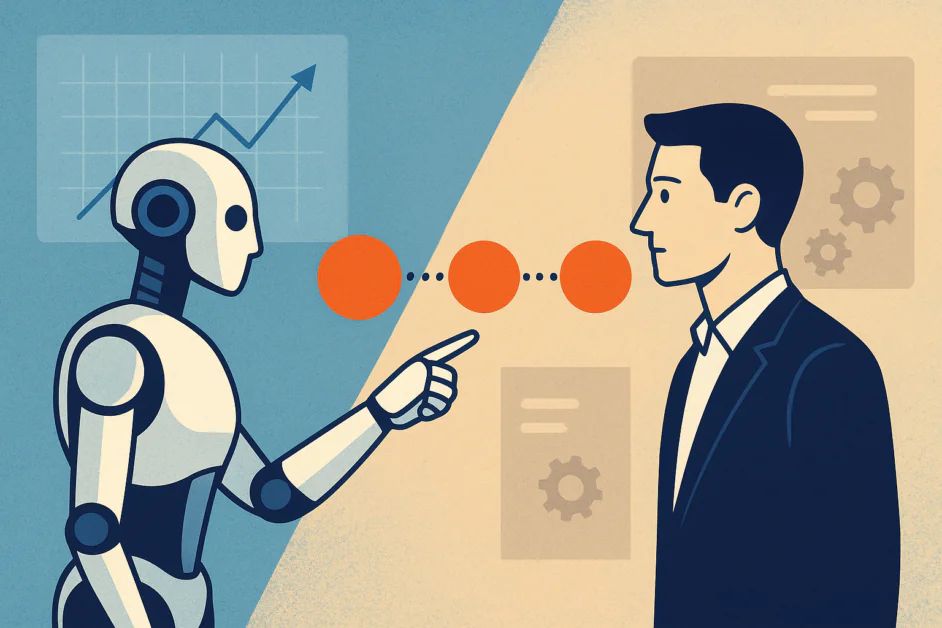
Artificial Intelligence (AI) has achieved remarkable successes in recent years. It can defeat human champions in games like Go, predict protein structures with high accuracy, and perform complex tasks in video games. These achievements demonstrate AI’s ability to recognize patterns and make decisions efficiently.
Despite these advancements, AI often struggles with everyday reasoning, flexible problem-solving, and tasks that require human judgment. This contrast is known as the reinforcement gap. The reinforcement gap refers to the difference between tasks where Reinforcement Learning (RL) performs well and those where it faces limitations.
Understanding this gap is essential for developers, AI researchers, technology leaders, and organizations adopting AI solutions. Without this understanding, there is a risk of overestimating AI’s capabilities or encountering challenges in real-world deployment.
Examples such as AlphaGo’s 2016 victory, AlphaFold’s protein predictions in 2020–21, and GPT-4’s structured reasoning illustrate areas where AI excels. At the same time, challenges persist in robotics, conversational AI, and unstructured environments. These examples highlight where the reinforcement gap is most apparent and why it is essential to study.
Understanding Reinforcement Learning (RL) Fundamentals
RL is a branch of machine learning in which an agent learns to make decisions by interacting with an environment. The agent selects actions, observes the outcomes, and receives rewards that indicate how suitable those actions were. Over time, these rewards influence the agent’s policy, which is the set of rules it uses to choose future actions.
RL differs from other learning methods in essential ways. Supervised learning depends on labeled datasets, and the model learns from correct examples provided in advance. Unsupervised learning focuses on finding patterns in data without feedback or goals. RL, however, relies on continuous interaction and delayed rewards. The objective is not to identify patterns in static data, but to determine which sequences of actions will lead to the highest long-term outcomes.
AlphaGo provides a clear example of how RL operates. The system learned to play Go through self-play, exploring millions of possible game states and adjusting its decisions based on win–loss results. This process allowed it to develop strategies that were both effective and unexpected. It also shows why RL performs well in structured environments where rules remain fixed and feedback is consistent.
These fundamentals help explain the reinforcement gap. RL performs strongly in controlled settings, yet its performance declines in open and unpredictable environments. This difference is central to understanding why AI succeeds in some tasks and struggles in others.
Why RL Excels in Structured Environments
Reinforcement learning performs well in environments where rules are fixed and outcomes can be measured. These settings give the agent clear goals and consistent reward signals. Therefore, the agent can test actions, observe outcomes, and adjust its policy with confidence. This consistency supports stable learning because the environment does not change in unexpected ways.
Moreover, structured tasks supply controlled and reliable feedback. For example, board games such as Go, Chess, and Shogi follow fixed rules and produce definite win–loss results. Video games like StarCraft II also provide stable conditions, and the agent can explore many strategies without physical harm or cost. In addition, scientific applications use similar stability. AlphaFold predicts protein arrangements with accuracy metrics that confirm how well it performs. Laboratory robotics simulations offer controlled spaces where robotic arms can attempt tasks safely and repeatedly.
Consequently, these environments allow RL agents to practice a large number of scenarios. The agent gains experience, improves its decisions, and often reaches performance that goes beyond human ability. This pattern explains why RL produces strong results in tasks that are bounded, predictable, and easy to measure.
RL Market Growth and Industry Adoption
The growing interest in the RL can be understood more clearly when viewed in the context of the previous sections. RL performs well in structured environments and produces strong results in controlled tasks. Therefore, many industries are studying ways to use RL in practical systems. Recent industry reports estimate the global RL market between 8 and 13 billion dollars, and forecasts expect it to reach 57 to 91 billion dollars by 2032–34. This pattern shows that RL is gaining wider recognition in research and commercial settings. It also reflects the rising availability of data, computing power, and simulation tools that support RL experiments.
Moreover, several fields have begun to test RL in real deployments. These efforts show how organizations apply the strengths of RL in controlled or semi-structured environments. For instance, robotics teams use RL to improve motion control and factory automation. Robots repeat actions, examine the outcomes, and improve accuracy through steady adjustments. In the same way, autonomous vehicle developers rely on RL to study complex road situations. Models train on large volumes of simulated cases, which helps them prepare for rare or risky events.
Supply chain operations also benefit from RL. Many companies use RL to plan demand, set inventory levels, and adjust logistics routes when conditions change. This makes their systems more stable and responsive. Large language models apply Reinforcement Learning From Human Feedback (RLHF) to improve how they respond to users. The method guides training in a way that increases clarity and supports safer interaction.
Consequently, organizations invest in RL because it learns through interaction rather than fixed datasets. This feature is valuable in environments where outcomes change over time. Firms that work in robotics, logistics, and digital services often face such conditions. RL gives these firms a method to test actions, study feedback, and refine performance.
However, the current pattern of adoption also connects directly to the reinforcement gap. Most RL deployments still occur in structured or semi-structured environments where rules and rewards are stable. RL performs well in these settings, yet it faces difficulty in open and unpredictable environments. This contrast shows that increased interest in RL does not mean all tasks are suitable for it. Understanding this gap helps organizations set realistic expectations, avoid unsuitable applications, and plan responsible investments. It also supports a clearer understanding of where RL can offer real value and where further research is still needed.
Why RL Struggles in Real-World Tasks
Despite its successes in games and simulations, RLoften faces difficulties in real-world applications. This difference between controlled tasks and practical environments illustrates the reinforcement gap. Several factors explain why RL underperforms when tasks are less structured or unpredictable.
One main challenge is the lack of clear rewards. In games, points or wins provide immediate feedback that guides the agent. In contrast, many real-world tasks do not offer measurable or consistent signals. For example, teaching a robot to clean a cluttered room is difficult because it cannot easily identify which actions lead to success. Sparse or delayed rewards slow learning, and agents may require millions of trials before showing significant improvement. Therefore, RL performs well in structured games but struggles in messy or uncertain settings.
Moreover, real-world environments are complex and dynamic. Factors such as traffic, weather, and healthcare conditions change constantly. Data can be incomplete, sparse, or noisy. For instance, autonomous vehicles trained in simulation may fail when facing unexpected obstacles or extreme weather. These uncertainties create a gap between laboratory performance and practical deployment.
Transfer learning limitations further widen this gap. RL agents often overfit to their training environment. Policies that work in one context are rarely generalized to others. For example, an AI trained to play board games may fail in real-world strategic tasks. Controlled simulations cannot fully capture the complexity of open-ended environments. Consequently, RL’s broader applicability is restricted.
Another critical factor is human-centered reasoning. AI struggles with common sense thinking, creativity, and social understanding. Polanyi’s Paradox explains that humans know more than they can explicitly describe, making tacit knowledge difficult for machines to learn. Language models can produce fluent text, but they often fail in practical decision-making or contextual understanding. Therefore, these skills remain a significant barrier for RL in real-world tasks.
Finally, technical challenges reinforce the gap. Agents must balance exploration and exploitation, deciding whether to try new actions or rely on known strategies. RL is sample inefficient, requiring millions of trials to learn complex tasks. Simulation-to-reality transfer can reduce performance when conditions change slightly. Models are brittle, and minor input variations can disrupt policies. In addition, training advanced RL agents requires significant computational resources and large datasets, which limit deployment outside controlled environments.
Where Reinforcement Learning Works and Falls Short
Examining real-world examples clarifies the reinforcement gap and shows where RL performs well versus where it struggles. These cases demonstrate both the potential and the limitations of RL in practice.
In controlled or semi-structured environments, RL demonstrates strong performance. For instance, industrial robotics benefits from repetitive tasks in predictable settings, enabling robots to improve accuracy and efficiency through repeated trials. Autonomous trading systems optimize investment strategies in structured financial markets, where rules are clear and outcomes measurable. Similarly, supply chain operations use RL to dynamically plan logistics and adjust inventory when conditions change within predictable boundaries. Simulated robotics tasks in research labs also allow agents to experiment safely and repeatedly, helping refine strategies in environments that are fully observable and controlled. These examples show that RL can perform reliably when goals are well-defined, feedback is consistent, and the environment is predictable.
However, challenges emerge in unstructured or complex environments, where conditions are dynamic, noisy, or unpredictable. Household robots, for example, struggle with cluttered or variable spaces because simulations cannot capture real-world complexity. Conversational AI systems often fail to reason deeply or understand common-sense context, even when trained on large datasets. In healthcare applications, RL agents may make mistakes when patient data is incomplete, inconsistent, or uncertain. Tasks involving complex planning or human interaction highlight further limitations. AI struggles to adapt flexibly, interpret subtle social cues, or make judgment-based decisions.
Therefore, comparing successes and stalled areas highlights the practical implications of the reinforcement gap. RL excels in structured and semi-structured domains but often underperforms in open-ended, unpredictable settings. Understanding these differences is essential for developers, researchers, and decision-makers. It helps identify where RL can be applied effectively and where human oversight or further innovation is necessary.
Addressing the Reinforcement Gap and Its Implications
The reinforcement gap affects how AI performs in real-world tasks. Therefore, overestimating AI capabilities can lead to mistakes and risks. For example, in healthcare, finance, or autonomous systems, such errors can have serious consequences. Consequently, developers and decision-makers need to understand where RL works effectively and where it struggles.
One way to reduce the gap is to use hybrid methods. By combining RL with supervised learning, symbolic AI, or language models, AI performance improves in complex tasks. In addition, human feedback guides agents to behave more safely and correctly. These methods reduce errors in unpredictable environments and make AI more reliable.
Another approach focuses on reward design and guidance. Clear and structured rewards help agents learn correct behaviors. Similarly, human-in-the-loop systems provide feedback so agents do not adopt unintended strategies. Simulations and synthetic environments give agents practice before real-world deployment. Moreover, benchmarking tools and meta-learning techniques help agents adjust to different tasks more quickly, improving both efficiency and reliability.
Governance and safety practices are also essential. Ethical reward design and clear evaluation methods ensure AI behaves predictably. Furthermore, careful monitoring is necessary in high-risk applications such as healthcare or finance. These practices reduce risks and support responsible AI deployment.
Looking ahead, the reinforcement gap may become smaller. RL and hybrid models are expected to improve adaptability and reasoning in more human-like ways. Consequently, robotics and healthcare may see better performance in previously complex tasks. However, developers and leaders must continue to plan carefully. Overall, understanding the reinforcement gap remains central to using AI safely and effectively.
The Bottom Line
The reinforcement gap demonstrates the limits of AI in real-world tasks. While RL achieves remarkable results in structured environments, it struggles when conditions are unpredictable or complex. Therefore, understanding this gap is essential for developers, researchers, and decision-makers.
By examining successful case studies alongside stalled areas, organizations can make informed choices about AI adoption and deployment. Moreover, hybrid methods, clear reward design, and simulations help reduce errors and improve agent performance. In addition, ethical practices and continuous monitoring support safe use in high-stakes applications.
Looking forward, advances in RL and hybrid AI models are likely to narrow the gap, enabling better adaptability and reasoning. Consequently, recognizing both the strengths and limitations of AI is critical for responsible and effective implementation.



