
Thought Leaders
From Hype to ROI: How AI Agents Are Carving Their Niche in SaaS

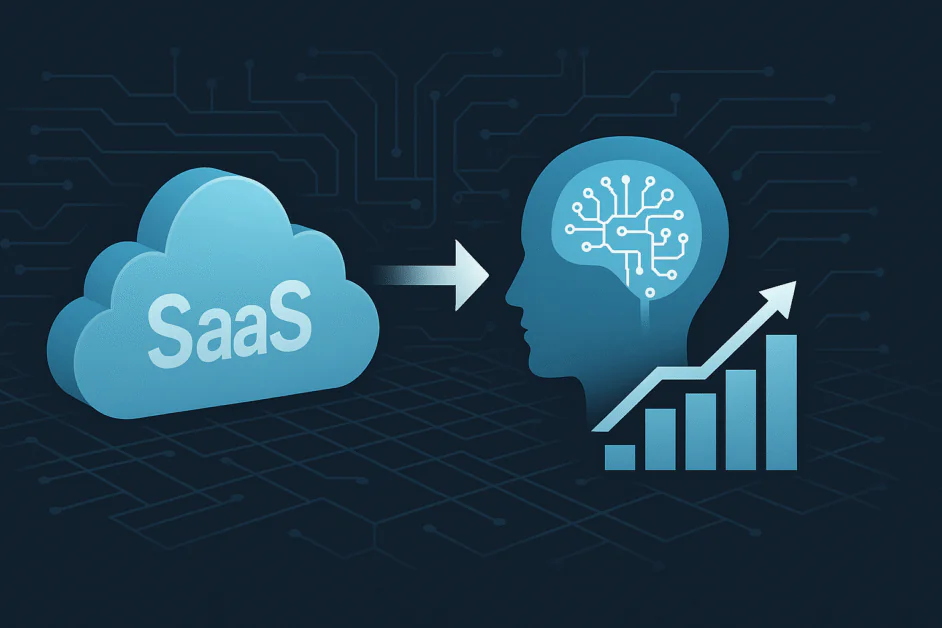
Ask any SaaS leader today about AI agents, and you’ll hear a mix of excitement and unease. The all-powerful AI remains out of reach — instead, we’re seeing something far more interesting: a pragmatic push to embed AI agents into the workflows that actually run businesses.
Albato’s recent qualitative study, based on 55 in-depth interviews with SaaS founders, product leaders, and CTOs conducted between August and October 2025, reveals that the market is entering a phase of cautious optimism. This is not the time to chase hype, but to double down on delivering real, measurable value.
The greatest risk for AI agents in SaaS is that we’ll succeed at building something dazzling and expensive, with little true demand. Dragos Andronic, Senior Director of Product Management at Dixa, captures a common sentiment, observing that the market currently feels like “a lot more infrastructure is being developed right now than there’s a need from the market… a solution waiting for a problem.”
The Real-World Hurdles: Trust, Complexity, and the “Pull-Gap”
The chasm between the sophisticated infrastructure being built and the actual market demand is not a minor gap; it is the central challenge of this market phase. This gap is forged by several significant, interconnected barriers identified in our research.
The Trust Deficit: The Need for Verification Before Autonomy
Trust is the universal and most formidable challenge. It manifests not as abstract fear, but in very specific, practical anxieties. Andras Horvath, Director of Product for AI & Analytics at Wrike, pinpointed the core user anxiety around the “non-deterministic” nature of AI actions. Unlike traditional software, which follows predictable, programmed paths, AI agents can produce unexpected outcomes. The fear is especially acute around bulk operations: what if an AI makes a cascading error, modifying hundreds of customer records or sending erroneous communications? The core questions from users are brutally practical: “How do I undo the ‘mess’?” and “Who is ultimately responsible?”
The solution, as Horvath’s team discovered, is building robust mechanisms for verification before granting autonomy. “Users wanted to have a testing playground… just narrate step by step what’s going to happen if I deploy you,” he noted. Implementing a “dry-run” or simulation mode, where users can preview an AI’s intended actions on a sample data set without committing to them, has proven crucial for building confidence in high-stakes scenarios.
This philosophy of graduated trust extends strategically to integrations. At Wrike, the team deliberately restricted their AI copilot from taking external actions (like sending emails via Gmail or creating tickets in Jira) until its performance and reliability within their own platform’s controlled environment were near-perfect. The focus wasn’t on having AI everywhere just for the sake of it—as Horvath noted, “No one cares about having AI sprinkled here or not. Their question is: How much time and effort is it going to save us?” By ensuring the AI worked reliably within Wrike first before extending to external integrations, the team could demonstrate real value and minimize risk. This “walled garden” approach is a critical strategy for responsible scaling.
Technical & Integration Complexity: The Silent Project Killer
Beyond trust lies the immense, often underestimated, challenge of technical complexity. Building an AI agent that can intelligently answer a question is a difficult feat of natural language processing. Building an agent that can reliably act — that can execute commands, manipulate data, and orchestrate processes across a portfolio of disparate software systems — is a problem of a different magnitude altogether.
This “integration chaos” demands massive engineering resources, ongoing maintenance, and sophisticated security protocols. Each connection to an external API, each data mapping exercise, and each authentication flow represents a potential point of failure.
This complexity is the very reason the future of AI agents lies in collaboration and open integration platforms. Overcoming this chaos will not be achieved by every company building its own monolithic, all-encompassing agent, but by creating ecosystems where specialized agents can securely communicate and delegate tasks to one another through standardized protocols. The winning solutions will be those that simplify this integration nightmare for developers and end-users alike.
The Silent Market: The Critical “Pull-Gap”
Perhaps the most fundamental and sobering challenge is the profound lack of overt user demand. As our experts consistently highlight during the interviews, the majority of end-users are not actively asking for “AI agents.” There is no groundswell of user pressure forcing the hands of product teams; instead, the primary push is coming from the top down, from product leaders and executives who are convinced of the strategic necessity.
This creates a critical “pull-gap,” a dangerous scenario where a powerful but expensive solution is being built for a problem users haven’t yet realized they have. This gap forces product teams to be exceptionally clever in their design and rollout. They cannot simply build a powerful agent and expect users to flock to it; they must carefully introduce AI capabilities in a way that seamlessly solves a pre-existing, felt pain point, often without the user even being aware they are interacting with an “AI agent.” Success depends on value being so obvious and frictionless that it creates its own demand.
Beyond Buzzwords: Where AI Agents Are Proving Their Worth
The trajectory of AI agents is becoming clearer. Our research shows industry leaders from Dixa to Reachdesk, and Wrike are now deploying agents in several key spheres that deliver concrete value:
Customer Support & Communication
Automating helpdesk queries and routine interactions to improve response times and reduce human workload. As Dragos Andronic, Senior Director of Product Management at Dixa, confirms, this is a “straightforward scenario” that is relatively easy to sell because it delivers “immediate gains in efficiency and workload reduction.”
Data Analysis and Reporting
Leveraging AI to do the heavy lifting of data crunching, acting as a BI analyst to generate insights for non-technical users. On consumer intelligence platforms, agents act as on-demand data scientists, allowing a marketer to ask, “What’s the sentiment around my brand?” and receive a polished report with charts and insights.
Workflow Automation
Using agents to automate multi-step processes across different apps, triggered by a simple user request. Pedro Amaral, CPO of Reachdesk, envisions an agent that orchestrates an entire campaign from a single command, pulling CRM data, selecting gifts, and scheduling communications automatically.
In-Product Guidance & Content Generation
From acting as an onboarding assistant to generating personalized content, agents are being tasked with tasks that traditionally required human effort.
Conclusion: The End of Hype, and The Pragmatic Path Forward
The grand vision of AI is being reshaped not in laboratories, but in the daily workflows of businesses. Our research reveals a definitive market transition: the conversation has moved from speculative potential to a disciplined focus on tangible value. The critical question is no longer if AI agents are transformative, but where they can deliver measurable ROI by solving specific, high-value problems.
The collective data points to a single, conclusive insight: the true value of an AI agent is determined not by its intelligence in isolation, but by its ability to operate reliably within a trusted and integrated system. The early excitement has been tempered by the hard realities of user skepticism, technical complexity, and a noticeable lack of broad user demand. These are not minor obstacles; they are the defining constraints of the current market.
Consequently, the winning strategy in this new phase will not belong to those chasing the most ambitious AI, but to those mastering its most practical applications. Success will be defined by a focus on reliability over brilliance, integration over isolation, and clear utility over technological novelty.
The era of pragmatic AI has begun. Its progress will be measured not in theoretical breakthroughs, but in quiet, cumulative gains — in automated reports that save countless hours, in customer queries resolved instantly, and in complex workflows that finally execute seamlessly. The future belongs to those who build AI that works, not merely impresses.



