
Thought Leaders
AI Art Trends to Watch in 2026

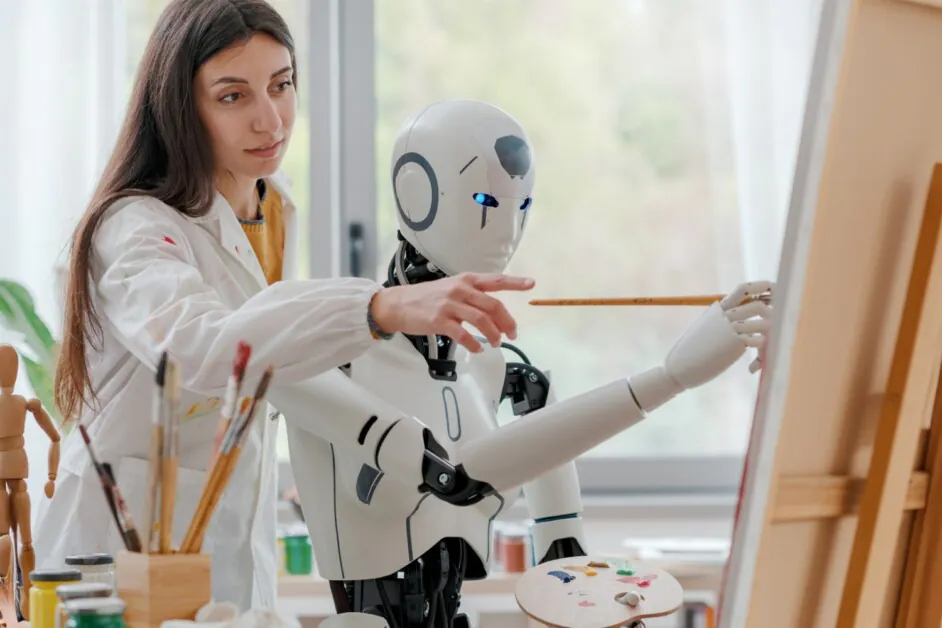
As we look toward 2026, AI is no longer an experimental concept in the professional art scene but is firmly embedded in many creative workflows, empowering visual artists to transcend the limits of the physical world and actively reshaping how we make and experience art.
According to the industry report, the AI art market is expected to grow by nearly 29% annually, reaching over $40 billion by 2033. Experts also predict that AI art’s share of the total contemporary art market will continue to rise, surpassing the 5% estimated for 2025.
Having secured its place at the intersection of technology and creativity, AI art is now increasingly present in traditional art spaces, reflecting its growing acceptance and adoption. Furthermore, an approximate 35% of fine art auctions now include AI-created artworks.
Based on tendencies in visual arts in the past year, recent sociocultural shifts, and ongoing technological advancements, here’s the take on the most anticipated AI art trends for 2026.
Human–AI Synergy

The next phase of AI-assisted creativity marks a transition from hybrid practices to human-AI synergy. Thanks to recent advancements in machine learning, computer vision, and natural language processing, AI tools can now understand and interpret context layers, artistic intent, stylistic personality, and emotional tones at near-human levels. It enables a far more intuitive and subtle creative partnership than ever before, enriching the collaborative dynamic.
On the technical side, demand is rising for creator-first tools that give artists fine-grained control and sovereignty over artistic direction and meaning-making, allowing them to adjust outputs until the work precisely reflects their authentic vision. “One-size-fits-all” general-use models will continue to lose relevance in creative fields. Artists will increasingly employ multiple AI tools in tandem and leverage fine-tuned private models trained on custom datasets, using AI as an extension of their imagination while maintaining full authorship of the final work.
Both in online and offline spaces, we will see more exhibitions exploring the synergistic impact of human creativity and artificial intelligence within the artistic process, showcasing how technology becomes an intertwined element of creative practice and encouraging discussions on what it means to be an artist in the age of machines.
Expressive Storytelling

Audiences are craving uniqueness and personal meaning, rejecting work that feels standardized or interchangeable. AI art focused on personal storytelling will be a quickly growing trend in 2026, aiming to grant individuality and push back against concerns about hollowness and homogenization in generic AI-produced outputs.
There will be a renewed emphasis on emotionally driven narrative art. While relying on AI implementation, artists will articulate their personal stories and experiences and imbue their works with pronounced identity, cultural background, and emotional weight. These pieces, exploring universal themes such as love, loss, and the struggles of self-discovery, will demonstrate that, when guided with intention and sensitivity, AI can produce outputs that feel authentic and resonate with wide audiences across cultures.
Following a broader cultural shift toward expressive presence, maximalism is making a comeback in 2026. Treating artworks as repositories of personal stories, this style has historically foregrounded individuality, revealing it in a “more is more” manner through abundant, eclectic compositions and intense visual drama.
Participatory and Immersive Art

A new chapter of personalization makes an appearance through evolving interactive art, in which artworks change in real time, responding to environmental factors and audience interactions, such as movement, sound, touch, and other inputs.
Reflecting a broader desire for connection and collaboration within the art world, artists will favor creating works that invite full audience engagement, leveraging AI’s adaptability to deliver unique experiences for each visitor. AI can generate detailed characters, landscapes, and ambient visuals and adjust elements on the fly, enabling viewers to influence the storylines and determine the outcome of an artwork. This flexibility dissolves the traditional boundary between observer and artwork, transforming passive spectators into active participants in the artistic process.
Furthermore, the fusion of AI with advancing virtual and augmented reality technologies enables artists to bring their imagination to life in a literal sense and invites viewers to step inside the artwork, setting the stage for more immersive art experiences to captivate audiences in 2026.
Through these projects, art becomes a living, evolving system and a fantastical, journey-like experience, transporting viewers to new dimensions and inviting them not only to explore the environments crafted by artists but also interact and co-create. A famous example is teamLab’s fluid, interplayed immersive art experiences, which respond to visitors’ movements and behaviors, allowing the viewer to become part of the art itself.
Another direction anticipated to surge is multimodal AI art, blending multiple creative inputs and outputs such as text, images, and sound to deliver richer, more complex experiences. More artists will experiment with translating visual art into corresponding audio experiences, and vice versa. For instance, we may witness abstract sculptures reshaping in response to ambient sound, AI generating music that aligns with a visual atmosphere, animations that sync with poetry, or even voice-guided, real-time art creation in which AI responds instantly to artists’ verbal instructions.
Poetics of Imperfection

Flawless, hyper-realistic imagery has become one of the most recognizable hallmarks of AI aesthetics. Answering public calls for authentic human representation in visual media, artists are embracing the poetics of imperfection as a creative strategy. They deliberately guide AI to replicate these flaws, opposing sleek, over-polished, and sometimes almost sterile algorithmic depictions. One example is Candace Arroyo, who uses AI to create compelling editorial models with textured skin and unconventional beauty traits. This growing artistic recognition of beauty in the incomplete, the irregular, and the asymmetrical echoes a broader sociocultural view of imperfection as “the new code of desire” due to its power to connect.
In line with this trend’s conceptual aspect, AI artists are also exploring digital malfunction to achieve greater distinctiveness and unpredictability in execution. By intentionally prompting AI to misfire, artists add unexpected visual artifacts such as pixelation, distortion, or warped geometry, resulting in art pieces that appear raw, expressive, and visually intriguing. AI-generated blur, ranging from focus mode for adding authenticity to a surreal mode for eliciting dreamlike states, is another technique set to trend, defying the pursuit of photorealistic perfection.
Textural Depth and Dimensionality

Texture is forecast to play one of the central roles in the art and design scene in 2026. Digital and AI artists will also increasingly explore opportunities to combine technology with a handmade sensibility to produce work that feels more tactile and material. For example, they may emulate analog film grain and voluminous brush textures, resort to hybrid aesthetics that mix traditional techniques like watercolor with digital finishes, or add layered materials, raised surfaces, or physical elements.
These features help introduce depth, visual differentiation, and tangibility to the final artwork. They also demonstrate that AI art doesn’t have to exist solely within a digital space but can be integrated into the world of physical art, inspiring AI artists to move beyond experimenting with the blending of classic and contemporary art styles and techniques toward merging AI outputs with traditional mediums like painting, printmaking, or sculpture.
Three-dimensional AI artworks are also expected to be prominent across media spaces in the coming year, driven by recent advances in AI-powered 3D graphics. Artists will use AI to create 3D representations of objects, characters, and environments, enriching them with complex materials, textures, and patterns, which will push the boundaries of realism in AI-generated imagery, with applications across visual art, architecture, fashion photography, and beyond.
Nostalgic Aesthetics

Nostalgia will remain one of the most powerful visual forces in 2026. Retro aesthetics, and specifically retro-futuristic motifs, will continue to attract both artists and audiences due to the strong emotional pull of remixing vintage charm with futuristic ambition. We will likely be presented with many more comforting yet otherworldly mashups of nostalgic aesthetics from the 1970s, 1980s, and 1990s with bold sci-fi and cyberpunk visuals, recalling emotional memories and offering playful escapism.
The continuing appeal of nostalgic pictures will naturally give rise to a range of parallel microtrends, as the soft, warm, sentimental Ghibli-inspired style did a few months ago. For example, as part of the broader 1990s revival, glitter and shimmer will resurge in AI art as symbols of optimism and cheerful self-expression. Lo-fi aesthetics, with their grainy textures, muted tones, and retro vibes, are also becoming widely popular for their emotional resonance, inviting viewers to revisit the past while imagining a new future.
Dreamcore Surrealism

An AI-driven branch of surrealism, dreamcore surrealism, blending nostalgic notes with dreamlike to fever-dream imagery, will be one of the dominant AI art styles in 2026, producing some of the most culturally resonant work.
The growing desire for spontaneity, for liberating thought from rational control, for challenging established artistic values, and for evoking the sensation of subconscious experiences is apparent in today’s art world. Surrealism, as a movement that stretches imagination and embraces psychic automatism, has become a natural playground for AI artists.
With AI’s capacity for chance-driven, nonsensical creativity and “what if” experimentation, the art world will be presented with a distinctive variation of surrealistic aesthetics that can be mesmerizing at times and uncanny or unsettling at others. We can expect to see more art projects that draw on nostalgic imagery while presenting distorted versions of familiar scenes, complete with bizarre juxtapositions that make the known feel strange, replicate the sensation of dreaming or inhabiting liminal spaces, and evoke unease or the feeling of being suspended between states.
For example, David Szauder’s Bestiarium unfolds as a form of contemporary mythmaking. His vintage portraiture-like, AI-generated human-animal hybrids, clothed in early twentieth-century silhouettes and restrained, muted tones, exist somewhere between reverie and recollection, provoking a delicate tension in which nostalgic elegance coexists with quiet dissonance.
Data-Driven Abstract Art

Pointed up by Refik Anadol through his data sculptures, data-driven abstract art will be among the noteworthy AI art directions in 2026, offering a unique intersection of AI analytics and precision with the expressive freedom of abstract art, where complex information becomes a visual, dynamic, or even multisensory experience.
Artists will increasingly surprise us with stunning projects originating from raw datasets, in which algorithmically derived invisible patterns and relationships are translated into tangible visual or audio forms, shaping immersive abstract compositions capable of responding to real-time data inputs. The resulting works will reveal how AI can create something genuinely new, delivered through an original visual language and offering a fresh perspective on both data and art.
Sustainability and Biophilic Design

With growing awareness of environmental challenges, sustainability is no longer a niche or peripheral concern but an urgent global issue that increasingly finds visual expression in various forms of art, and AI art is no exception.
According to the 2025 Art Basel and UBS Market Report, eco-conscious art practices now influence one in three new collectors worldwide. AI artists, who mainly create digitally, resort to eco-visualisation and climate-focused storytelling, presenting powerful, often large-scale projects that make disturbing ecological themes visually palpable. One of the most prominent recent examples is Refik Anadol’s installation called Large Nature Model: Coral, in which the artist used AI to gather millions of photos of coral reefs to create a massive dynamic model, portraying nature’s authentic beauty as it’s being destroyed due to rising ocean temperatures.
The current trend toward biophilic art will continue to go strong in 2026, fueled by a longing for connection with nature in our highly digitalized world. Artists will experiment with AI to reinterpret nature-inspired motifs and recreate floral patterns, organic textures, and color palettes, developing new and intricate ways to express nature’s beauty. Providing a sustainable way to bring elements of the natural world into interior spaces, works that display natural scenes and themes have been shown to create a soothing atmosphere and promote well-being, making this type of wall art likely to be among the best-selling categories in the coming year.



