
Artificial Intelligence
GM to Integrate Google Gemini Across All Vehicles

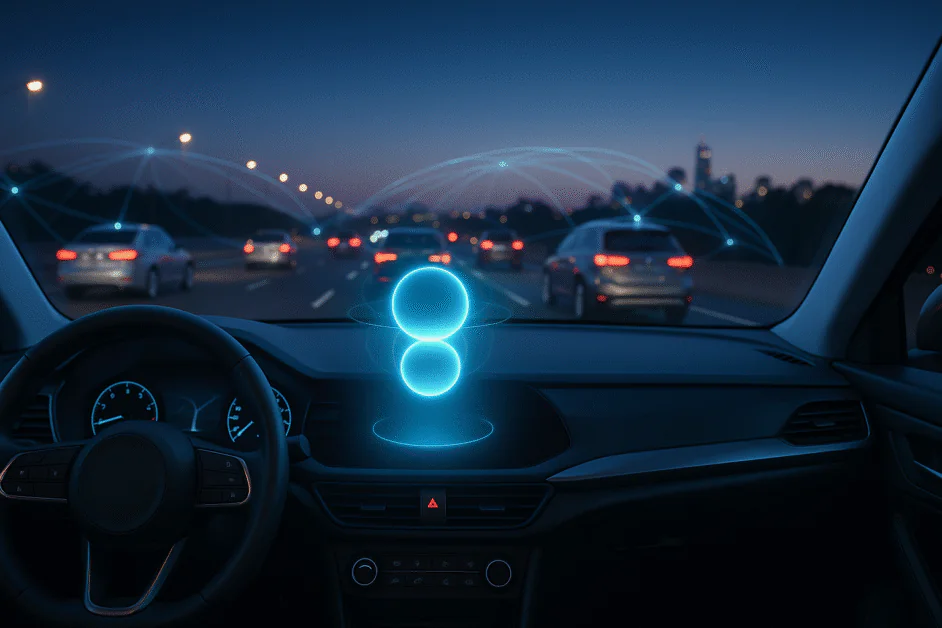
General Motors will integrate Google’s Gemini AI assistant across all its vehicles starting in 2026, expanding its partnership with Google to bring generative AI-powered conversational features to cars, trucks, and SUVs.
The Gemini AI assistant will allow drivers to draft and send messages using natural language, plan multi-stop routes including charging stations or amenities, and prepare for meetings or tasks while driving. The integration builds on GM’s existing Google built-in platform, which already includes Google Assistant, Google Maps, and Google Play, but adds more sophisticated conversational capabilities powered by Google’s large language model.
GM executives unveiled the plans at the GM Forward event in New York, positioning the move as part of a broader software and AI roadmap that includes a new eyes-off autonomous driving system planned for 2028. The Gemini assistant will enable voice interaction and digital assistant functions that extend beyond current voice command systems, using natural conversation to handle tasks that previously required manual input.
Generative AI Being Deployed Across Major Automakers
The announcement places GM alongside other major automakers already deploying generative AI assistants. Mercedes-Benz has integrated AI into its MBUX Virtual Assistant for deeply personalized, conversational voice interaction in flagship models. Stellantis partnered with Mistral AI in February 2025 to develop its STLA Smart Voice assistant, which handles real-time troubleshooting and feature discovery across its 14 brands. Tesla leads in software-defined vehicle architecture and autonomous driving but has not yet deployed advanced generative AI conversational assistants comparable to Mercedes or Stellantis offerings.
GM and Google began collaborating in 2019, when GM committed to integrating Google built-in services into select vehicles. The first GM vehicles with embedded Google services reached the market in 2021, allowing drivers direct access to navigation and entertainment without connecting a smartphone. In 2022, GM launched the OnStar Interactive Virtual Assistant powered by Google Cloud’s Dialogflow, which handles more than one million customer inquiries monthly for navigation, FAQs, and emergency detection.
The Gemini integration deepens that partnership by adding generative AI’s natural language processing and reasoning capabilities. Unlike earlier voice systems that relied on predefined commands, Gemini can interpret context, handle multi-turn conversations, and access a broader knowledge base to assist with complex requests. GM has not disclosed technical details about data privacy, on-board versus cloud processing, or how the assistant will integrate with OnStar’s existing services.
Beyond the Gemini announcement, GM revealed at the Forward event that it will launch an eyes-off, hands-off driver-assistance system in 2028, debuting in the all-electric Cadillac Escalade IQ. The system represents a step up from the current Super Cruise hands-free technology, which still requires drivers to keep their eyes on the road. The new capability is classified as Level 3 vehicle autonomy under SAE standards and builds on data from five million autonomous miles driven by Cruise, GM’s former robotaxi subsidiary.

Cadillac Escalade IQL interior (Image: GM)
The automotive industry is racing to modernize vehicle interfaces with generative AI, viewing conversational assistants as a way to differentiate products and improve user experience. As electric vehicle sales growth has slowed and competition intensified, automakers are investing in software-defined features that can be updated over the air and generate recurring revenue through subscriptions. GM’s move signals its intent to compete not just on hardware and electrification, but also on the intelligence and usability of in-cabin digital experiences.
GM has not announced pricing, subscription models, or whether the Gemini assistant will be standard or optional equipment when it launches in 2026.



