
Artificial Intelligence
ChatGPT Might Be Draining Your Brain: Cognitive Debt in the AI Era

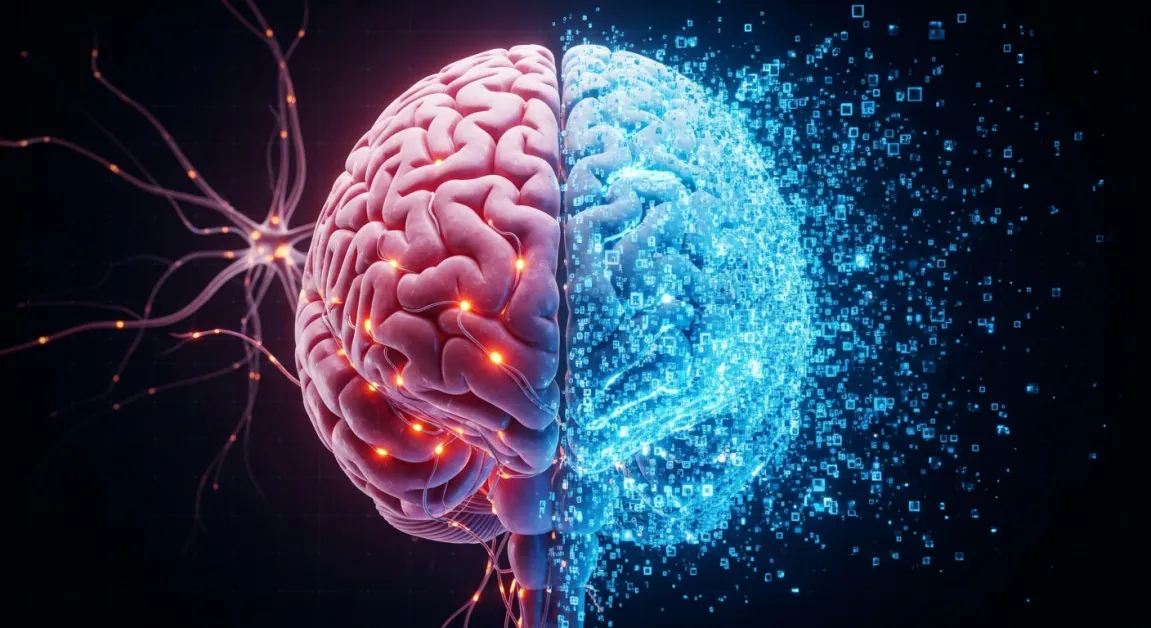
In an era where ChatGPT has become as commonplace as spell-check, a groundbreaking MIT study delivers a sobering message: our increasing reliance on LLMs may be quietly eroding our capacity for critical thinking and deep learning. The research, conducted by MIT Media Lab scientists over four months, introduces a compelling new concept – “cognitive debt” – that should give educators, students, and technology enthusiasts pause.
The implications are profound. As millions of students worldwide turn to AI tools for academic assistance, we may be witnessing the emergence of a generation that writes more efficiently but thinks less deeply. This isn’t merely another cautionary tale about technology; it’s a scientifically rigorous examination of how our brains adapt when we outsource cognitive effort to artificial intelligence.
The Neuroscience of Cognitive Offloading
The MIT study examined 54 college students from five Boston-area universities, dividing them into three groups: one using OpenAI’s GPT-4o, another using traditional search engines, and a third writing essays without any external assistance. What researchers discovered through EEG brain monitoring was striking: those who wrote without AI assistance showed significantly stronger neural connectivity across multiple brain regions.
The differences were particularly pronounced in theta and alpha brain waves, which are closely linked to working memory load and executive control. The brain-only group exhibited enhanced fronto-parietal alpha connectivity, reflecting internal focus and semantic memory retrieval required for creative ideation without external aid. In contrast, the LLM group showed significantly lower frontal theta connectivity, indicating that their working memory and executive demands were lighter.
Think of it this way: when you use AI to write, your brain essentially goes into power-saving mode. While this might feel like efficiency, it’s actually a form of cognitive disengagement. The neural pathways responsible for idea generation, critical analysis, and creative synthesis remain underutilized, much like muscles that atrophy from lack of use.

The Memory Problem: When AI Writes, We Forget
Perhaps the most alarming finding concerns memory formation. After the first session, over 80% of LLM users struggled to accurately recall a quote from their just-written essay – none managed it perfectly. This isn’t a minor glitch.
The research revealed that essays created with LLMs are not deeply internalized. When we craft our own sentences, wrestling with word choice and argument structure, we create robust memory traces. But when AI generates the content, even if we edit and approve it, our brains treat it as external information – processed but not truly absorbed.
This phenomenon extends beyond simple recall. The LLM group also fell behind in their ability to quote from the essays they wrote just minutes prior, suggesting that the cognitive ownership of AI-assisted work remains fundamentally compromised. If students can’t remember what they supposedly “wrote,” have they truly learned anything?
The Homogenization Effect: When Everyone Sounds the Same
Human graders described many LLM essays as generic and “soulless,” with standard ideas and repetitive language. The study’s natural language processing (NLP) analysis confirmed this subjective assessment: the LLM group produced more homogeneous essays, with less variation and a tendency to use specific phrasing (such as third-person address).
This standardization of thought represents a subtle but insidious form of intellectual conformity. When thousands of students use the same AI models to complete assignments, we risk creating an echo chamber of ideas where originality becomes extinct. The diversity of human thought – with all its quirks, insights, and occasional brilliance – gets smoothed into a predictable, algorithmic average.
Long-term Consequences: Building Cognitive Debt
The concept of “cognitive debt” mirrors technical debt in software development – short-term gains that create long-term problems. In the short term, cognitive debt makes writing easier; in the long run, it may reduce critical thinking, increase susceptibility to manipulation, and limit creativity.
The study’s fourth session provided particularly revealing insights. Students who switched from LLM to unaided writing showed weaker neural connectivity and lower engagement of alpha and beta networks than the brain-only group. Their previous reliance on AI had left them cognitively unprepared for independent work. As the researchers note, previous reliance on AI may blunt the ability to fully activate internal cognitive networks.
We’re potentially creating a generation that struggles with:
- Independent problem-solving
- Critical evaluation of information
- Original idea generation
- Deep, sustained thinking
- Intellectual ownership of their work
The Search Engine Middle Ground
Interestingly, the study found that traditional search engine users occupied a middle ground. While they showed some reduction in neural connectivity compared to the brain-only group, they maintained stronger cognitive engagement than LLM users. The search group sometimes showed patterns reflecting search engine optimization, but crucially, they still had to evaluate, select, and integrate information actively.
This suggests that not all digital tools are equally problematic. The key differentiator appears to be the level of cognitive effort required. Search engines present options; users must still think. LLMs provide answers; users need only accept or reject them.
Implications for Education and Beyond
These findings arrive at a critical juncture in educational history. As institutions worldwide grapple with AI integration policies, the MIT study provides empirical evidence for caution. The researchers emphasize that heavy, uncritical use of LLMs can change how our brains process information, potentially leading to unintended consequences.
For educators, the message is clear but nuanced. AI tools shouldn’t be banned outright – they’re already ubiquitous and offer genuine benefits for certain tasks. Instead, the results suggest that solo work is crucial for building strong cognitive skills. The challenge lies in designing curricula that leverage AI’s advantages while preserving opportunities for deep, unassisted thinking.
Consider implementing:
- AI-free zones for critical thinking exercises
- Scaffolded approaches where students master concepts before using AI assistance
- Explicit instruction on when AI helps versus hinders learning
- Assessment methods that value process over product
- Regular “cognitive workout” sessions without digital assistance
The MIT study doesn’t advocate for Luddism. Instead, it calls for intentional, strategic use of AI tools. Just as we’ve learned to balance screen time with physical activity, we must now balance AI assistance with cognitive exercise.
The key takeaway is that heavy, uncritical use of LLMs can change how our brains process information. This change isn’t inherently negative, but it requires conscious management. We need to cultivate what might be called “cognitive fitness” – the deliberate practice of unassisted thinking to maintain our intellectual capabilities.
Future research should explore optimal integration strategies. Can we design AI tools that enhance rather than replace cognitive effort? How can we use AI to amplify human creativity rather than standardize it? These questions will shape the next generation of educational technology.
The Bottom Line: Use Your Brain
The bottom line: it’s still a good idea to use your own brain. How much, exactly, remains an open question. This isn’t mere nostalgia for pre-digital times; it’s a recognition that certain cognitive capabilities require active cultivation. Like physical muscles, our mental faculties strengthen through challenge and weaken through disuse.
As we stand at this technological crossroads, the MIT study offers both a warning and an opportunity. The warning: uncritical adoption of AI writing tools may inadvertently compromise the very cognitive abilities that make us human. The opportunity: by understanding these effects, we can design better systems, policies, and practices that harness AI’s power while preserving human intellectual development.
The concept of cognitive debt reminds us that convenience always carries a cost. In our rush to embrace AI’s efficiency, we must not sacrifice the deep thinking, creativity, and intellectual ownership that define meaningful learning. The future belongs not to those who can prompt AI most effectively, but to those who can think critically about when to use it – and when to rely on the remarkable capabilities of their own minds.
As educators, students, and lifelong learners, we face a choice. We can drift into a future of cognitive dependency, or we can actively shape a world where AI amplifies rather than replaces human thought. The MIT study has shown us the stakes. The next move is ours.



