
Artificial Intelligence
Why Ambient Agents Are the Future of Human-Computer Interaction

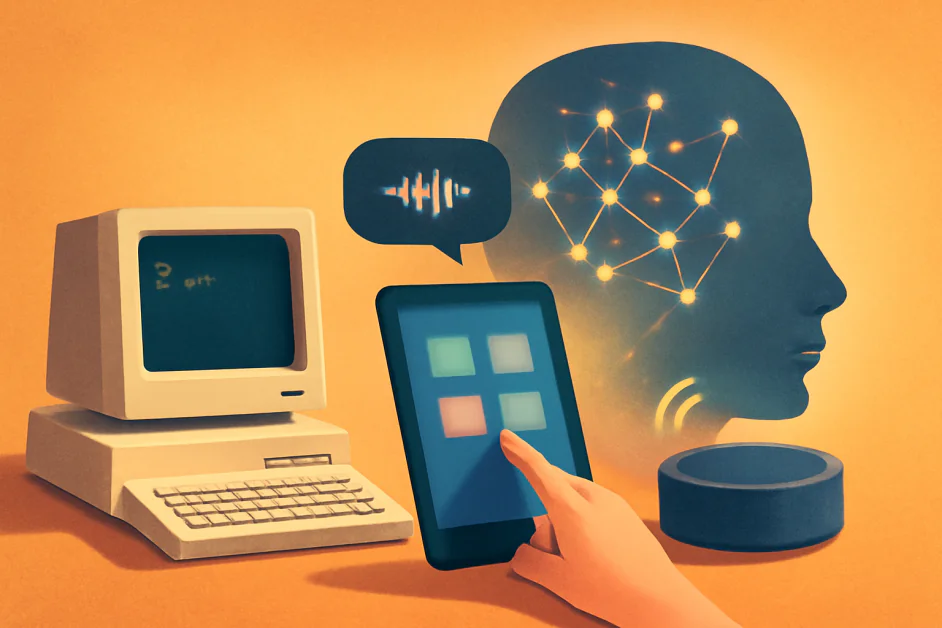
As technology continues to evolve, the way we interact with computers is changing dramatically. From typing commands on early computers to using touchscreens and voice assistants today, human-computer interaction (HCI) has become more natural and accessible. Now, a new wave of innovation is emerging with Ambient Agents. These intelligent systems work quietly in the background, anticipating our needs and enhancing our experiences without requiring direct instructions. This article explores what ambient agents are and how they are redefining HCI.
The Challenges of Human-Computer Interaction
Human-computer interaction has evolved through distinct stages. Each breakthrough reduced the effort needed to communicate with machines. We started with command lines where users typed complex instructions. Then came graphical interfaces with windows and menus. Touch screens made interaction more natural. Voice assistants brought conversations to computing.
While each generation solved some specific problems, they also created new ones. Graphical interfaces were intuitive but required precise clicking. Touch screens felt natural but needed visual attention. Voice assistants understood speech but struggled with context. Every interface demanded that humans learn its language and limitations.
Current systems still require much work from users. We open specific apps for specific tasks. We remember where we saved files. We repeat the same actions daily. We constantly switch between different interfaces and platforms. This friction slows us down and creates mental overhead.
Understanding Ambient Agents
Ambient agents are intelligent systems that operate continuously in the background. They monitor our environment and respond on our behalf without requiring direct user input. They are context-aware, meaning they can sense their surroundings, interpret data, and make decisions to enhance our experience. Unlike traditional AI agents, such as chatbots or voice assistants like Siri, which rely on explicit commands, ambient agents are proactive and predictive.
These agents possess several key qualities that make them different from traditional interfaces. They understand context through multiple sources of information. They know our location, schedule, preferences, and current activity. They process environmental data like weather, traffic, and social situations. This contextual awareness allows them to make intelligent decisions about when and how to help. For instance, in a smart home, an ambient agent might dim lights to signal focus time or vibrate your watch when someone important calls. Such interaction feels natural because it uses multiple human senses. Ambient agents learn and adapt continuously. They learn our routines, priorities, and communication style. This personalization makes the system more useful and reduces the need for manual configuration.
How Ambient AI Agents Operate
Ambient agents employ a combination of technologies to function effectively. Sensors embedded in devices continuously collect real-time data from the environment, such as temperature, motion, sound, and visual inputs. This data is processed by machine learning algorithms that identify patterns in both user behavior and environmental conditions. The system learns over time, understanding which actions are helpful in specific contexts and which ones users prefer to handle manually.
Natural language processing (NLP) allows ambient agents to interpret spoken and written communication. Event-driven architecture enables these systems to automatically respond to specific triggers. For example, a calendar event, a location change, or a shift in the environment could prompt the agent to act, whether it’s sending a reminder or adjusting your smart home settings.
The integration of these technologies into everyday devices, such as smartphones, smart speakers, and home automation systems, is what makes ambient agent more effective. For instance, LangChain’s email assistant monitors incoming emails, categorizes them, and even drafts responses without requiring user input for routine messages. The agent only prompts the user when it requires to respond to a critical email.
Benefits of Ambient AI
The primary appeal of ambient agent is its ability to reduce cognitive load and make human-computer interaction more intuitive. By anticipating needs and taking proactive actions, ambient agents minimize the mental effort involved in using technology. For example, LangChain’s email assistant can organize our emails, highlight important ones, and even suggest optimal travel routes based on real-time traffic data.
As these agents learn from our behavior, they personalize their assistance to better align with our preferences. Whether it’s adjusting home lighting when we return or offering meeting summaries, these agents can adapt to our routines. This level of personalization makes interactions feel almost magical, as if the technology is working one step ahead.
Ambient agents are excellent at interpreting context, which allows them to deliver highly relevant and personalized actions. Unlike traditional chatbots, which reset with each interaction, ambient agent maintain ongoing awareness. For instance, a healthcare agent can monitor patient vitals and alert staff if an anomaly from the routine values is detected.
Accessibility is another aspect where these agents can make a significant impact. For individuals with disabilities, ambient agent can offer contextual assistance that makes technology more accessible. For example, it can provide real-time audio descriptions for visually impaired users, enhancing their ability to interact with the world around them.
Real-World Applications
Ambient AI is already making its way into the mainstream, with several companies integrating these technologies into their products. Samsung’s SmartThings platform, for example, uses advanced sensors to monitor user activities and automatically adjust the environment based on detected actions, such as exercising, sleeping, or working. Meta’s Ray-Ban smart glasses employ ambient AI to provide live translations and identify songs or objects in real time. Other companies, like Apple and Microsoft, have also incorporated ambient agents. Apple’s introduction of its on-device processing system, Apple Intelligence, provides personalization and context-based assistance to the users. The system offers tools like writing aids, smart summarization, and a more intuitive Siri, operating directly on users’ devices without external data access. Microsoft’s Windows 11 Copilot is also an example of an integrated ambient agent, assisting with document summaries, email drafts, and queries.
Challenges and Considerations
While ambient agent holds immense promise, several challenges must be addressed to ensure its widespread adoption. Data privacy is a significant concern, as these systems continuously collect sensitive information, including voice commands, location, and even visual data. Protecting user privacy is essential, and techniques like federated learning, where data is processed on the device, can help mitigate privacy risks while still allowing for system personalization.
Reliability is another concern. For ambient agent to be trusted, it must operate consistently without errors. A misheard voice command or a failure in a smart home system could lead to frustration. Ensuring that these systems handle exceptions is crucial to building user confidence.
Security remains a major concern. As ambient agent connects different devices to work, the risk of cyberattacks increases. Ensuring that all connected devices are secure through encryption, regular updates, and robust security protocols is essential for the success of ambient agent technology.
The Bottom Line
Ambient agents are the next evolution in human-computer interaction. These systems work in the background, anticipate user needs, and improve experiences without direct input. They use context awareness, continuous learning, and integration with everyday devices to reduce mental effort and offer personalized support. Real-world examples, like Samsung’s SmartThings and Meta’s Ray-Ban smart glasses, show their potential in smart homes and augmented reality. However, issues like data privacy, reliability, and security must be resolved to gain user trust and ensure broad success.



