
Thought Leaders
The Super Bowl Cloud Resiliency Playbook

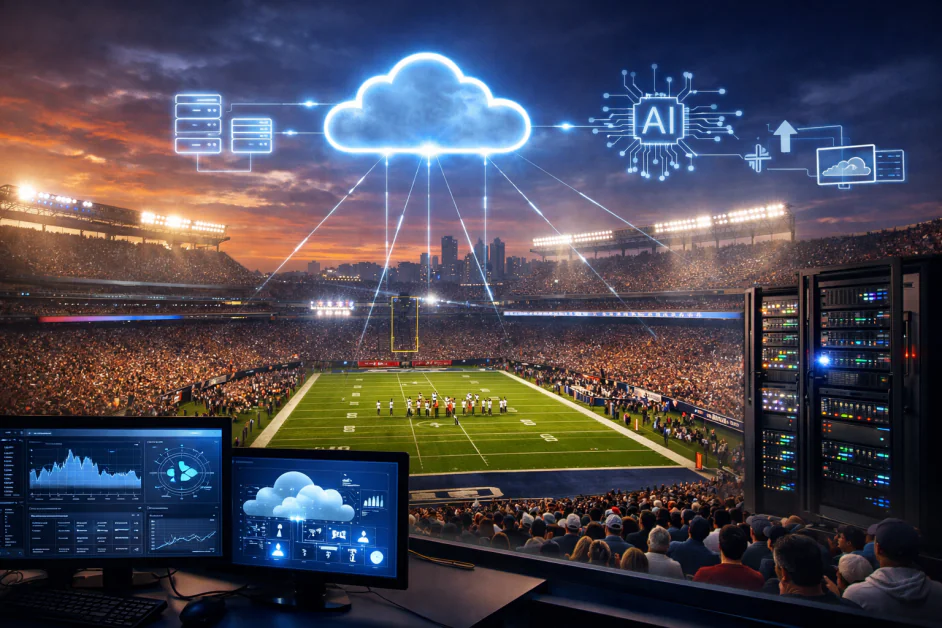
In all the excitement of the Super Bowl, it can be easy to forget the infrastructure behind the scenes. For the Bowl to go off without a hitch – not just for the broadcast itself, but for the vast network of business operating around the event as well – thousands of backend systems need to work as planned while being stretched to max capacity.
There are few areas where this is more true than in the cloud. Whether it’s AWS supporting Peacock streaming or the Seattle Seahawks operations – or, for that matter, Google Cloud supporting the 2028 Olympics or Microsoft Azure powering the Premier League – the cloud is critical for making any major sporting event happen.
That’s why, if your company is engaging in any kind of Super Bowl activation in 2026, you’ve likely thought through your Game Day cloud plan (and if you haven’t, it’s likely too late). But if you are considering activity in Super Bowl 2027 – or you just want to up your cloud game – this article is for you.
Below, I’ll offer a Cloud Playbook you need to follow to keep your own team nimble and ready to play. In the interest of space, I’ll focus specifically on two critical areas where cloud stressors show up on Game Day: an unparalleled data surge, and a robust reliance on AI.
But first, let’s do a quick huddle to take stock of the cloud outage threat.
First Down Fundamentals: How Much Should You Rely on the Cloud?
Before we begin, I want to be clear: there is more than enough reason for leagues, teams, and major applications to trust the hyperscalers with their customers and operations. The major cloud providers have more than earned their reputations for reliability – and the evidence indicates that their uptime reliability has only been increasing.
But at the same time, it’s clear that any core infrastructure can fail – even at the critical times when, one can assume, infrastructure providers are working overtime to ensure perfect runtime. Remember the (not-cloud-related) Coinbase crash of 2022 or Superdome blackout of 2013? Or closer to the cloud side, recall that Azure’s major outage last year came just hours before its scheduled quarterly earnings release last October.
In other words: Assume that your cloud provider will do fine this Sunday – but always prepare for the worst. And with that in mind, let’s look at two main issues causing the majority of cloud challenges.
The Data Blitz: Handling Unprecedented Volume
Clouds are supporting Super Bowl operations in which the data demands have never been greater. For just one representative example: last year FOX shared that, to support live distribution, the 2025 Super Bowl saw streaming services deliver content to 15.5 million peak concurrent viewers and required roughly 135 Tbps – up from just 3.4 million peak concurrent viewers and 15 Tbps in 2020.
Of course, what’s important to keep in mind here is that the jump in data usage happened because data volume has exploded across the board – both in volume and in types of data being brought into the picture. This trend ups the complexity of data management – and, as the Uptime Institute has reported, that complexity, in turn, poses new outage threats.
One source of that new complexity, of course, is AI.
Second Quarter Surge: The AI Revolution
In the past few years, that data stress is largely generated (and managed) by a very obvious new element: the rise of AI. While Super Bowl-specific AI isn’t easily available, just a quick scan of the NFL ecosystem shows a wealth of AI applications touching nearly every aspect of the game. For a small sample how AI usage is in the mix, consider the following football-related AI developments from just this past year:
-
Game Play – NFL’s Sideline Viewing System, the Microsoft-developed smartboard tablets used by coaches to track play and manage sideline huddles, has been upgraded with GitHub Copilot access “to filter plays based on criteria such as down and distance, scoring plays, and penalties to quickly analyze formations, decipher coverages and make more data-driven and strategic decisions” per an NFL announcement.
-
Broadcast – ESPN has bowed in-game real-time data and play probabilities made possible by NFL’s Next Gen Stats and TruPlay AI’s sports analytics and prediction application Adrenaline.
-
Fantasy Leagues – The NFL has launched AI-powered insights for fantasy leagues in its new NFL Pro’s Fantasy AI Assistant (made in partnership with AWS AI, Next Gen Stats, and NFL Fantasy)
-
Betting – Betting app FanDuel rolled out its GenAI sports betting chat feature for guiding bettors to NFL and NBA wagers this past March.
Plus, there are the myriad ways AI is powering the game well before game day – from NFL’s AWS AI partnerships around issues from safety to game scheduling, to its use of Microsoft Azure AI Foundry to support smarter draft picks. It’s no wonder that AI-support giants are striking deals with the NFL – including Cisco, which holds AI Infrastructure partnerships with multiple NFL franchises, including the New England Patriots.
On game day itself, the new AI obviously adds to the new complexity and data volume mentioned above. Long term, it presents another type of cloud instability as well – which I’ll explain next.
The Blind Side: AI’s Hidden Threat to Cloud Reliability
In addition to requiring very specific data management, AI is also a potential root cause in the next wave of cloud fragility. On the heels of the two major AWS and Azure outages last year, Forrester Research’s Lee Suster warned that the crashes “weren’t isolated — they’re a preview of what’s to come” – and that AI is a key accelerant of the dangers. As Suster writes:
Hyperscalers are diverting investment away from legacy x86 and ARM environments, prioritizing GPU-centric data centers for AI workloads while aging infrastructure falters under growing complexity. We believe this strategy will have some meaningful fallout in the form of at least two major multiday outages in 2026.
AI is becoming increasingly crucial – and creating business conditions to make clouds less dependable than they were before. That’s another reason for AI to force IT players onto defense. Some key strategies below.
The Winning Defense: Essential Cloud Protection Plays
To safeguard your cloud operations and maintain business continuity, be sure to:
-
Deploy AI-driven anomaly detection and continuous resilience testing. Use machine learning to catch problems before they impact users. Regularly simulate failures—regional outages, service degradations—in production-like environments to validate your recovery systems actually work.
-
Eliminate single points of failure with active-active multi-cloud deployments. Run production across multiple providers and regions simultaneously, each handling live traffic. Use real-time traffic shifting and geo-redundancy to direct users based on current conditions, enabling disaster recovery far faster, regardless of where outages hit.
Key to that second point is building systems that aren’t married to a single provider. Don’t just work in multiple clouds – work toward true cloud redundancy and fluidity. Here are three steps to keep in mind to achieve that nimbleness:
-
Stick with tools that work across clouds. For instance, use Kubernetes instead of provider-native container services, Okta or Keycloak over AWS Cognito for authentication, Terraform instead of provider-specific options like AWS CloudFormation when it comes to infrastructure as code.
-
Keep tight control over your configuration. Version control everything so you know exactly what’s running and can roll back fast when things go sideways. Define your infrastructure through code, not by clicking around in the console. Lock down admin access so nobody can make changes that don’t get documented.
-
Set up your failover environment before you need it. You can’t afford to wait until an outage hits to start spinning up a secondary cloud provider. Build out parallel environments now, and actually test your failover automation regularly—don’t let it turn into one of those runbooks that sits untouched for half a year. In other words: Do all your scrimmages now to be ready to hit the turf at game day.
The Final Whistle: Building Your Championship Infrastructure
The Super Bowl tests more than the players on the field—it stress-tests every system supporting the game, including the cloud. For IT professionals, the lessons are straightforward: reliable cloud infrastructure requires the same preparation and strategic thinking that goes into game day planning. Be sure you’re set up to weather emergencies, avoid lock-in, and can move nimbly across clouds in a crisis. Do that, and you’re on your way to a championship-level cloud strategy.



