
Artificial Intelligence
The Illusion of AI Reasoning: Apple’s Study and the Debate Over AI’s Thinking Abilities

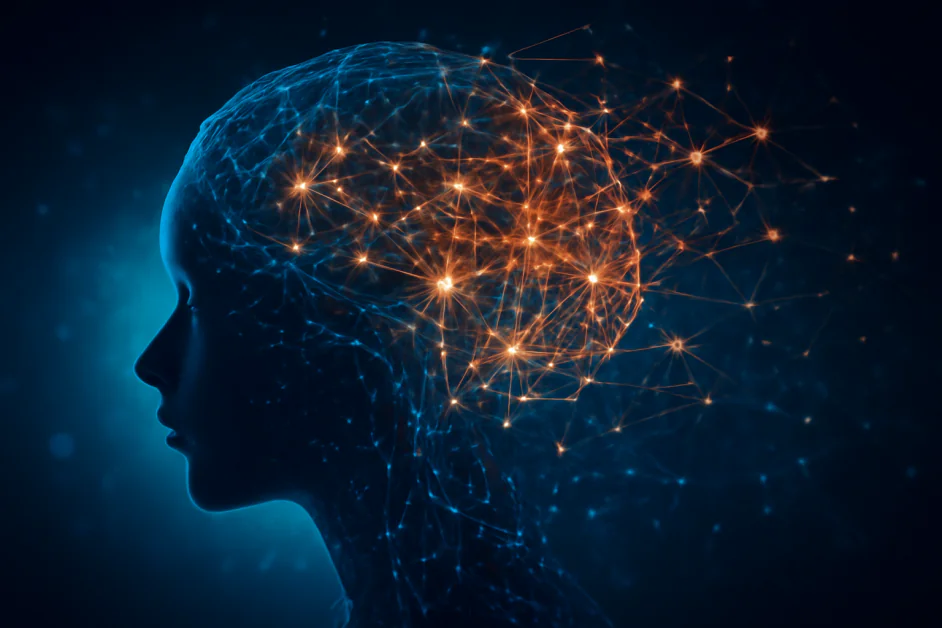
Artificial Intelligence (AI) is now a part of everyday life. It powers voice assistants, runs chatbots, and helps make critical decisions in industries such as healthcare, banking, and business. Advanced systems, such as OpenAI’s GPT-4 and Google’s Gemini, are often regarded as capable of providing intelligent, human-like responses. Many people believe these models can reason and think like humans.
However, Apple’s 2025 study challenges this belief. Their research questions whether these Large Reasoning Models (LRMs) are truly capable of thinking. The study concludes that these AIs may not use real reasoning but instead rely on pattern matching. The models identify and repeat patterns from their training data rather than creating new logic or understanding.
Apple tested several leading AI models using classic logic puzzles. The results were unexpected. On simpler tasks, standard models sometimes performed better than the more advanced reasoning models. On moderately challenging puzzles, LRMs showed some advantages. But when the puzzles became more complex, both types of models failed. Even when given the correct step-by-step solution, the models could not follow it reliably.
Apple’s findings have initiated a debate within the AI community. Some experts agree with Apple, saying these models only give the illusion of thinking. Others argue that the tests may not fully capture AI’s capabilities and that more effective methods are needed. The key question now is: Can AI truly reason, or is it just advanced pattern matching?
This question matters to everyone. With AI becoming more common, it is essential to understand what these systems can and what they cannot do.
What Are Large Reasoning Models (LRMs)?
LRMs are AI systems designed to solve problems by showing reasoning step by step. Unlike standard language models, which generate answers based on predicting the next word, LRMs aim to provide logical explanations. This makes them useful for tasks that need multiple steps of reasoning and abstract thinking.
LRMs are trained on large datasets that include books, articles, websites, and other textual content. This training enables models to understand language patterns and the logical structures commonly found in human reasoning. By showing how they reach their conclusions, LRMs are expected to offer more clear and trustworthy results.
These models are promising because they can handle complex tasks across various domains. The goal is to enhance transparency in decision-making, particularly in critical fields that rely on accurate and logical conclusions.
However, there is concern about whether LRMs are truly reasoning. Some believe that instead of thinking in a human-like way, they may use pattern matching. This raises questions about the real limits of AI systems and whether they are only mimicking reasoning.
Apple’s Study: Testing AI Reasoning and the Illusion of Thinking
To answer the question of whether LRMs reason or are just advanced pattern matchers, Apple’s research team designed a set of experiments using classic logic puzzles. These included the Tower of Hanoi, River Crossing, and Blocks World problems, which have long been used to test human logical thinking. The team selected these puzzles because their complexity could be adjusted. This enabled them to evaluate both standard language models and LRMs under different levels of difficulty.
Apple’s approach to testing AI reasoning differed from traditional benchmarks, which often focus on mathematical or coding tasks. These tests can be influenced by the models’ exposure to similar data during training. Instead, Apple’s team used puzzles that allowed them to control complexity while maintaining consistent logical structures. This design let them observe not only the final answers but also the reasoning steps taken by the models.
The study revealed three distinct performance levels:
Simple tasks
On fundamental problems, standard language models sometimes outperformed the more advanced LRMs. These tasks were straightforward enough that the simpler models could generate correct answers more efficiently.
Moderately complex tasks
As the complexity of the puzzles increased, LRMs, which were designed to provide structured reasoning with step-by-step explanations, showed an advantage. These models were able to follow the reasoning process and offer more accurate solutions than the standard models.
Highly complex tasks
When faced with more difficult problems, both types of models failed entirely. Although the models had sufficient computational resources, they were unable to solve the tasks. Their accuracy dropped to zero, indicating that they were unable to handle the level of complexity required for these problems.
Pattern Matching or Real Reasoning?
Upon further analysis, the researchers found more concerns with the models’ reasoning. The answers provided by the models depended heavily on how the problems were presented. Small changes, such as altering numbers or variable names, could result in entirely different answers. This inconsistency suggests that the models rely on learned patterns from their training data rather than applying logical reasoning.
The study showed that even when explicit algorithms or step-by-step instructions were provided, the models often failed to use them correctly when the complexity of the puzzles increased. Their reasoning traces revealed that the models did not consistently follow rules or logic. Instead, their solutions varied based on surface-level changes in the input rather than the actual structure of the problem.
Apple’s team concluded that what appeared to be reasoning was often just advanced pattern matching. While these models can mimic reasoning by recognizing familiar patterns, they do not truly understand the tasks or apply logic in a human-like way.
The Ongoing Debate: Can AI Truly Reason or Just Mimic Thinking?
Apple’s study has led to a debate in the AI community about whether LRMs can truly reason. Many experts now support Apple’s findings, arguing that these models create the illusion of reasoning. They are of the view that when faced with complex or new tasks, both standard language models and LRMs struggle, even when given the correct instructions or algorithms. This suggests that reasoning is often merely the ability to recognize and repeat patterns from training data rather than genuine understanding.
On the other side, companies like OpenAI and some researchers believe their models can reason. They point to high performance on standardized tests, such as the LSAT, and challenging math exams. For example, OpenAI’s GPT-4 scored in the 88th percentile among LSAT test-takers. Some interpret this strong performance as evidence of reasoning ability. Supporters of this view argue that such results show AI models can reason, at least in certain situations.
However, Apple’s study questions this view. The researchers argue that high scores on standardized tests do not necessarily indicate an accurate understanding or reasoning. Current benchmarks may not fully capture reasoning skills and could be influenced by the data on which the models were trained. In many cases, the models might simply be repeating patterns from their training data rather than truly reasoning through new problems.
This debate has practical consequences. If AI models do not honestly reason, they may not be reliable for tasks that require logical decision-making. This is particularly important in fields such as healthcare, finance, and law, where errors can have severe consequences. For example, if an AI model cannot apply logic to new or complex medical cases, mistakes are more likely. Similarly, AI systems in finance that lack the ability to reason might make poor investment choices or misjudge risks.
Apple’s findings also caution that while AI models are helpful for tasks such as content generation and data analysis, they should be used with care in areas that require deep understanding or critical thinking. Some experts see the lack of proper reasoning as a significant limitation, while others believe that pattern recognition alone can still be valuable for many practical applications.
What’s Next for AI Reasoning?
The future of AI reasoning is still uncertain. Some researchers believe that with more training, better data, and improved model architectures, AI will continue to develop actual reasoning abilities. Others are more skeptical and think current AI models may always be limited to pattern matching, never engaging in human-like reasoning.
Researchers are currently developing new evaluation methods to assess AI models’ ability to handle problems they have never encountered before. These tests aim to assess whether AI can think critically and explain its reasoning in a manner that makes sense to humans. If successful, these tests could provide a more accurate understanding of how well AI can reason and help researchers develop better models.
There is also increasing interest in developing hybrid models that combine the strengths of pattern recognition and reasoning. These models would use neural networks for pattern matching and symbolic reasoning systems for more complex tasks. Apple and NVIDIA are both reportedly exploring these hybrid approaches, which could lead to AI systems capable of true reasoning.
The Bottom Line
Apple’s 2025 study raises important questions about the true nature of AI’s reasoning abilities. While AI models like LRMs show great promise in various fields, the study warns that they may not possess a genuine understanding or human-like reasoning. Instead, they rely on pattern recognition, which limits their effectiveness in tasks that require more complex cognitive processes.
AI continues to shape the future, making it essential to acknowledge both its strengths and limitations. By refining testing methods and managing our expectations, we can use AI responsibly. This will ensure it complements human decision-making rather than replacing it.



