
Thought Leaders
The AI Adoption Gap: Why Technical Readiness Isn’t Enough

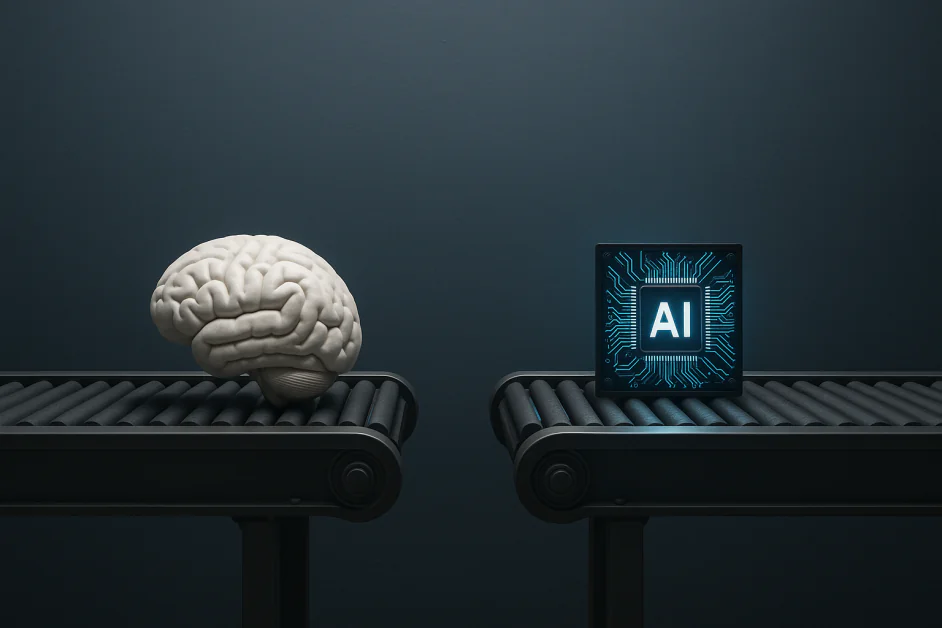
A recent MIT report has been making waves by highlighting that 95% of enterprise generative AI pilots are failing. The key challenge? The deployments aren’t translating to noticeable revenue increase. The reason, the authors explain, is because existing genAI pilots don’t adapt to existing workflows.
MIT isn’t the only one coming to this conclusion. A recent Boston Consulting Group survey found that “the share of employees who feel positive about GenAI rose from 15% to 55% with strong leadership support. But only about one-quarter of frontline employees say they receive that support.”
Anyone who has spent time in a large workplace has likely seen this dynamic at play. We are at a point now where technologically, an AI version of you can attend a meeting on your behalf, take notes, and summarize the key findings for you. The technology is here and ready. But are the people?
The central challenge facing businesses today isn’t whether AI can transform work; it’s whether organizations can successfully integrate AI in ways that people will actually adopt and use effectively. This gap exists because the way AI tools are typically introduced fails to meet people where they are.
To encourage AI adoption, technology needs to align with the way people actually work, think, and collaborate.
From AI Use to AI Coexistence
Historically, our engagement with AI has been transactional—inputs and outputs, prompts and responses. But as AI capabilities mature, our relationship with these systems must evolve beyond simple tool use toward genuine coexistence.
This evolution requires fundamentally rethinking how people interact with technology at work. Successful AI integration isn’t simply a technical shift; it’s a leadership challenge that demands building trust and driving adoption from the top down.
Business leaders must ensure that AI enhances rather than disrupts the natural rhythms of how teams meet, collaborate, and make decisions. This means communicating AI’s value clearly, modeling its use, and fostering a workplace culture that is transparent and optimistic about AI’s potential. It’s both providing employees with the tools they want to use, but also offering them training so they can get the most out of them.
Consider the meeting room, a frequent stage for collaboration and discussions. If AI is going to elevate these moments, it cannot become a source of distraction or cognitive overhead.
The most effective workplace AI operates invisibly, intelligently managing background tasks like capturing key insights, reducing noise, and prioritizing what matters most. What it shouldn’t require is for participants to configure settings or learn new interfaces. When AI coexists with natural work patterns rather than competing with them, it drives clarity, accelerates decision-making, and creates more space for human connection.
Why Technical Capability Isn’t Enough
The real challenge for businesses is ensuring AI’s usability. Workers are overwhelmed by tools that are too technical, too fragmented, or too difficult to trust. Even the most sophisticated AI features fail when they’re not designed with the user experience in mind.
We’ve witnessed this with the explosion of meeting apps, note-taking bots, and collaboration platforms. Rather than reducing cognitive load, many of these tools have increased it, requiring employees to learn new interfaces and adjust established workflows around the technology.
This is where thoughtful design must lead, guided by a simple but powerful principle: the best technology disappears into the background. By working intelligently behind the scenes — framing conversations, filtering distractions, and surfacing what matters most — well-designed AI feels like a natural extension of the workplace rather than an obstacle within it.
Preparing Organizations for AI Integration
As AI becomes increasingly capable, the question is no longer “can it be done?” but “how should it be done?” And the answer is rarely one-size-fits-all.
Every organization is different. Cultures vary, workflows diverge, and employee needs span across in-office, hybrid, and remote models. Successful AI integration demands environments purpose-built not just for generic productivity, but for the specific ways people within each company collaborate, communicate, and create value.
Modern workplaces must be adaptable, supporting deep focus one moment and collaborative meetings the next. We might call this the “adaptive office”: a space that embraces changing needs from moment to moment. AI should adapt to this natural flow of work rather than interrupting it.
But even the most seamless technology won’t succeed unless people are prepared to embrace it. Organizations must invest in change management, training, and support systems that ensure employees feel confident using new AI tools.
The Path Forward
The technology is ready. AI can already transform how we meet, collaborate, and make decisions. The critical question facing every organization is whether their people and workspaces are ready to embrace this transformation.
Success requires moving beyond viewing AI as just another tool to adopt. Instead, organizations must integrate AI as a collaborative partner that enhances human capabilities while respecting natural work patterns. This means prioritizing user experience, investing in proper change management, and designing AI implementations that fit each organization’s unique culture and workflows.
The future belongs to organizations that can bridge the gap between AI’s technical possibilities and human readiness to embrace them. The question isn’t whether AI will transform work, it’s whether your organization will lead that transformation or be left behind by it.



