
Artificial Intelligence
Test-Time Scaling: The Secret Sauce Behind the New Wave of PhD-Level Reasoning Models

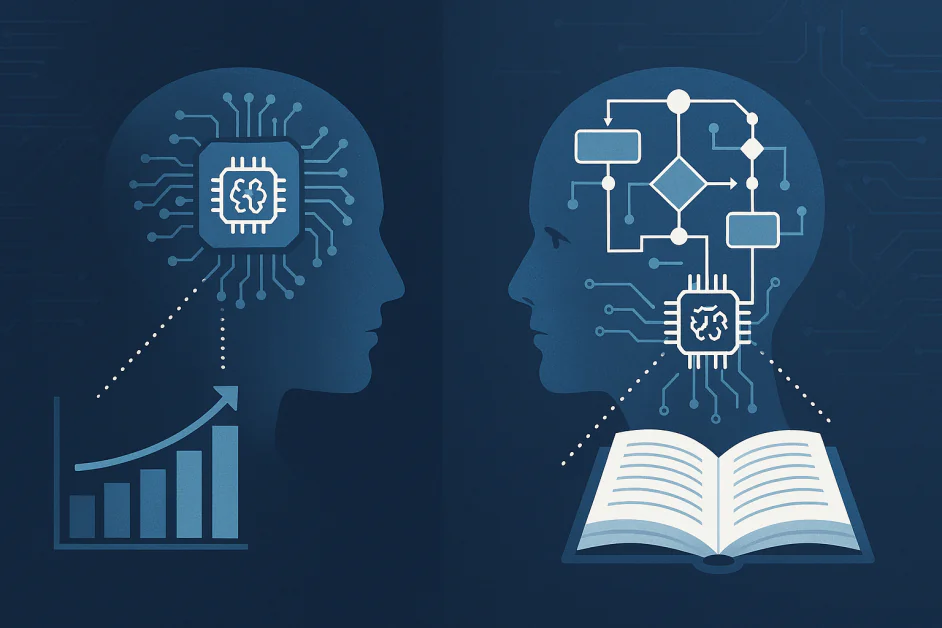
The field of artificial intelligence has reached a point where simply adding more data or increasing the size of a model is not the best way to make it more intelligent. For the past few years, we believed that if we built larger neural networks and fed them more of the internet, they would eventually become more intelligent. This approach, known as scaling laws, worked remarkably well. It gave us models that can write poetry, translate languages, and pass the bar exam. However, these models often struggled with deep logic, complex mathematics, and multi-step scientific problems. They were excellent at pattern matching but often failed at problems that require multi-step reasoning.
Recently, a new trend has emerged that is changing the way we think about AI capabilities. This trend is called test-time scaling. Instead of focusing only on how much a model learns during its training phase, researchers are now focusing on how much the model “thinks” when it is actually answering a question. This shift is the secret sauce behind the latest wave of reasoning models, such as OpenAI’s o1 series, which are now performing at the level of PhD students in difficult subjects like physics, chemistry, and biology.
The Shift from Scaling Training to Scaling Inference
To understand why this is a major change, we must look at how AI was built until now. Traditionally, the “intelligence” of a model was determined based on its training. This involved spending months and millions of dollars to run massive amounts of data through thousands of GPUs. Once the training was finished, the model was essentially frozen. When you asked it a question, it would provide an answer almost instantly based on the patterns it had already learned. This is what we call inference or test-time.
The problem with this traditional approach is that the model only has one chance to get the answer right. It processes the prompt and generates tokens one after another without a way to “think” or “double-check” its logic before speaking. Test-time scaling changes this dynamic. It allows the model to spend more computational power during the inference phase. Just as a human might take a few seconds to answer a simple question but several minutes or hours to solve a complex math problem, AI models are now being designed to scale their effort based on the difficulty of the task.
Defining the Concept of Test-Time Scaling
Test-time scaling refers to the techniques that allow an AI model to use extra computing resources to process a request at the moment of delivery. In simple terms, it means giving the model more “thinking time.” This is not about making the model bigger; it is about making the model more deliberate. When a model uses test-time scaling, it does not just produce the first answer that comes to mind. Instead, it might explore different paths, check for errors in its own logic, and refine its response before the user ever sees it.
This concept is often compared to the way the human brain works. Psychologists often talk about “System 1” and “System 2” thinking. System 1 is fast, instinctive, and emotional. It is what you use when you recognize a face or drive a car on a familiar road. System 2 is slower, more deliberate, and logical. It is what you use when you solve a difficult math equation or plan a complex project. Until recently, LLMs were mostly System 1 thinkers. Test-time scaling is the bridge that allows them to access System 2 thinking.
The Mechanics of the Reasoning Process
There are several ways that researchers achieve test-time scaling. One of the most common methods is called Chain of Thought (CoT) prompting, but in these new models, it is built directly into the system rather than being something the user has to ask for. The model is trained to break a problem down into smaller, logical steps. By doing this, the model can verify each part of the solution before moving to the next.
Another important technique involves search algorithms, such as Monte Carlo Tree Search. Instead of just predicting the next most likely word, the model generates multiple possible paths for an answer. It evaluates these paths and determines which one is most likely to lead to a correct solution. If it hits a dead end or realizes a previous step was wrong, it can go back and try a different approach. This “look-ahead” capability is very similar to how a chess engine evaluates thousands of potential moves before choosing the best one. By searching through many possibilities during the inference stage, the model can solve much more complex problems than those that can be solved directly using a standard LLM.
Why PhD-Level Reasoning Requires More Than Memory
The reason this matters so much is that high-level reasoning in science and mathematics cannot be solved by memory alone. In a PhD-level physics exam, you cannot simply repeat a fact you read in a textbook. You must apply complex principles to a new and unique situation. Standard models often hallucinate in these scenarios because they are trying to predict the next word based on probability rather than logic.
Test-time scaling allows the model to act more like a researcher. It can test hypotheses internally. For example, if a model is asked to write a complex piece of code, it can “run” the logic in its hidden chain of thought, identify a potential bug, and fix it before presenting the final code. This ability to self-correct is what allows the new wave of models to hit high scores on benchmarks like the American Invitational Mathematics Examination (AIME) or the GPQA (a difficult science test designed by experts). They are not just guessing; they are verifying.
The Efficiency Trade-off and Compute Costs
While test-time scaling is powerful, it comes with a significant cost. In the old way of doing things, the most expensive part of AI was the training. Once the model was deployed, running it was relatively cheap and fast. With test-time scaling, the cost shifts toward the user’s request. Because the model is doing more work by generating multiple paths and checking its own work, it takes longer time to respond and requires more hardware resources.
This creates a new kind of economics for AI. We are moving toward a situation where the “cost per query” can vary wildly. A simple question about the weather might cost a fraction of a cent and take a second. A deep scientific inquiry might cost several dollars in compute time and might take an hour to process. This trade-off is necessary for achieving high-level reasoning, but it also means that developers must find ways to make these models efficient so they can be used at scale in industries like medicine or engineering.
The Impact on the Future of Artificial Intelligence
The rise of test-time scaling suggests that we may be entering a new era of AI development. For years, there was a worry that we would eventually run out of high-quality human data to train models. If models only learn from what humans have already written, they might hit a ceiling. However, test-time scaling shows that models can improve their performance by thinking harder, not just by reading more.
This opens the door to AI making its own discoveries. If a model can reason through a problem it has never seen before, it can potentially find new solutions in material science, drug discovery, or renewable energy. It moves AI from being a helpful assistant that summarizes text to being a digital collaborator that can help solve the world’s hardest problems. We are seeing a move away from “generative” AI toward “reasoning” AI.
The Bottom Line
Test-time scaling is proving to be the missing link in the quest for advanced artificial intelligence. By allowing models to use more compute at the moment of inference, we have unlocked a level of performance that was previously thought to be years away. These models are beginning to demonstrate a type of logic that feels much closer to human intelligence than the simple pattern recognition of the past.
As we move forward, the challenge will be to refine these techniques. We need to make reasoning faster and more accessible while finding the right balance between “fast” and “slow” thinking. The secret sauce is no longer just the size of the model or the amount of data it has seen. The secret is how the model uses its time to think. For anyone following the progress of AI, it is clear that the focus has shifted. The race is no longer just about who has the biggest model, but who has the model that can reason the best. This shift will likely define the next decade of innovation in the field.



