
acquisitions
Why the SpaceX–xAI Merger Signals AI’s Next Infrastructure Shift

Unite.AI is committed to rigorous editorial standards. We may receive compensation when you click on links to products we review. Please view our affiliate disclosure.
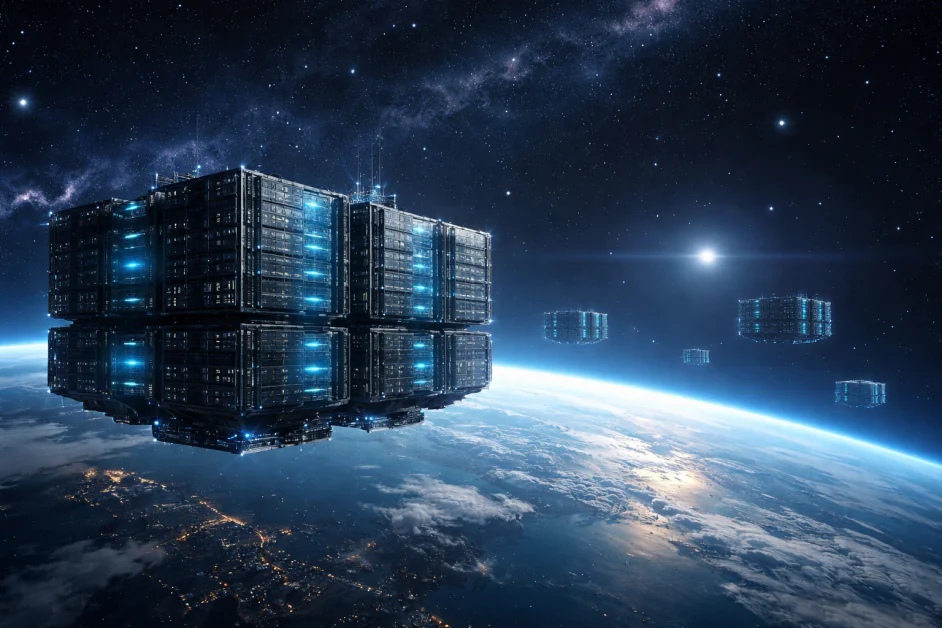
SpaceX’s confirmed merger with xAI is more than a high-profile consolidation of Elon Musk’s private interests; it is a declaration that the “era of frictionless compute” has ended. As frontier AI models grow in parameter count and training duration, they have begun to collide with the hard limits of Earth’s physical infrastructure. In 2026, the dominant bottlenecks for AI development are no longer just chip yields or data availability, but the availability of high-density power and the ability to shed massive heat loads without exhausting local water supplies.
The SpaceX–xAI merger reframes the pursuit of AGI as an infrastructure problem. Instead of fighting for diminishing capacity on terrestrial grids, the combined entity is betting that AI scale must expand beyond the planet to survive. This is not a pivot of convenience, but one of physical necessity.
The Terrestrial Ceiling: Why Earth Can No Longer Sustain AI Growth
Modern AI data centers are facing three compounding constraints that are effectively capping the scale of training runs on Earth. First is Energy Density. Frontier training runs now require hundreds of megawatts—sometimes gigawatts—of continuous power. In traditional data center hubs like Northern Virginia or Dublin, the load from AI has begun to exceed regional grid capacity, leading to permitting delays that can span years. By 2026, data centers are projected to consume over 1,000 TWh annually, a figure equivalent to the entire electricity consumption of Japan.
Second is Thermal Management. High-density compute clusters are notoriously water-intensive. Terrestrial facilities rely on convective cooling, which draws regulatory scrutiny in an era of increasing water scarcity. Finally, there is Geopolitical Risk. Terrestrial infrastructure is vulnerable to national regulatory overreach, grid instability, and physical sabotage. For a company seeking to build the world’s most powerful intelligence, relying on a fragile, local power grid is a single point of failure that cannot be mitigated through software alone.
The Orbital Compute Hypothesis
The SpaceX–xAI combination suggests a radical alternative: Orbital AI Infrastructure. Space offers a unique environment that solves the primary bottlenecks of terrestrial compute. In a Sun-synchronous orbit, solar energy is continuous and unconstrained by weather or atmospheric interference. A solar array in space can be up to eight times more productive than one on Earth, providing a 24/7 power source that bypasses the need for massive battery backups.
Technical Deep Dive: Radiative vs. Convective Cooling
On Earth, we cool chips by moving heat into air or water (convection). In the vacuum of space, convection is impossible. Instead, orbital data centers must rely on radiative cooling. While a vacuum is a perfect insulator, deep space serves as a 3-Kelvin heatsink. By utilizing passive radiators, an orbital cluster can shed heat as infrared light. This allows for gigawatt-scale compute clusters that “sweat” heat into the void without consuming a single drop of water.
What the Merger Actually Combines
The merger brings together three distinct but complementary systems under one corporate strategy, enabling a level of vertical integration never before seen in the technology sector:
- Launch Capacity: Starship provides the super heavy-lift capability required to deploy massive compute payloads. With a target of 100+ tons to Low Earth Orbit (LEO) at a fraction of current costs, it is the only vehicle capable of building an orbital grid.
- Global Connectivity: The Starlink V3 constellation, featuring 4 Tbps laser-mesh networking, serves as the backbone. This allows the entire constellation to act as a single, distributed “Orbital Brain,” reducing the number of hops between the AI and the end user.
- Vertical Compute: xAI provides the models (Grok) and the compute strategy. Unlike competitors who rent from hyperscalers like Azure or AWS, xAI now owns everything from the silicon and the power source to the rocket that launches it.
The Economics of the Vacuum: The $200/kg Threshold
Deploying infrastructure into orbit only makes sense if the economics of launch align with the returns on AI inference. Historically, space has been too expensive for “dumb” mass like server racks. However, we have reached a threshold where compute demand is growing faster than semiconductor efficiency gains. As chips hit the limits of Moore’s Law, the only way to increase intelligence is to increase the number of chips—and the energy to run them.
If Starship can bring launch costs down to approximately $200 per kilogram, orbital data centers become cost-competitive with terrestrial facilities on a per-kilowatt basis. At this price point, the capital expenditure of building in space is offset by the zero-cost operational energy (solar) and the lack of terrestrial land-use taxes and utility fees. For the first time, physics—not just capital—is the primary driver of ROI.
Sovereign Compute: AI Beyond Borders
Perhaps the most profound implication of this merger is the concept of Digital Sovereignty. Terrestrial data centers are inherently subject to the laws and policies of the nation-state where they are located. An orbital data center operates in international waters—effectively “Sovereign Compute.”
This provides a unique advantage for a company like xAI. An orbital cluster is physically isolated from terrestrial threats such as natural disasters, grid failures, or political instability. It offers a neutral ground for sensitive data and large-scale training runs that are “unplugged” from national regulatory environments. For organizations and nations seeking to reduce their ecological impact or bypass local power shortages, space-based compute offers an “exit” from the constraints of the 20th-century power grid.
Risks and Engineering Hurdles
The vision of a million-satellite orbital compute mesh is not without significant risks. The primary technical hurdle is Radiation Resilience. High-density AI chips are extremely sensitive to cosmic rays, which can cause “bit-flips” or permanent hardware degradation. Developing radiation-hardened AI hardware that maintains high performance is a task that has historically eluded even the most advanced defense contractors.
Additionally, there are concerns regarding Orbital Congestion. A constellation of the scale SpaceX is proposing (up to one million satellites) raises the risk of Kessler Syndrome—a cascading series of collisions that could render LEO unusable. Finally, Latency remains a factor; while laser-links in a vacuum are faster than fiber-optic glass, the physical distance between orbit and Earth still adds milliseconds that could affect real-time, high-frequency applications.
A Signal to the AI Community
Regardless of the execution timeline, the SpaceX–xAI merger sends a clear signal: the frontier of AI has shifted from software to systems integration at a planetary scale. The combined organization is betting that the future of artificial intelligence is constrained less by human intelligence than by the physical environment in which it resides.
As we move toward the end of the decade, we will likely see a bifurcation of the AI industry. Terrestrial clusters will remain optimized for low-latency inference and consumer applications, while the “heavy lifting” of frontier training will migrate to orbital environments. This is the beginning of the Space-Compute Era.
Conclusion
The SpaceX–xAI merger is best understood not as a corporate headline, but as an architectural experiment. It asks a fundamental question: “If intelligence continues to scale, does it ultimately require a new physical environment to exist?”
The transition to orbit is no longer a matter of “if,” but “when.” For those following the path to AGI, the most important hardware developments are no longer happening in Silicon Valley, but at launch sites in South Texas.



