
Thought Leaders
Robotics and Automation: A Real-World Look at What’s Next in Manufacturing

 Add Unite.AI to your preferred sources on Google
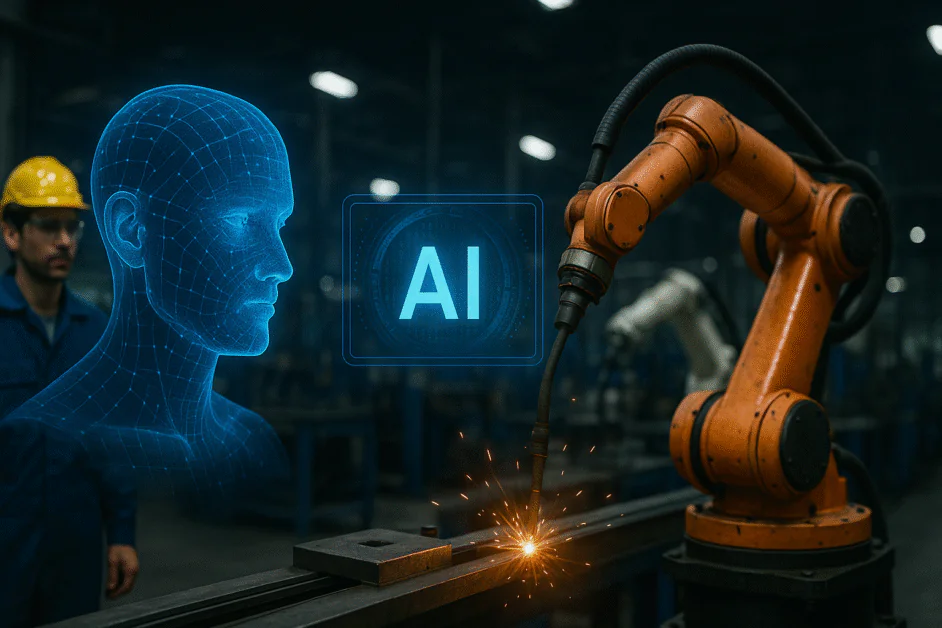
Manufacturing is changing faster than at any point in my career. Robotics and automation are already reshaping how we design products, run factories, ensure quality, and move goods around the world. These tools aren’t replacing people—they’re helping us work smarter, faster, and more creatively.
Where Robotics and Automation Are Making a Difference
Let’s start with design. Engineers today can generate thousands of part configurations in minutes, balancing cost, strength, and materials. Prototyping that used to take weeks can now be done overnight with robotic additive systems. Add in digital twins and it’s possible to simulate stress tests, run tolerance checks, and validate manufacturability without ever cutting material. That’s real time and money saved.
On the production floor, robots have evolved well beyond simple, repetitive tasks. Collaborative robots (co-bots) are smart enough to adjust on the fly when parts vary, working safely alongside people. Advanced scheduling tools pull in data from machines, labor, and supply chains to make production runs smoother, reducing costly downtime. The result is a shop floor that feels less like a rigid system and more like a living organism that adapts in real time.
Quality control is also being transformed. Vision systems now scan for flaws at speeds and scales that humans simply can’t match. Robots take on repetitive inspections, while engineers focus on fixing problems at the source and driving continuous improvement. That combination improves yield, cuts rework, and delivers more consistent results.
And then there’s logistics. In warehouses, automated guided vehicles move material nonstop and robotic pickers handle orders with precision. Forecasting tools crunch real-time data—from shipping routes to market trends—to predict demand and prevent costly shortages or overstock. Together, they’re making supply chains smarter, faster, and far less vulnerable to surprises.
Predictive Maintenance and Forecasting: Critical Levers for Competitiveness
Predictive maintenance is one of the clearest wins. Instead of waiting for a machine to fail, sensors and analytics now tell us exactly when equipment needs attention. Downtime shrinks, assets last longer, and production keeps moving. For industries where every minute of uptime matters.
For example, several automakers are outfitting stamping presses and robotic welders with predictive monitoring. These machines are the heartbeat of assembly, and unplanned downtime can cost hundreds of thousands of dollars per hour. By predicting failures days in advance, companies are avoiding shutdowns and keeping production lines humming.
Forecasting is equally powerful. Instead of relying on last year’s averages, manufacturers are feeding in live data from dozens of sources—weather patterns, shipping congestion, even consumer sentiment. This sharper lens on demand makes it easier to keep inventory balanced, avoid costly mistakes, and meet customer expectations with confidence.
In consumer electronics, contract manufacturers are using real-time demand forecasting to scale production of popular devices while trimming excess inventory of slower-moving products. This agility allows them to respond to sudden surges—like a new phone release—without overextending working capital.
Why Humans Still Matter
For all these advances, humans remain the heartbeat of manufacturing. Automation can spot a pattern or flag a risk, but it takes human judgment to decide what to do about it. Creativity and innovation are also still uniquely human strengths. Robots can suggest design tweaks; engineers know which ones align with customer needs or industry standards.
Trust also comes from people. Employees are more likely to embrace automation when it helps them do better work, not when they feel threatened. The companies that lead here are investing in training, showing teams how robotics can take away repetitive tasks and open up opportunities for more meaningful, higher-value work.
Medical device manufacturers are a good example. Robots may handle precision assembly of surgical instruments, but highly trained technicians are still essential to ensure compliance with strict regulations and to make judgment calls about quality. The combination of automation for consistency and people for expertise ensures both efficiency and safety.
What’s Slowing Things Down
None of this comes without challenges. Cost is often the biggest hurdle, especially for smaller manufacturers. The smartest path forward is to start small: pilot one use case, prove the ROI, then scale. Robotics-as-a-service models are also making adoption easier by turning big capital costs into manageable operating expenses.
Other challenges include:
1. Data Collection
Volume & Diversity: Robots need massive, diverse datasets (vision, sensor, motion) to generalize across environments, but collecting this data is expensive and time-consuming.
Edge Case Coverage: Real-world scenarios (e.g., unusual lighting, rare obstacles, unexpected human behavior) are hard to capture in sufficient quantity.
Privacy & Access: In factories, warehouses, or hospitals, sensitive information may restrict data capture.
2. Data Quality
Labeling & Annotation: Training requires labeled data (e.g., object recognition, semantic maps), but human labeling is costly and prone to error.
Sensor Noise & Drift: Cameras, LiDAR, and IMUs generate noisy data that must be cleaned and synchronized.
Bias & Representativeness: Over-representation of “easy” environments (lab settings) vs. under-representation of messy real-world conditions.
3. Data Management
Storage & Bandwidth: Multi-modal robotic data (video, LiDAR point clouds, telemetry) is massive—terabytes per day for autonomous systems.
Real-Time Processing: Robots often need millisecond-level decision-making, so data pipelines must be optimized for speed and edge processing.
Versioning & Traceability: Keeping track of which dataset trained which model for safety-critical robotics is a non-trivial challenge
Data integration is another sticking point. Many manufacturers are stuck with siloed systems that don’t talk to each other. Leaders are addressing this by investing in unified platforms and better data governance so that information flows freely and can fuel smarter decision-making.
The skills gap is real too. Not everyone is trained to program or operate advanced systems. That’s why retraining and upskilling are becoming essential strategies. Companies that make this investment not only get more out of their technology but also build employee loyalty.
Cybersecurity is a final obstacle. As more machines connect to networks, the risk of attacks grows. The leaders in this space are addressing it head-on by embedding security into every layer, from encrypted sensors to constant monitoring.
Looking Ahead
Robotics and automation are changing the game. And the manufacturers who succeed will be those who use these tools to amplify human talent, strengthen supply chains, and stay flexible when conditions shift. Those who wait risk falling behind in an industry that rewards adaptability and speed.
At Fictiv, we see this every day. The companies making the biggest strides are the ones using robotics and automation to empower their people, not replace them. Whether it’s an automaker avoiding downtime, a medtech company ensuring compliance, or an electronics giant managing demand swings, the message is clear: technology and human expertise together create a stronger, more resilient manufacturing ecosystem. That’s the real competitive edge—and it’s why this moment feels like a leap into the next industrial era.



