
Interviews
Rob Ringham, CAIO, Artisight – Interview Series

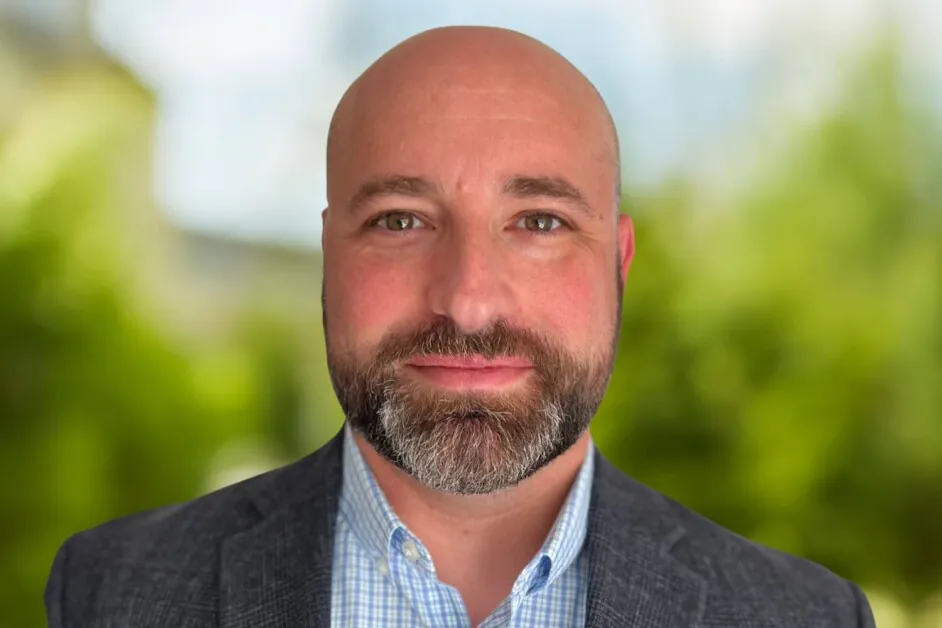
Rob Ringham is the Chief AI Officer at Artisight, where he drives the company’s AI strategy and innovation. Over nearly six years, he has also served as CTO and VP of Computer Vision, advancing AI-powered healthcare solutions. Previously, he spent over a decade at Infusion (now Avanade) as a principal architect in machine learning and mobile technologies, building large-scale AI systems that connect advanced technology with real-world impact.
Artisight is a healthcare technology company offering a “Smart Hospital Platform” that uses ambient intelligence—combining computer vision and multi-sensor networks powered by AI—to streamline clinical workflows, automate operational tasks, and provide real-time insights. Their platform aims to ease clinicians’ burdens by supporting activities like virtual nursing, asset tracking, and process optimization, ultimately improving care quality, staff satisfaction, and institutional efficiency.
You’ve had an extensive career across Fortune 500 companies and AI domains before joining Artisight. What personal experiences shaped your decision to focus on healthcare AI?
Joining Artisight nearly 6 years ago was a bit like coming home for me. I started my career 20 years ago, building image processing stacks for X-ray systems for healthcare. After several years, I moved into consulting, building large-scale data systems in capital markets, oil and gas, manufacturing, retail and hospitality.
Returning to the healthcare industry felt like a natural step, and focusing on AI in healthcare offered a way to make a meaningful, tangible difference in people’s health. Our work at Artisight improves hospital efficiency, leading to better patient outcomes – something that drives and motivates both me and our team every day.
Many AI agents excel at administrative tasks but fall short at the bedside. Where do you see their biggest limitations for clinical teams?
Friction in the clinical workflow is the biggest challenge teams face when adopting AI, both from the proliferation of devices and from the reliance on point solutions. Every new deployed device or solution requires not just backend integration but also the addition of yet another frontend, which clinicians must be able to locate in the moment at the bedside.
Consider an application frontend delivered through a mobile app, with each user needing to pick up their phone, open an app, authorize/sign in, enter data, and confirm data – these actions all add up to small points of friction that reduce the effectiveness of AI solutions. While multiple frontends aren’t inherently bad, a common platform on which AI solutions can be embedded and delivered throughout the hospital is a far more effective use of capital, driving faster and more impactful ROI.
Artisight’s smart rooms are described as “ambient” and “always-on.” How do these differ from traditional AI automation in hospitals?
With Artisight, AI is built directly into the fabric of the patient room, operating room, rehab facility, and patient home, allowing clinicians at the bedside to securely use their voice to document clinical tasks without needing to find and authenticate through a separate app. At the same time, Artisight’s computer vision algorithms observe activity in the room in a way that preserves patient privacy. With Artisight, clinicians enter the room and interact with Artisight in a low-friction manner through our ambient technology.
Hands-free documentation is a clear win—but what deeper opportunities does ambient AI unlock for physicians and nurses?
Ambient AI unlocks a new level of care coordination by surfacing information about the state of the patient room or operation in real-time. When a patient has been discharged, Artisight’s computer vision algorithms can instantly recognize that the room is ready for cleaning and notify the appropriate teams. Once a patient room has been cleaned, AI can mark the room ready to accept a new patient – no rounding needed to open new rooms.
Information about the state of an operating room is surfaced in a similar fashion. Artisight can tell that a room is being prepared for a surgical procedure or that the operating room is ready to be cleaned. Clinical staff have access to detailed analytics for each operating room, enabling them to track usage patterns and optimize throughput.
How does the platform integrate computer vision and NLP in a way that supports clinicians without adding new burdens?
Artisight’s Smart Hospital Platform integrates AI to eliminate the need for devices, manual log-ins, and/or physical contact with shared workspaces. Artisight’s computer vision AI solutions generate outputs such as risk scores, event notifications, and predictive insights that are clearly displayed through a centralized dashboard accessible by nurses and clinicians. For natural language use cases, end users can view underlying data inputs and contributing factors to AI-generated outputs through the Artisight Smart Hospital platform to build clinician confidence.
What measurable improvements in patient outcomes have you seen when documentation and assessments become invisible and real-time?
At one health system, Artisight’s Smart Hospital Platform reduced patient falls by 69% over an 8-week period, while at another, Artisight’s AI-powered virtual nurses offloaded up to 30 minutes of repetitive documentation per shift, freeing time for patient care. Implementing Artisight has led to roughly a half-day reduction in patient length of stay due to throughput improvement – over 50% of patients are now discharged within 75 minutes – far better than the national average of 120-150 minutes.
Staffing shortages are a pressing crisis. How can ambient AI practically reduce burnout and turnover among nurses and clinicians?
Ambient AI is helping clinicians and nurses focus on patient care, while also improving job satisfaction. The impact of the reduction in documentation alone is immense. At one health system, nurse turnover dropped from 25% to 13%, with 86% of nursing staff reporting improved safety, and a 25% improvement to nurse well-being. Units with virtual nurses complete 17% more discharges before 2:00 PM, contributing to decreased length-of-stay.
Hospitals often ask about ROI. How do you demonstrate financial and operational impact to health system leaders?
What were hospitals like before and after the introduction of electricity? That’s the scale of what AI will do for healthcare. Today, we have many physical health system facilities that have evolved over a long time. As a result, they are complex and extraordinarily manual in their operations. In the series, The Pitt, much is made of the fact that no one seems to know when inpatient rooms and operating rooms are available, and there is a lot of gaming of that system. That’s a reality for most health systems. It’s not very humorous when the costs of that opacity and underutilization are added up. And that’s just one example of where highly trained people spend much of the day confirming and communicating the status of patients, rooms, teams, critical equipment, supplies, and medications. In a smart hospital, that information is captured in the background and you can begin to solve all of those challenges of care quality, utilization and coordination from one place.
With over 400 hospitals already live, what lessons have you learned from deploying at scale?
Hospital environments have many complex moving pieces. Digital infrastructure runs on complicated network topologies where security and reliability are the highest priorities. We’ve seen that Artisight quickly becomes critical infrastructure for hospitals because of the care Artisight has taken in providing high-quality advanced technology that is deeply integrated into the workflow. We meet the needs of hospitals today and future-proof their infrastructure for an era of AI innovation.
Privacy and compliance are critical in healthcare. How does Artisight ensure patient trust while deploying ambient intelligence?
Artisight adheres to HIPAA, GDPR, and other relevant data protection and privacy regulations and is SOC 2 Type 2 certified. As part of our SOC 2 Type 2 compliance, Artisight implements robust security controls. Our systems and processes are regularly audited as a component of our SOC 2 Type 2 certification.
Looking ahead five years, how do you envision the role of AI in hospitals evolving beyond what we’re seeing today?
Returning to the electricity metaphor, AI will become an indispensable, critical infrastructure for hospital operations. Artisight’s platform will become air traffic control for the hospital, with previously inaccessible information constantly surfaced to the right teams to drive efficiency in operations.
Thank you for the great interview, readers who wish to learn more should visit Artisight.



