
Thought Leaders
Reimagining the Hospital of the Future with AI

 Add Unite.AI to your preferred sources on Google
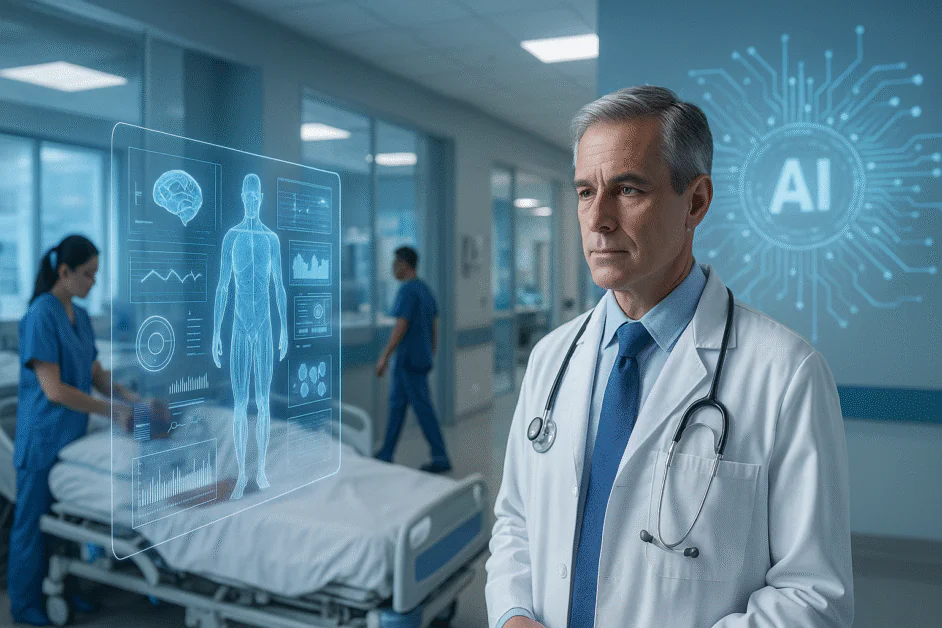
At the start of my career, we were just beginning to see how technology could redefine medicine and drive substantial impact. Electronic health records were emerging, telemedicine was experimental, and artificial intelligence belonged more to science fiction than to the exam room. Today, that future has arrived, and it is redefining medicine and how hospitals run around the world. AI is no longer theoretical; it is already helping hospitals reduce clinician burnout, accelerate diagnoses, and deliver better care to more people.
As both a physician and technology leader, I have had the privilege of seeing this transformation from both sides of the stethoscope. My journey has taken me from leading clinical informatics initiatives at HCA Healthcare’s (HCA ) TriStar Division to helping health systems nationwide adopt digital innovation. Now at Lenovo, I am focused on advancing clinical outcomes and improving patient experiences through technology that truly serves care teams. The hospital of the future will not be built by technology alone, but by people who know how to use it responsibly.
The State of AI in Healthcare
Across the country, hospitals are already putting AI to work. According to a 2025 IBM report, 77% of healthcare executives say AI provides a clear, measurable competitive advantage. Much of the progress so far has focused on operational efficiency by automating workflows, reducing documentation time, strengthening cybersecurity, and supporting clinical decisions. And according to Lenovo’s AI Vital Signs report, 77% of hospitals and outpatient centers are piloting or scaling AI, with 93% believing it will expand access to quality care. Still, many health systems are navigating AI as isolated experiments rather than integrated strategies. To realize the full promise of AI, hospitals must move from pilots to practice.
What’s Driving AI Forward
Every healthcare leader knows the pressures that make this shift essential. Staffing shortages are intensifying, with the World Health Organization projecting an 11 million healthcare worker shortfall by 2030. Administrative burden remains high, with nurses spending up to 30% of their time on non-clinical tasks that could be automated (Accenture). At the same time, hospitals are sitting on decades of imaging and pathology data, much of which goes underutilized without AI. These challenges are not only operational but deeply human. Clinicians are overwhelmed by data overload, inefficient systems, and rising dissatisfaction. The opportunity for AI is not simply to make hospitals smarter; it is to make them more humane.
Where AI Is Already Making a Difference
Hospitals that have begun adopting AI are already seeing meaningful results. Chatbots are streamlining patient intake and discharge while integrating with electronic medical records and offering multilingual support. Radiology tools pre-screen images and flag abnormalities, so radiologists can focus on complex cases that demand their expertise. Natural language processing is improving patient communication by guiding individuals through their care journey in their preferred language. Historical imaging data is enabling earlier and more precise interventions for conditions such as fatty liver disease. Each of these examples reflects the same principle that AI is most powerful when it empowers clinicians rather than replaces them.
Overcoming the Barriers
For all its promise, scaling AI requires overcoming real challenges. More than three in four leaders (76%) in the HIMSS Market Insights study cite rising IT infrastructure costs as a major barrier. The survey found that healthcare leaders face six key hurdles, led by concerns around IT security and resiliency (61%) and the need to better prioritize investments (59%). Yet behind these statistics lies a deeper truth that innovation in healthcare does not fail for lack of technology; it falters when systems, budgets, and mindsets are not aligned.
To unlock AI’s full potential, hospitals must address three critical dimensions: governance, culture, and capacity. Strong governance frameworks ensure AI is used responsibly and transparently, with multidisciplinary oversight that includes clinical, IT, and legal leaders. This approach builds trust by making algorithms explainable and data policies clear to both clinicians and patients. Equally important is fostering a culture that embraces change. Clinicians need to see AI as an ally that alleviates administrative burden, enhances safety, and restores time for patient connection. When hospitals communicate these benefits clearly and share success stories from early adopters, skepticism turns into confidence.
Finally, healthcare organizations must strengthen their capacity to support AI-driven care. Many hospitals still operate with legacy systems that were never designed for AI-scale workloads. Upgrading infrastructure through secure cloud integration, hybrid edge computing, and AI-capable devices is not simply an IT project; it’s foundational to care delivery. Aligning investments with measurable outcomes ensures that technology spending directly translates into improved efficiency, accuracy, and patient experience.
A Roadmap to the Hospital of the Future
Based on my experience working with hospitals across the country, I see a clear roadmap for healthcare leaders looking to build the hospital of the future. The first step is to prioritize high-impact use cases where AI can deliver measurable value, such as automating administrative tasks, supporting clinicians in decision-making, and strengthening cybersecurity. These initiatives free up clinicians’ time, reduce errors, and build trust in technology.
Next, hospitals must modernize infrastructure and endpoints to enable real-time insights at the bedside. Investing in AI-capable devices and hybrid edge computing not only improves speed and security but also future-proofs care delivery as technology evolves.
Workforce training is equally vital. AI is only as effective as the people using it, and equipping clinicians to understand and apply it confidently turns technology into empowerment rather than disruption. Strong governance and security frameworks further ensure compliance, accountability, and patient trust.
Finally, connecting data to outcomes by improving quality, accessibility, and integration allows hospitals to move from reactive to predictive care. The long-term benefit is a healthcare system that is smarter, more resilient, and ultimately more human, where technology amplifies rather than replaces the art of care.
The Vision Ahead
Lenovo’s AI Vital Signs study found that 75% of healthcare leaders say their AI investments have met or exceeded ROI expectations, with the biggest gains to date in improved security and compliance, operational efficiency, and faster decision-making. These early wins set the stage for even greater transformation ahead.
By 2030, expanding use cases and continued improvements in AI safety could increase automation potential to up to 3 hours per day, giving clinicians more time to focus on patient care. Personalized medicine will move from aspiration to everyday reality, tailoring treatment plans for each individual. Predictive AI will enable earlier interventions, allowing care teams to act before symptoms appear. The hospital of the future will not feel impersonal or robotic – it will feel more human. Technology will take on the burden, freeing clinicians to do what they do best: care, connect, and heal.
Building Smarter, More Compassionate Care
AI’s true potential in healthcare is not about replacing expertise but amplifying it. With thoughtful investments in infrastructure, governance, and training, hospitals can create intelligent ecosystems that enhance both patient care and clinician experience. The future of healthcare will not be written by machines, but by the people who choose to use them wisely.



