AI Models & Platforms
Port Brings Vibe Coding to Platform Engineering With AI Builder

 Add Unite.AI to your preferred sources on Google
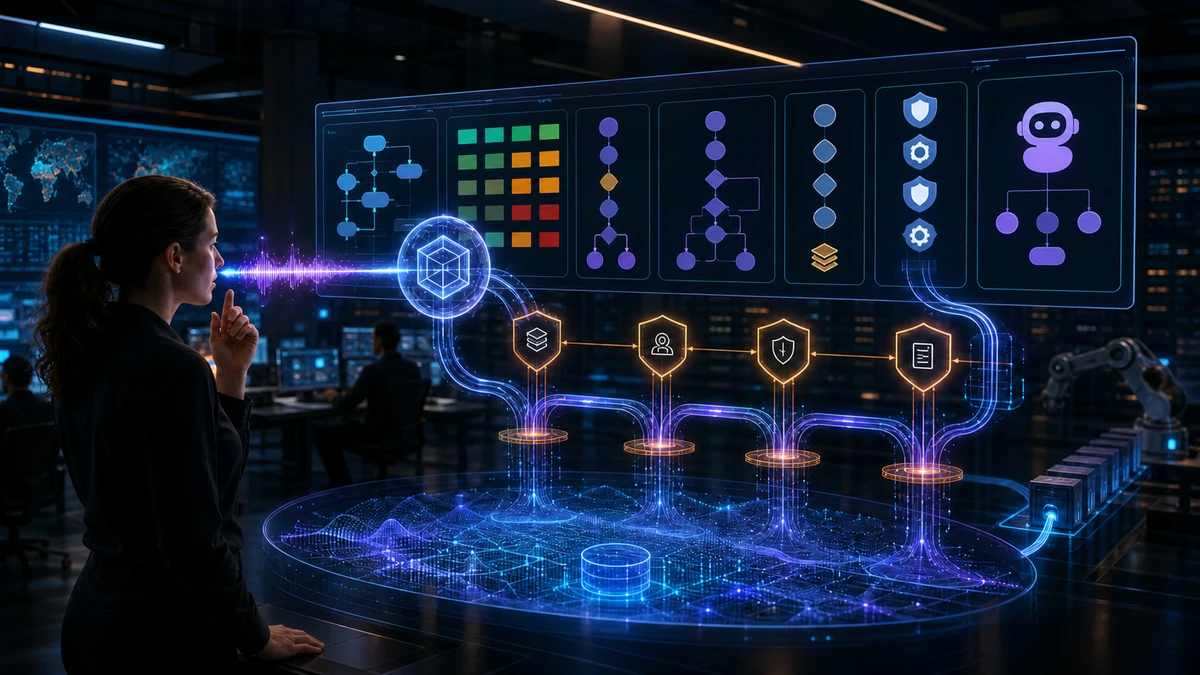
Port has launched AI Builder, a new natural language development experience designed to help platform engineering teams build agentic software delivery workflows without turning AI adoption into another layer of operational sprawl.
The company describes the product as the first purpose-built vibe coding experience for platform engineering. But the more important point is not the “vibe coding” label. It is what Port is trying to apply it to.
Vibe coding has largely been associated with individual developers using natural language to generate applications, prototypes, or code changes. Port is taking that same interaction model and applying it to the software delivery lifecycle itself: onboarding, infrastructure workflows, production readiness, incident response, cost controls, engineering performance tracking, governance, and agent management.
That is a very different problem from helping a developer write code faster. In large engineering organizations, the challenge is not simply whether AI can generate a useful workflow. It is whether that workflow fits the company’s architecture, follows internal policies, connects to the right tools, respects permissions, and can be audited after the fact.
From Coding Assistant to SDLC Control Layer
Port’s AI Builder is built on top of the company’s Agentic SDLC Platform, which combines a context lake, workflow orchestration, agent management, and governance capabilities. The idea is to give developers, platform teams, and AI agents a shared foundation for understanding how software moves through an organization.
That foundation matters because agentic development can quickly become fragmented. A developer might build an agent to triage incidents. A platform engineer might build one to manage cloud costs. A security team might build one to enforce compliance checks. Each use case may be valuable on its own, but without shared context and controls, companies can end up with duplicated workflows, inconsistent governance, and agents acting on incomplete information.
AI Builder is Port’s attempt to give teams a more structured path. Instead of building isolated automations, teams can describe what they want in natural language and have the system help create workflows, dashboards, scorecards, or agents within Port’s governed environment.
How AI Builder Works
AI Builder allows teams to create and modify agentic SDLC workflows through a chat-based interface. A platform team could, for example, ask it to create a production readiness scorecard, design an onboarding workflow for a new service, build an AI cost management process, or generate an autonomous ticket resolution flow.
Port says the system comes with embedded domain knowledge across SRE, DevOps, architecture, security, AI governance, data modeling, and UX. That is meant to make the tool more specialized than a general-purpose coding assistant. Rather than only producing code or configuration, AI Builder is intended to reason through how platform engineering work should be structured.
A key feature is Plan Mode. Before building, the AI drafts a plan, asks clarifying questions, and waits for approval. Plans are versioned and saved, giving teams a record of what was proposed and approved. That may sound like a small workflow detail, but it is central to the product’s positioning. The more autonomy organizations give AI agents, the more they need approval paths, traceability, and accountability.
Why Context Matters
The product is connected to Port’s Context Lake, which is designed to give agents and workflows access to real organizational data. That can include services, teams, ownership, dependencies, environments, integrations, policies, and operational metadata.
This is one of the more important parts of the announcement. AI systems are often only as useful as the context they can access. A generic assistant may be able to suggest a deployment workflow, but it does not automatically know which services are business-critical, which teams own them, what approval process applies, or which dependencies could break if a change is made.
Port’s approach is to make organizational context part of the build process. That means AI Builder is not just responding to prompts in isolation. It is meant to create workflows that reflect how a company actually operates.
For platform teams, this could reduce the gap between idea and implementation. Instead of manually assembling workflows across different systems, teams can use natural language to generate the first version, then review, refine, and govern it inside the platform.
Making More Engineers Builders
Port CEO and Co-founder Zohar Einy framed the launch around a broader change in software development: more people inside engineering organizations now expect to build automation and agentic workflows themselves.
“AI is fundamentally changing how software gets built,” Einy said. “Everyone is a builder now. Developers and platform teams alike want to create AI agents that eliminate toil, remove bottlenecks, and improve software delivery.”
That shift creates a new challenge for platform teams. They are no longer only building internal tools for developers to consume. They are increasingly responsible for creating the environment where developers, AI agents, and platform workflows can safely interact.
This is where AI Builder fits into Port’s larger strategy. It gives more users the ability to create workflows, but does so within a system that is intended to preserve standards, visibility, and control.
The Industry Implication: Agent Sprawl Is Becoming a Real Problem
The launch points to a broader issue emerging across enterprise AI adoption. Companies are moving from experimentation to implementation, but many are doing so with disconnected tools. AI coding assistants, internal bots, workflow agents, data assistants, and automation scripts are being adopted at different speeds by different teams.
That creates a new form of software sprawl. In the cloud era, companies had to learn how to manage infrastructure sprawl. In the SaaS era, they had to manage application sprawl. In the AI era, they will need to manage agent sprawl.
The problem is not that teams are building too many agents. The problem is that many agents may be built without shared context, ownership, permissions, observability, or lifecycle management. An agent that works well for one team can become a liability if no one knows what systems it can access, what decisions it is allowed to make, or how its behavior is monitored over time.
This is why platform engineering is becoming more important, not less, in the age of AI. As software development becomes more automated, organizations need a stronger operating model for how automation is created, approved, reused, and governed.
Internal Developer Portals Are Evolving
AI Builder also reflects the changing role of internal developer portals. Originally, many portals were focused on service catalogs, documentation, self-service actions, and developer experience. They helped engineers find what they needed and reduced the burden on platform teams.
The next phase looks more active. Port is positioning the portal as a shared execution layer where developers and agents can collaborate against the same organizational map. In that model, the portal is not just a place to view services or trigger workflows. It becomes the control plane for agentic software delivery.
That evolution makes sense. If AI agents are going to participate in the SDLC, they need the same things human engineers need: context, permissions, standards, and feedback. The difference is that agents can operate much faster, which makes governance more urgent.
Productivity Gains Will Depend on Trust
The promise of products like AI Builder is faster software delivery with less manual work. But the real test will be trust.
Enterprises will not allow agents to make meaningful changes across the SDLC simply because they are fast. They will need proof that the workflows are safe, explainable, reversible, and aligned with internal policies. They will also need a clear understanding of where humans remain in the loop.
That may be the most important implication of Port’s announcement. The next stage of AI in software development is not just about better code generation. It is about building the systems that allow AI to participate in real operational environments without creating chaos.
AI Builder is available on Port’s free and paid subscriptions.