
Technology
New Micro-Display Implant Offers Hope to Restore Sight to Millions—A Breakthrough by XPANCEO and INTRA-KER

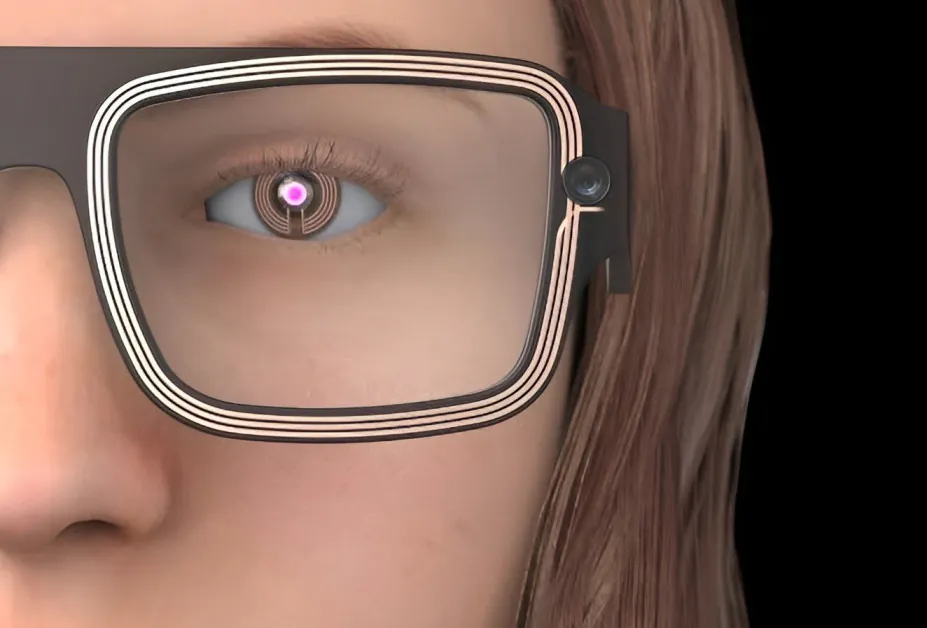
XPANCEO, a Dubai-based deep-tech company building next-generation smart contact lenses and ocular computing systems, and Italian medtech innovator INTRA-KER have introduced a prototype that could transform the way we think about blindness and its treatment. Their intracorneal implant proof of concept goes far beyond traditional surgery by abandoning the need for donor tissue altogether. Instead of waiting months or even years for a viable cornea, patients may one day regain sight through a system that projects visual information directly onto the retina.
For the millions trapped in a cycle of long waiting lists and uncertain outcomes, this breakthrough represents not just a technical advance but a profound promise: that vision can be restored without relying on the fragile economics of donor availability. By turning the problem of corneal blindness into one of digital information delivery, XPANCEO and INTRA-KER are reframing a medical challenge that has endured for centuries, offering a glimpse of a future where access to sight is no longer determined by scarcity but by innovation.
Understanding Corneal Blindness: A Widespread Crisis
Corneal blindness is one of the world’s most pressing vision health challenges. According to global estimates, around 12.7 million people are currently awaiting corneal transplantation, yet only one donor cornea is available for every 70 needed. Each year, roughly 185,000 corneal transplants are performed, a figure dwarfed by the scale of demand.
Millions live with the daily consequences: around 5.5 million are bilaterally blind from corneal causes, while another 6.2 million are unilaterally blind. In developing countries, where eye banks and surgical infrastructure are scarce, the prevalence is even higher. Conditions like trachoma, trauma, and fungal infections add millions of new cases each year, while fungal keratitis alone blinds nearly one million people annually. For many, donor-based surgery is not only out of reach but also an uncertain fix, with grafts sometimes failing due to rejection or complications.
Against this backdrop, the XPANCEO–INTRA-KER implant represents a radical alternative: a solution that does not rely on the fragile supply chain of donor tissue, but on the precision of engineered optics.
The Technology: Rethinking Sight Through Light Projection
At the core of this breakthrough is a deceptively simple concept: vision is information, and information can be delivered in new ways. The system uses smart glasses equipped with a miniature camera to capture a scene, then wirelessly transmits that data—through the same communication and power protocols XPANCEO designed for its smart contact lens prototypes—to a micro-display implanted in the corneal region. That micro-display projects the image directly onto the retina, restoring functional vision even when the cornea is opaque.
“The initial proof of concept combined a 450×450 pixel display with our micro-optical projection system into a 5.6 mm package, and for clinical use, we aim to miniaturize the entire system,” explains Dr. Valentyn Volkov, founder of XPANCEO. “With over 12 million people awaiting corneal transplants, we see this as the beginning of a new era, where advanced optics and computation can bridge longstanding gaps in vision care.”
For INTRA-KER, the achievement lies in making the surgical side feasible. “Until now, implanting electronics in the anterior segment of the eye has not met with success,” says Prof. Massimo Busin of INTRA-KER. “With only 185,000 traditional corneal transplants performed each year, we see a critical need for solutions that don’t rely on donor tissue. This system is made possible by our IP protected technology, which enables precise and safe implantation of sealed electronic components using a procedure no more complex than standard corneal surgery.”
Together, the two companies are working toward clinical trials expected to begin within two years, with the potential to open a $50–200 million annual market and, more importantly, transform access to sight for millions.
The path forward is not just about restoring lost vision—it’s about redefining it. What XPANCEO and INTRA-KER have demonstrated is that sight can be treated as an engineering problem, where images are delivered as data rather than filtered through damaged tissue. In the near term, this means clinical trials and careful refinement of the device to ensure safety and usability. But the longer view is far more ambitious: implants that do more than restore sight, adding features like night vision, real-time health tracking, or overlays of digital information. By transforming the eye into a living interface, this technology hints at a future where vision is no longer limited by biology, but expanded by design.
Implications for the Future
The arrival of an intracorneal micro-display implant represents more than a new medical device; it is a reimagining of what it means to see. For decades, the only path forward for those with corneal blindness was transplantation, a procedure constrained by donor shortages and the risk of immune rejection. This new approach severs that dependency. By replacing the cornea’s optical function with engineered precision, it opens the possibility of restoring vision to millions who have long been left behind simply because biology could not supply the answer.
The technology also introduces a profound shift in how we think about vision itself. No longer bound to transparency of tissue, sight becomes an information problem—data captured, transmitted, and projected with the same logic that powers advanced computing. Today that means bypassing the cornea to deliver a clear image to the retina. Tomorrow, it could mean expanding human vision beyond natural limits: overlaying data in real time, correcting inherited conditions like color blindness, or even extending perception into wavelengths of light invisible to the human eye. What begins as restoration could soon evolve into enhancement.
On a global scale, the implications are equally powerful. In regions where millions suffer blindness from trachoma, trauma, or fungal infections, the prospect of a safe, scalable alternative to corneal grafts is transformative. Countries that lack robust eye-banking systems could leapfrog directly to engineered implants, just as parts of the world skipped landlines to adopt mobile phones. The ripple effects extend to independence, productivity, and quality of life for entire communities where blindness has long meant isolation.
Yet such promise comes with difficult questions. Implanting electronics in the eye will demand rigorous regulatory oversight, long-term safety studies, and ethical debate. Who will own the data transmitted through such systems? How do we ensure equitable access so that this is not a privilege of the wealthy but a lifeline for all? And how will society draw the line between therapy that restores sight and technology that augments it?
Perhaps the most compelling implication lies not in the technology itself but in its human impact. The ability to see again—or for the first time—is the restoration of dignity, autonomy, and connection. It is a mother reading to her child, a student learning without limits, a worker returning to their craft, an elder walking unassisted through their community. By bridging the gap between biology and computation, XPANCEO and INTRA-KER have lit a path toward a future where corneal blindness is no longer a life sentence, but a challenge answered by ingenuity.



