
acquisitions
Buildots Acquires Genda: A Defining Moment for AI-Driven Construction

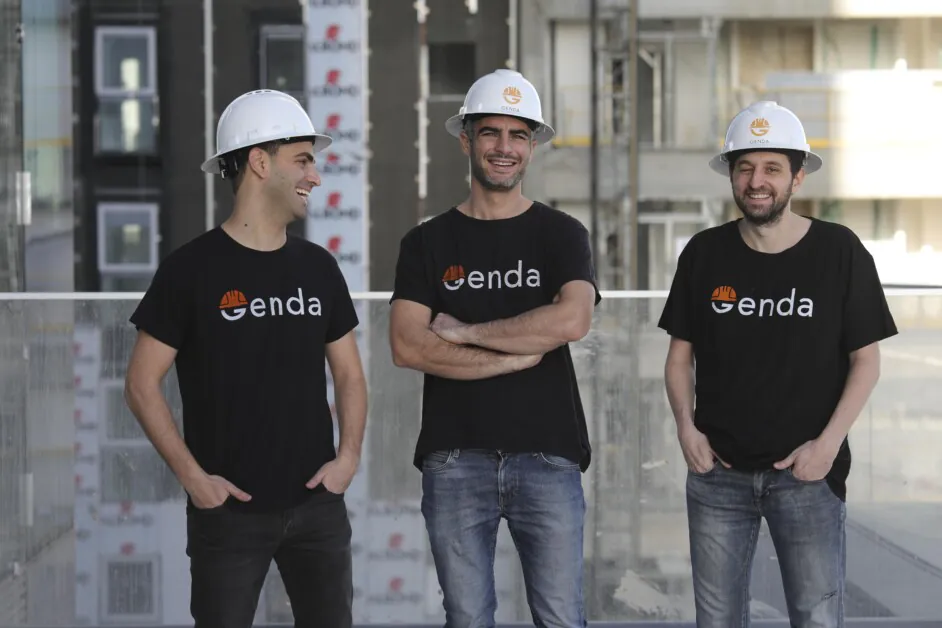
Today, Buildots, the Tel Aviv–based leader in AI-powered construction management, announced its acquisition of Genda, a workforce and safety management platform headquartered in Austin, TX. The move marks a pivotal moment for the construction industry—one where progress analytics and workforce intelligence converge under a single, AI-driven ecosystem.
This acquisition isn’t just another merger in the fast-growing world of construction tech. It represents a concrete step toward unifying the fragmented layers of site data—what is being built and who is doing the work—into one coherent intelligence framework. For decades, contractors have struggled to connect the dots between project schedules, real-time progress, and on-site workforce performance. Buildots and Genda are now attempting to close that gap for good.
Buildots: Turning Cameras and AI into Construction Intelligence
Founded in 2018 by Roy Danon, Yakir Sudry, and Amit Golan, Buildots emerged from Tel Aviv University’s engineering scene with an ambitious goal: to bring true data visibility to construction. Using computer vision and machine learning, the platform automatically tracks construction progress through visual data captured onsite.
Supervisors or engineers walk the site wearing helmet-mounted 360° cameras, which continuously record the evolving state of each floor or room. These images are uploaded to Buildots’ cloud platform, where AI algorithms compare them against the project’s Building Information Model (BIM) and schedule. The system identifies completed elements, detects deviations, and measures work-in-progress at a level of granularity human teams could never match.
The result is a near-real-time “digital twin” of construction progress—an evolving mirror of the physical site. Project managers can instantly see what’s ahead or behind schedule, and Buildots’ predictive models estimate delay risks, allowing proactive intervention before problems escalate.
Beyond static dashboards, Buildots also includes an AI assistant called Dot. This generative AI layer lets users ask natural-language questions like “Which rooms have completed electrical installations?” or “Where are we behind schedule on drywall?” Dot then surfaces insights from thousands of data points, helping managers make decisions grounded in factual site intelligence rather than guesswork.
This fusion of computer vision, data analytics, and generative AI has positioned Buildots as one of the most sophisticated platforms in construction management. Its technology is already being used on megaprojects such as data centers, semiconductor fabs, and battery factories—projects where even small inefficiencies can cost millions.
Genda: Bringing Workforce and Safety Visibility to the Jobsite
While Buildots focuses on what is being built, Genda focuses on who is building it. Founded in 2019 by Erez Dror and headquartered in Austin, TX, Genda has quietly become a trusted partner to major contractors, including DPR Construction, Clark Construction, Hensel Phelps, and JE Dunn.
The platform gives general contractors a real-time map of their workforce, tracking labor, equipment, and materials across the jobsite. Genda uses Bluetooth beacons, mobile apps, and location-based analytics to determine where teams are working, which tasks are active, and where inefficiencies might be forming.
This data does more than simply record attendance. Genda’s AI validates task execution, detects idle time, and correlates workforce movement with project milestones. If an area shows high worker density but little progress, it flags potential bottlenecks or safety issues. Similarly, if a scheduled trade crew fails to appear, the platform can immediately alert site supervisors.
Beyond workforce analytics, Genda has developed modules for safety management, hoist scheduling, and delivery coordination. It can automatically log lift usage, track wait times, send emergency alerts, and even help contractors substantiate change orders and insurance claims with verified data. By quantifying what historically relied on anecdotal reporting, Genda provides the kind of factual ground truth that modern contractors increasingly demand.
A New Era of Unified Productivity Intelligence
By acquiring Genda, Buildots gains a missing layer—human activity data—to complement its deep visual understanding of project progress. Together, they can create what Buildots CEO Roy Danon calls “unified productivity intelligence.”
In traditional construction workflows, project teams operate on fragmented data streams. Progress reports, workforce logs, and scheduling systems all exist separately, creating blind spots that delay decisions. With Buildots’ computer vision tracking combined with Genda’s workforce telemetry, these layers can now be interlinked.
For example, if Buildots detects that installation work in a specific area is lagging, it can cross-reference Genda’s workforce data to determine whether the delay stems from an absent crew, equipment shortage, or misallocation of labor. This integration turns what was once reactive management into proactive, data-driven decision-making.
Contractors will be able to test interventions—such as adding workers to a zone or resequencing tasks—and immediately see whether those changes improve productivity. Over time, the combined dataset could even train AI models to predict the best mitigation strategies for recurring problems.
According to Tal Morgenstern, Partner at Lightspeed Venture Partners and a Buildots board member, the merger could lead to “the world’s first foundation model for construction and the physical world.” In essence, Buildots aims to create a generalizable intelligence layer that understands how buildings are made—across contexts, geographies, and project types.
Challenges Ahead
Integrating two highly complex systems is never simple. One immediate challenge will be aligning Buildots’ visual data, captured in discrete image sets, with Genda’s continuous workforce telemetry. Ensuring that both data types correspond to the same physical spaces and time intervals will require careful synchronization and standardization.
Another challenge is workforce privacy. Genda’s detailed tracking raises legitimate concerns among labor groups about surveillance and data use. To succeed, Buildots will need to maintain transparency and demonstrate that these tools are about efficiency and safety, not micromanagement.
There is also the issue of interoperability. Construction firms rely on a patchwork of digital tools—from Procore to Autodesk Build—and integration fatigue is real. Buildots will have to position this unified platform as a net simplifier, not another dashboard in a sea of software.
Finally, data standardization across regions and project types remains a hurdle. A semiconductor plant in Arizona and a housing development in London produce very different data patterns. AI models trained on one may not easily generalize to the other, meaning Buildots will need to continue refining and localizing its algorithms.
What This Means for the Future of Construction
Today’s announcement signals a turning point for how construction data is gathered, understood, and acted upon. The merger of Buildots and Genda is part of a larger transformation—one where AI becomes the central nervous system of the built environment.
In the near future, contractors may operate with live digital twins that continuously update based on real-world conditions. Instead of relying on weekly progress meetings or manual inspections, AI will provide an always-accurate snapshot of what’s happening onsite. If a delay risk emerges, the system won’t just flag it—it will recommend or even automate mitigation actions.
Over time, this integration could extend into robotics and autonomous site operations. The same computer vision that recognizes construction progress could guide drones or robotic inspectors, while workforce data from systems like Genda could orchestrate machine–human collaboration with unprecedented precision.
Such advancements could reshape how infrastructure projects are delivered—especially those critical to national interests, like data centers, chip fabs, and renewable energy facilities. These are precisely the kinds of projects Buildots already serves, and where small efficiency gains translate into enormous cost savings and faster deployment of vital infrastructure.
Still, the goal isn’t automation for automation’s sake. It’s about augmenting human decision-making with precise, data-driven insight. By uniting progress tracking with workforce intelligence, Buildots and Genda are building a bridge between the physical and digital worlds of construction—a bridge that may ultimately redefine how we design, build, and manage the spaces we live and work in.



