
Interviews
Jonathan Kron, CEO of BloodGPT – Interview Series

 Add Unite.AI to your preferred sources on Google
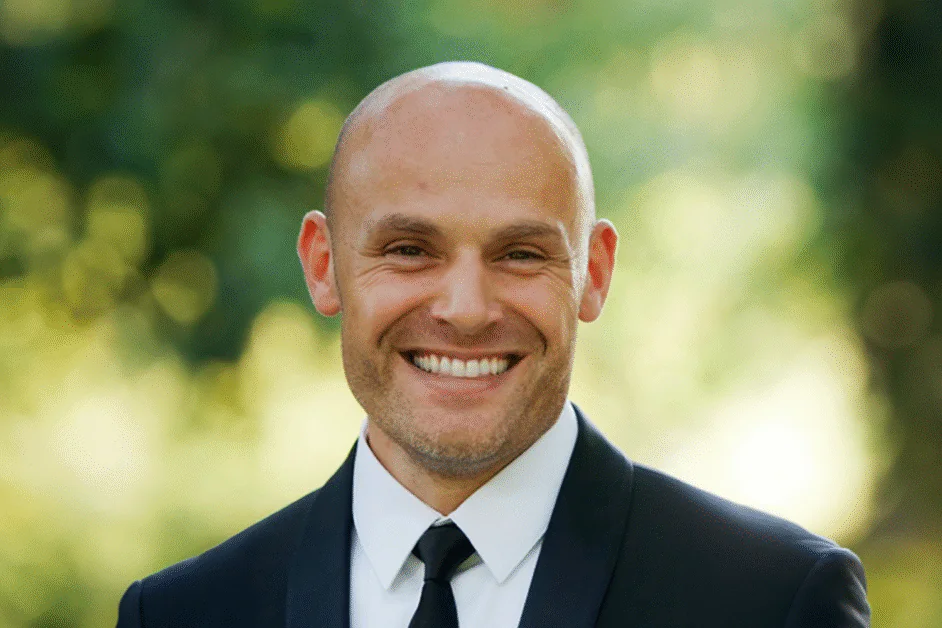
Jonathan Kron is the CEO of BloodGPT. He is a healthcare strategist and entrepreneur with 20+ years of experience building and scaling healthcare ventures. Before joining BloodGPT he founded and exited Med24, a London-based clinic (raised £5M, exited 2022), co-founded PCG, a Monaco-based healthcare-at-home startup that secured $1M+ in contracts on a $500K seed budget, and has advised digital health ventures including Klarity and LIPS Healthcare on major fundraising and growth.
BloodGPT is an AI-powered platform for diagnostic laboratories and clinics that integrates seamlessly into existing workflows, interpreting blood test results in seconds with 99.99% accuracy.
You’ve spent more than two decades building and scaling healthcare ventures. What personal experiences or industry pain points led you to BloodGPT?
I first heard about BloodGPT earlier this year from a colleague. The premise immediately resonated, both personally and from a business perspective. I’m someone who has always tracked my own bloodwork in spreadsheets, pulling numbers from PDFs and images, only to run into inconsistent units, reference ranges, and naming conventions. It was tedious and often unreliable. And deep down, I knew I couldn’t be the only one dealing with the frustration of receiving messy, fragmented, and inaccessible results from a doctor, lab or clinic.
For that reason, within days of learning about BloodGPT I was on a call with the founders and, by the end of it, I then became the CSO. After 20+ years working across clinics, startups, and health systems, I knew this was right up my alley.
BloodGPT addresses some pain points that I’ve seen repeatedly. People get test results, but access is fragmented, context is lost, and the process overwhelms already-stretched professionals. Think about this. Blood data is one of the richest signals of overall wellbeing, yet, it is still so underutilized.
So my rationale was that if we can combine AI and advanced data science with strong health knowledge, we can make that information usable in real time for everyone: individuals, health professionals, and entire systems.
BloodGPT promises 99.99% accuracy in interpreting blood test results and integrates directly into existing lab workflows. Can you walk us through how the platform was conceived and the key challenges you faced in bringing it to market?
Funnily enough, it all began with a neighborly conversation. Nikita Udovichenko, a biochemist and sports-nutrition consultant, kept seeing the same problem in his practice before co-founding BloodGPT. People would get their blood-test reports and have no idea what to do with them. His neighbor Vasilii Lazuka, a serial AI entrepreneur and now Co-Founder and CTO, immediately saw the potential. What began as a casual exchange quickly turned into a real project. Soon after, AI product development expert Nata Savaścienka joined as Co-Founder and CPO, and I came on board, working alongside them and drawing on my twenty years of experience building healthcare and data platforms.
From that point, the focus became to build a system that treats every number as verifiable data, not something a language model can guess. We designed a multi-layer architecture that normalizes each biomarker to LOINC codes — Logical Observation Identifiers Names and Codes, the international standard for reporting laboratory tests — verifies every unit with UCUM, the Unified Code for Units of Measure, and always defers to the lab’s own reference ranges.
From my 20 years working with healthcare professionals, I know how central trust is in this sector. That’s why, as we built BloodGPT, the toughest challenges we focused on were stability and trust. We need to remember that large models can give different answers to the same file, misread dates, or invent ranges. We made it our mission to ensure every output was reproducible and fully traceable to its source.
Today, the platform connects directly into laboratory workflows through FHIR APIs — Fast Healthcare Interoperability Resources, a modern standard that lets health-information systems share data securely and efficiently. It also works with legacy lab information systems, giving professional time back and providing individuals with immediate clarity.
Many patients are now turning to general-purpose LLMs for interpreting lab results. What risks do you see in that trend, and how does BloodGPT provide a safer, more reliable alternative?
General-purpose language models are not built for laboratory data. They can misread units, mix up dates, or invent reference values, and they don’t show when they’re uncertain. A patient can paste in results and get a polished answer that’s simply wrong. And the scary part is, it sounds so convincing you might not think to question it.
BloodGPT is trained and validated specifically for pathology workflows. Each value is tied to LOINC identifiers and checked against UCUM measurement standards, and the platform always uses the laboratory’s own reference ranges as the final benchmark. Multi-layer guardrails trace every output back to its source, so the same input produces the same, fully auditable result.
That purpose-built design, focused on reproducibility and transparent provenance, gives professionals and individuals a level of reliability that a general chatbot simply can’t provide.
Your career has spanned founding clinics, advising startups, and now leading an AI-driven healthtech company. How has your perspective on healthcare innovation evolved over this journey?
Early on, innovation meant bricks and mortar — building new facilities and services to cut waiting lists and streamline patient pathways. Later, it became about business models, which involves delivering care more efficiently, operations more sustainable, and improving the overall patient experience.
Today, though, the focus is intelligence and scale. AI opens possibilities that were unimaginable when I started, but one lesson has stayed constant. Technology, on its own, doesn’t transform healthcare. Systems, incentives, and adoptions do.
In this regard, my thinking has shifted from “How do we build?” to “How do we integrate?” I firmly believe that the companies that succeed won’t necessarily have the flashiest algorithms. They’ll be the ones whose tools seamlessly and quietly power the everyday routines of doctors, patients, and health systems.
A recurring theme in healthtech is the balance between automation and the human touch. How do you envision AI like BloodGPT reshaping the role of doctors—particularly in reducing burnout while still preserving judgment and empathy?
Doctors rarely burn out from caring for people. They burn out from the paperwork, the duplicated tests, the fragmented systems, and all the administrative tasks that pull them away from their patients. Every doctor I know would rather spend five minutes talking to a patient than filling out another form. That additional workload, unfortunately, keeps growing, and it erodes the time and energy they have for real clinical care.
BloodGPT was built to relieve some of that pressure. The platform takes over the heavy lifting involved in organizing and interpreting lab information and supplies clear, structured insights that fit into existing workflows. When those routine steps are handled automatically and reliably, physicians can devote more of their day to what only they can do, which is listening, exercising judgment, and building trust with the people they treat.
I do not believe AI will replace doctors. If anything, it allows them to return to the heart of their profession, spending more time in conversation and less time chasing data. That is where technology can quietly make medicine more human, not less.
One of your stated goals is saving clinics millions annually in efficiency gains. What are the most tangible cost-saving mechanisms BloodGPT delivers?
The savings come from three main areas.
First is time. Reviewing and communicating lab results is still a slow, manual process in many health systems. BloodGPT cuts the review and interpretation window from several minutes to a few seconds for every test. Across thousands of results each week, that translates into hundreds of clinician hours returned to patient care.
Second is continuity. The platform keeps a running history of every patient’s blood data, so trends and anomalies are easy to spot. That reduces duplicated testing and catches errors that might otherwise trigger unnecessary follow-up appointments or repeat labs.
Third is resource use. When information is delivered accurately and instantly, staff can focus on higher-value tasks and labs can operate with leaner support teams.
When you add those effects together, a mid-sized health system can see annual savings in the millions while also improving outcomes. In healthcare, it is unusual to lower costs and raise quality at the same time, and that combination is exactly what we are aiming for.
You’ve noted that short-term investor horizons often kill systemic innovation in healthcare AI. How do you think founders and investors can align to ensure long-term impact?
It begins with a shared mission. If an investor is looking for a twelve-month flip, healthcare is the wrong arena. This sector demands patience, strict compliance, and years of trust-building.
Founders have a role to play in setting expectations. They need to explain regulatory timelines, adoption cycles, and the realities of reimbursement so that partners understand why progress can look slow from the outside.
Investors, for their part, should back milestone-based growth and resist chasing vanity metrics. The companies that truly change healthcare AI will be built by partners who are willing to think on a five- to ten-year horizon, and stay committed for the full journey, not just the first uptick in valuation or a quick exit.
With regulations tightening around AI in healthcare, how is BloodGPT approaching compliance, safety, and trust-building with both clinicians and patients?
From the beginning we treated responsible design as part of the product, not an afterthought. Our team follows the major privacy and security standards used in healthcare and keeps a close watch on evolving regulations in the United States, Europe, and other key markets. Our focus is on strong data-handling practices, transparent algorithms, and outputs that can be fully audited.
As I mentioned earlier, trust was our biggest challenge at the start, and it has stayed our north star. For us, it is about more than ticking regulatory boxes. Professionals can see where every value comes from and how it was processed, which gives them confidence in the information. Patients value the same clarity. BloodGPT is a tool for organizing and presenting their own results, not replacing the role of a clinician. In that sense, safety and trust are not features we add on later. They are the product itself.
Looking forward, do you see AI interpretation expanding beyond blood tests into other diagnostic areas—and if so, where do you think the biggest breakthroughs will come first?
It is already underway. Radiology, genomics, and ophthalmology have moved well past the experimental stage. In these fields, AI systems are helping identify early cancers on scans, analyze complex genetic variants, and flag signs of diabetic retinopathy in retinal images. In each case, the output goes to a qualified clinician for review, so the professional remains in control of the final decision.
The next wave will be about connection and integration rather than single domains. Consider that imaging, genomics, wearables, and laboratory data are still treated as separate streams. AI will increasingly bring them together, correlating subtle signals — a blood marker, a genomic variation, a pattern from a wearable — to reveal risk long before any one test could.
The real breakthrough will be this kind of integration: one layer of intelligence linking multiple inputs to give doctors and patients a continuous, real-time view of health and risk. That shift from episodic care to predictive, proactive care is where the greatest impact lies.
Finally, what excites you most about the future of AI in healthcare, and what role do you see BloodGPT playing in shaping that future?
What excites me the most, frankly, is what I was just discussing regarding the move from reactive to proactive healthcare. For decades, we have waited for people to become ill before we step in. Yes, prevention and personal responsibility have always been part of the conversation, but AI can finally make that vision practical, by identifying risk earlier, guiding healthier choices, and personalizing information at a scale we have never seen before.
BloodGPT is designed to be part of that foundation. Blood data is the most common and widely available health signal, yet, it is often underused. By making that information easier to understand and act on, we help transform raw numbers into clear insight, and insight into healthier lives. At the end of the day, that’s the simple goal. Take something complex and turn it into something people can use. We are laying the groundwork for the kind of care people will need in the years ahead, all while also making everyday healthcare better right now.
Thank you for the great interview, readers who wish to learn more should visit BloodGPT.



