
Interviews
Dan O’Toole, Chairman and CEO of Arrive AI – Interview Series

 Add Unite.AI to your preferred sources on Google
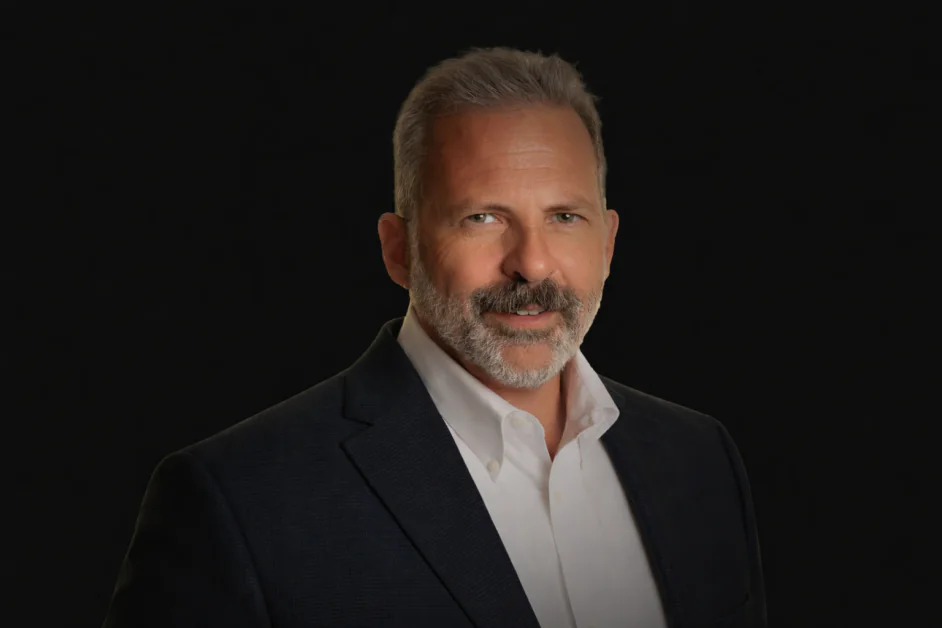
Dan O’Toole, Chairman and CEO of Arrive AI (ARAI ), is a serial entrepreneur and inventor with a track record spanning commercial services, real estate, plus autonomous delivery innovation. Since founding Arrive AI in 2020, he has guided the company’s evolution from its original DRONEDEK concept into a broader AI-driven logistics platform, building on patents he began developing as early as 2014 to address the challenge of secure drone delivery. He also served as CEO and Managing Broker of Striker Realty Group and earlier founded Facility Maintenance USA, showing a consistent focus on scalable service businesses. O’Toole’s career reflects a pattern of identifying operational inefficiencies, particularly in logistics plus infrastructure, then developing technology-driven solutions, culminating in his leadership of a company positioned at the intersection of AI, robotics, plus last-mile delivery.
Arrive AI is a technology company focused on transforming last-mile logistics through artificial intelligence plus autonomous delivery infrastructure. Its core innovation is the “Arrive Point™,” a patented smart delivery endpoint that enables secure, trackable exchanges of goods between people, drones, robots, plus traditional couriers. The platform combines real-time tracking, chain-of-custody controls, plus AI-driven logistics insights to reduce delivery failures, theft, plus inefficiencies while optimizing routes plus operations. Originally conceived as a smart mailbox for drone deliveries, the system has evolved into a broader “Mailbox-as-a-Service” plus data platform designed to support entire autonomous delivery networks, positioning Arrive AI as foundational infrastructure for the future of automated logistics.
You previously founded DRONEDEK, a company focused on secure smart delivery boxes for drones and autonomous drop offs. What specific limitation in last mile delivery pushed you to evolve that concept into Arrive AI, where the focus is now on verified and secure handoffs in complex environments like hospitals?
DRONEDEK did not disappear. It evolved into Arrive AI as a strategic rebrand that better reflects the full scope of what we are building.
When we started DRONEDEK, the focus was on solving where a package lands with secure, climate-assisted delivery points for drones and autonomous drop-offs. As we moved into real-world deployments, it became clear that the bigger problem was not the drop. It was the handoff.
In last mile delivery, especially in healthcare logistics, it is not enough to know a package arrived. You need to verify who received it, when it was received, under what conditions, and whether it remained secure the entire time. That is the difference between convenience and accountability.
Arrive AI reflects that expanded vision. We shifted from thinking about containers to creating a verified exchange layer because in complex environments, the last inch of the last mile is what truly matters.
Many robotics companies focus on getting a package from point A to point B, but your platform is built around what happens at the moment of delivery. Why is the handoff layer the most difficult and overlooked problem, especially in healthcare?
Yes, many robotics and autonomous delivery companies focus on transportation from point A to point B. However, the system breaks down if the final handoff is not trusted and verifiable.
The handoff is where digital systems meet the physical world. It involves human interaction, unpredictable environments, and high variability. In healthcare, even small errors can have serious consequences.
The industry has overlooked this layer because it requires integration across hardware, software, identity verification, and workflow design. Without solving the handoff, there is no complete delivery system. There is only partial automation.
Arrive Point acts as a secure interface between humans, robots, and drones. Can you walk us through how your system technically ensures a verifiable chain of custody from dispatch to final receipt?
The Arrive Point™ Network treats every delivery as a secure and traceable transaction.
From dispatch to final receipt, the system captures and verifies key events:
- Authenticated access ensures only authorized users or systems can interact with the delivery
- Secure containment protects the contents physically
- Environmental monitoring tracks conditions such as temperature in real time
- Event logging records every interaction with timestamps
- AI-powered verification uses sensors and computer vision to confirm the correct exchange
This creates a digital record of truth and a verifiable chain of custody that supports healthcare, logistics, and regulated environments.
You have already deployed inside a live hospital environment. What were the biggest real-world challenges that did not show up in simulations or early prototypes?
Hospitals operate in highly dynamic and complex environments.
Challenges that did not fully appear in simulations included:
- Constant interruptions and changing workflows
- Staff working under time pressure with little tolerance for friction
- Physical constraints such as narrow hallways and legacy infrastructure
- The need for intuitive systems that require minimal training
We learned that technology must integrate seamlessly into existing workflows. If it slows staff down or requires extra effort, it will not be adopted.
Healthcare logistics involves strict regulatory requirements around medications, lab samples, and sterile materials. How does your system maintain compliance while still enabling autonomous and unattended workflows?
Healthcare compliance is built into the system design.
Arrive AI supports:
- Access control and authentication for sensitive materials such as medications
- Complete audit trails for every delivery transaction
- Environmental integrity for temperature-sensitive items
- Secure containment to prevent tampering or contamination
The goal is to enable autonomous delivery workflows while maintaining full regulatory compliance and accountability.
Interoperability is a major challenge in robotics. How does Arrive AI integrate with different robot vendors, drone systems, and existing hospital infrastructure without creating new silos?
Interoperability is a core principle of the platform.
Arrive AI functions as a universal interface layer:
- API-based integrations connect with multiple robotics and drone vendors
- Compatibility with hospital systems and enterprise infrastructure
- Hardware designed to receive deliveries from different autonomous systems
- This approach prevents vendor lock-in and allows organizations to scale without creating new silos
Your platform combines physical infrastructure with AI orchestration. How do you balance hardware reliability with software intelligence to ensure the system works consistently in high-stakes environments?
Both hardware and software are critical to system performance.
The physical infrastructure must be highly reliable and consistent in all conditions. This ensures that every delivery interaction functions as expected.
The AI layer adds intelligence through verification, optimization, and adaptability. It enhances the system but does not replace the need for dependable hardware.
The result is a system where hardware ensures execution and software ensures validation and insight.
Hospital staff often spend hours each day moving supplies and specimens. What impact have you seen in terms of reducing this burden and improving time spent on patient care?
Hospital staff spend a significant amount of time transporting supplies, lab samples, and medications.
Arrive AI reduces this burden by:
- Automating internal logistics workflows
- Reducing manual transport tasks
- Minimizing workflow interruptions
This allows healthcare professionals to spend more time on patient care and less time on operational tasks. The impact is both efficiency and improved staff focus.
Trust is critical in clinical settings. How do you design the system so that staff can confidently rely on autonomous deliveries without second guessing whether a handoff was completed correctly?
Trust is established through consistency, visibility, and verification.
The system is designed so that:
- Every delivery action is recorded and verifiable
- Every transaction has a clear digital record
- Every interaction is consistent and repeatable
- When users can rely on accurate data and predictable outcomes, confidence in the system increases. Trust is built through performance over time.
Healthcare is an obvious starting point, but the underlying problem of secure autonomous handoffs exists in many industries. Where do you see this infrastructure becoming essential next, and what does that future look like?
Healthcare is the starting point because it has the highest requirements for security, compliance, and reliability.
The same need for secure and verified handoffs exists across many industries:
- Retail and e-commerce delivery
- Supply chain and logistics operations
- Government and public safety applications
- Enterprise campuses and smart city infrastructure
Arrive AI is building core infrastructure for the autonomous delivery economy. As robotics and automation scale, secure exchange points will become essential for connecting physical delivery with digital verification systems.
This is how autonomous delivery moves from concept to critical infrastructure.
Thank you for the interview, readers who wish to learn more should visit Arrive AI.



