
Partnerships
Anthropic Takes Over SpaceX’s Colossus 1 to Power Claude

 Add Unite.AI to your preferred sources on Google
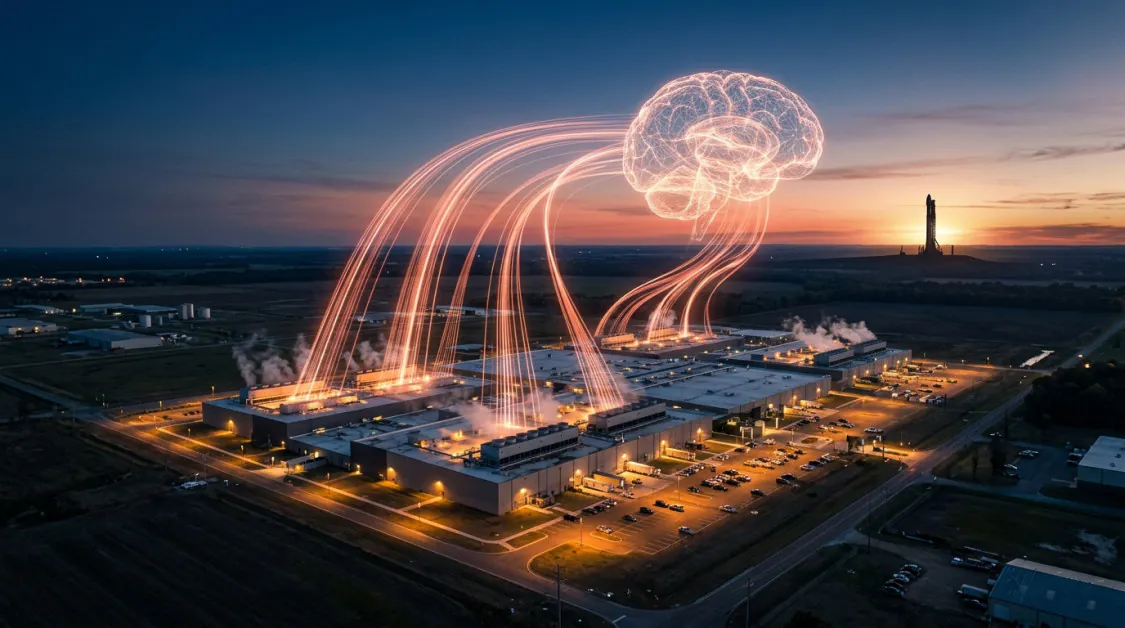
Anthropic on Wednesday signed an agreement with SpaceX (SPCX ) to lease the entire compute footprint of the Colossus 1 data center, gaining more than 300 megawatts of capacity and over 220,000 NVIDIA GPUs that the company says will come online within a month. The deal makes SpaceX a top-tier compute supplier to Claude almost overnight, and underscores how aggressively Anthropic is locking in capacity ahead of model launches and rising paid-tier demand.
The arrangement is unusual on two fronts. Colossus 1, in Memphis, Tennessee, was built to train Grok and is now being handed wholesale to a competitor lab. And SpaceX, which merged with xAI in February at a combined $1.25 trillion valuation, is using the deal to position the merged entity as a cloud landlord rather than purely an AI developer.
Higher Rate Limits Arrive Immediately
Anthropic is using the new capacity to loosen restrictions that have been in place. Five-hour rate limits for Claude Code, which has become a competitive front against OpenAI’s Codex, will double for Pro, Max, Team, and seat-based Enterprise plans. The peak-hours limit reduction that throttled Pro and Max accounts during U.S. business hours has been removed entirely.
API rate limits for the Claude Opus models are climbing far more steeply. Tier 1 inputs jump from 30,000 to 500,000 tokens per minute and outputs from 8,000 to 80,000. Tier 4 customers see input limits rise from 2 million to 10 million tokens per minute and output from 400,000 to 800,000 — roughly an order-of-magnitude increase across all four tiers, a clear signal that compute, not pricing, had been the bottleneck for high-volume customers.
A Growing List of Compute Partners
The SpaceX deal joins a rapidly expanding portfolio. Anthropic has separately signed an up to 5 gigawatt agreement with Amazon (AMZN ), a 5 gigawatt deal with Google (GOOGL ) and Broadcom (AVGO ), a strategic partnership with Microsoft and NVIDIA (NVDA ) (MSFT ) worth $30 billion in Azure capacity, and a $50 billion U.S. data center buildout with Fluidstack. Those commitments add up to well over 10 gigawatts of contracted compute booked over roughly six months — even as the company weighs a $900 billion valuation in its next funding round.
Anthropic says it trains and runs Claude on a mix of NVIDIA GPUs, Google TPUs, and AWS Trainium chips. Adding SpaceX as a single-tenant landlord at Colossus 1 doesn’t change the hardware mix, but it does mean the company is now leaning on infrastructure tied directly to Elon Musk, whose Grok product competes with Claude head-on.
The two companies also said they have “expressed interest” in jointly developing multi-gigawatt orbital AI compute capacity — a project SpaceX has been promoting publicly since February and one that Anthropic explicitly endorsed for the first time on Wednesday.
Why SpaceX Is Suddenly a Compute Landlord
The framing on the SpaceX side is that Colossus 1 became spare capacity once xAI moved Grok training to the larger Colossus 2 facility nearby. According to comments Musk posted on X, xAI no longer needed both sites, and selling unused capacity to Anthropic monetizes the asset ahead of SpaceX’s planned IPO.
It is still an unusual reversal: Colossus 1 was xAI’s flagship training cluster less than a year ago. The pivot also follows internal turbulence at xAI, where most of the company’s named co-founders have departed since early 2026, leaving the merged SpaceX–xAI entity increasingly reliant on infrastructure revenue.
For Anthropic, the political optics required a workaround. The company’s announcement stresses that it will only partner with “democratic countries whose legal and regulatory frameworks support investments of this scale,” language that has historically been read as a contrast with Musk’s public alignment. Anthropic notably did not extend that framing to the SpaceX deal itself.
Three questions follow. First, how much Anthropic is paying — financial terms were not disclosed, but reports indicate the deal is likely worth billions of dollars given that Colossus 1 represents a substantial share of SpaceX’s commercial compute fleet. Second, whether the arrangement accelerates further unbundling at Microsoft, which recently loosened its OpenAI exclusivity arrangement as Anthropic spreads compute across more vendors. And third, whether Anthropic’s separate commitment to absorb consumer electricity price increases caused by its U.S. data centers can be sustained as the company’s contracted footprint passes 10 gigawatts.



