
Thought Leaders
AI’s Role in Curating Memory, Identity and Legacy

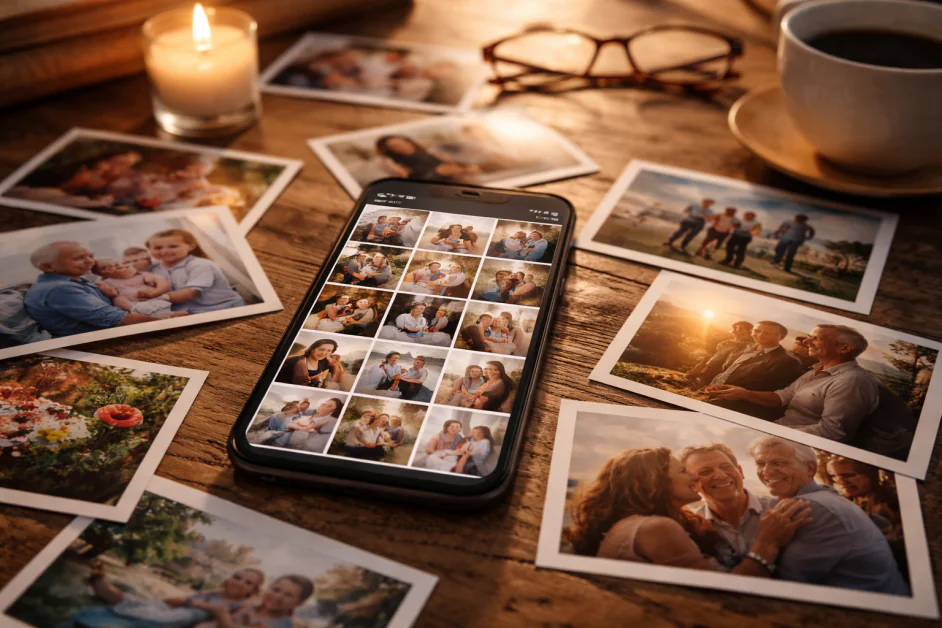
Humanity now takes more photos every two minutes than were captured in the entire 19th century. Billions are created daily. For many individuals, a single smartphone contains 10,000, 20,000, sometimes 50,000 images, and that number only continues to grow. To a machine, this is an image dataset of extraordinary scale. To a human, it’s something else entirely.
It’s a record of new arrivals and milestone birthdays, hospital visits and holidays, weddings and funerals. It holds the last photograph of a grandparent, the first image of a newborn child, the blurred snapshot taken moments before an accident. These images are not simply files to be classified, but fragments of personal identity.
For those of us building AI that works directly with people’s photo libraries, this scale creates a very particular challenge. We’re no longer building tools that manage media libraries. We’re designing systems that influence how people revisit and remember their lives. And that shift, combined with unprecedented data scale, demands a fundamentally different trust model.
Sensitive content is part of ordinary life
Computer vision technology is often used to detect faces, smiles, landmarks and activities. When we apply those techniques to personal photo libraries, they can cluster similar photos, suggest highlights and generate ‘memories’ to revisit and reflect on.
Personal photo libraries are becoming increasingly diary-like. Many of us instinctively reach for our phones to capture everyday moments, knowing they will be stored – even if we never return to them. In that sense, our photo libraries become unfiltered records of life as it unfolds, containing moments that are joyful, painful or mundane.
At a small scale, automated photo organisation feels straightforward and helpful. But personal libraries now often contain tens of thousands of images. In practice, systems like these must make thousands of small decisions on a user’s behalf: which faces to prioritise, which photos best represent a year, and which moments deserve resurfacing. At that scale, even a tiny error rate becomes emotionally meaningful. A 1% misclassification rate across a library of 20,000 photos could result in hundreds of images being surfaced in the wrong context or misinterpreted altogether.
One thing you learn quickly when working with real photo libraries is how often sensitive moments appear alongside everyday ones. Hospitals, funerals, moments of distress – alongside product choices that favour restraint. But just as important is recognising the limits of automated interpretation.
Perfectly understanding the meaning an image holds for a specific individual is rarely possible. The role of AI is not to determine meaning on someone’s behalf, but to help surface moments people may want to revisit and reflect on in ways that feel appropriate to them. In a world where digital tools increasingly shape how we organise our lives, photo albums remain deeply personal.
Where processing happens matters
There’s also a structural question about how and where images are processed. Cloud-based AI systems aggregate and analyse vast quantities of data remotely – a model that has enabled extraordinary advances in capability.
When dealing with private photo libraries, however, the emotional sensitivity is far greater. Images of children, intimate family moments, and even end-of-life experiences are among the most personal records people possess. Anyone building technology that interacts with this kind of data quickly realises that the architecture decisions are not purely technical. Sending images to remote servers for analysis can feel intrusive, even when strong safeguards exist.
Advances in mobile hardware are making it increasingly feasible to process large photo libraries directly on device. This allows sophisticated image understanding without exporting entire collections to the cloud. In this context, technical architecture becomes a reflection of values. The decision about where processing occurs can directly influence how much control individuals retain over their own memories.
The ethics of automated memory
When AI curates photos, it’s influencing how people remember their lives. A system that selects “best of the year” images implicitly decides which moments matter most. A feature that highlights certain faces more frequently may subtly shape how relationships are visually prioritised.
Unlike errors in advertising optimisation or logistics forecasting, mistakes in memory curation are personal. A poorly timed resurfacing of an image can unexpectedly revive grief. A meaningful relationship might be underrepresented simply because an algorithm failed to recognise its importance. Over time, these automated selections can quietly influence how people narrate their own lives.
This raises difficult questions. Should an algorithm decide which photos best represent someone who has passed away? Should it suppress images it considers distressing, or leave that choice entirely to the user? How should it behave when it cannot confidently determine whether a scene is celebratory or somber?
Ethical design in this space depends on humility. Systems should be transparent about when AI is making selections and make it easy to review, edit and override automated choices. Confidence thresholds for surfacing potentially sensitive content should be set with particular caution.
Trust as a human requirement
Public debates around AI ethics often focus on misinformation, bias or large-scale model training. Those conversations are of course necessary and important. But beyond the headlines, there’s another, less visible dimension of AI ethics playing out in family homes every day.
Only a small number of teams are currently building AI systems that curate personal photo libraries at global scale. We are making decisions that influence how millions of personal histories are organised and remembered.
When someone opens their photo library, they’re engaging with their own story. If AI systems handle that story carelessly, the impact can be intensely personal. A poorly timed notification or an insensitive automatic montage can reopen wounds that have taken years to heal.
Working in this space makes that responsibility feel unusually tangible. Designing AI for personal photography therefore requires a different mindset – especially as the scale of photo capture continues to grow. Emotional sensitivity cannot be bolted on after deployment, and privacy cannot be treated as a background setting. These considerations must shape the system from the outset.
As AI capabilities continue to expand, the temptation will be to automate more of our digital lives. In the realm of personal photos, however, progress should be measured differently. Rather than efficiency or optimisation, success lies in building systems that recognise the emotional weight carried by the images they touch.
Our photos document who we are and who we have been. Any AI entrusted with them must recognise that it is operating in one of the most human spaces technology can enter.



