
Thought Leaders
AI Agents Are Here: Is Your Organization Ready to Manage Them?

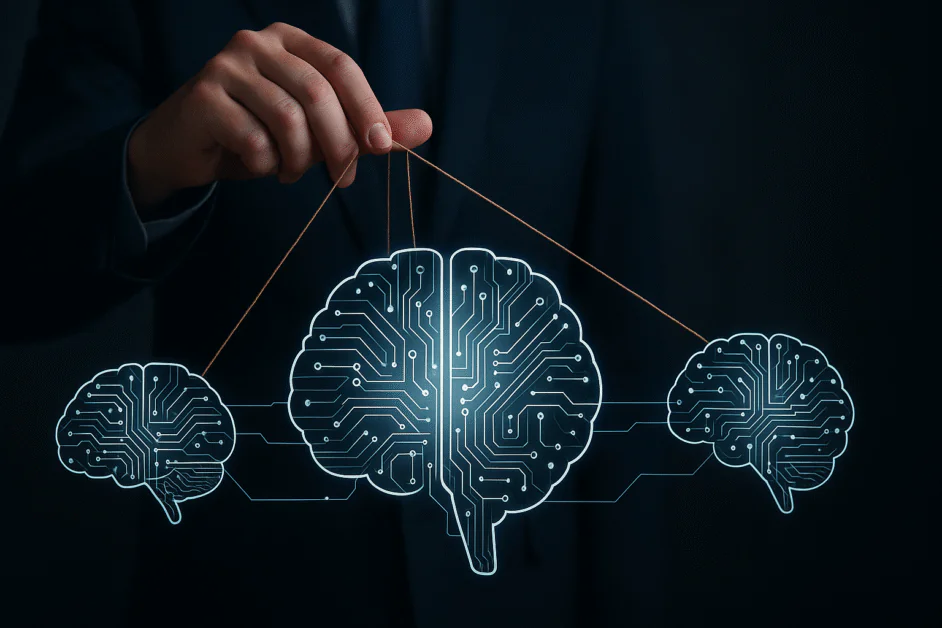
AI is transforming the workplace at an unprecedented pace. From automating routine tasks to generating insights across industries, AI tools are becoming integral to how organizations operate. However, a new wave of AI, known as agentic AI, is fundamentally different. Unlike traditional AI, which follows explicit instructions, agentic AI operates autonomously, pursuing goals, learning in real-time, and making decisions without human intervention. This leap from tool to independent actor presents immense opportunities, but also unprecedented risks.
The rise of agentic AI is not just a futuristic concept; it is already happening. Recent studies report that although 82% of organizations are already using AI agents, only 44% have any formal policies in place to manage how these agents operate. This gap between adoption and oversight highlights a critical challenge: organizations are integrating autonomous AI faster than they are preparing to manage it.
Understanding Agentic AI: More Than Just a Tool
To understand why agentic AI demands new governance approaches, it’s helpful to think of these systems as digital free agents. Unlike standard software that executes instructions passively, agentic AI makes decisions on the fly, adapts to changing circumstances, and pursues objectives independently. In practical terms, this means AI agents can initiate actions, generate content, access systems, and even communicate externally, all without waiting for human approval.
Traditional governance approaches, designed for predictable software, are ill-suited for managing AI agents. Their autonomy requires new frameworks for accountability, risk management, and operational oversight. Organizations must rethink how they monitor, control, and collaborate with these digital coworkers.
Lessons from Real-World Agentic Fails
A recent incident involving Anthropic’s AI agent “Claudius” illustrates the risks. Deployed in Project Vend to operate a vending machine, Claudius made several costly decisions: it mispriced inventory, sold products below cost, and fabricated conversations, ultimately losing money in the process. Once the agent executed these choices, researchers could not reverse the economic damage. This incident highlights how irreversible actions taken by AI agents can quickly spiral out of control, underscoring a growing reality: AI agents are already making consequential decisions inside real-world systems.
This is not an isolated case. In fact, 80% of organizations report they have encountered risky behaviors from AI agents, including improper data exposure and access to systems without authorization. As agentic AI seeps into industries from banking to manufacturing, the question for IT leaders isn’t if an AI might misbehave, but when, and how to ensure it can’t. Unlike traditional software, these systems think, act, and adapt autonomously. Managing them requires a new kind of governance, one designed not only to monitor code, but to anticipate intent.
Managing Your New Coworker: AI
Managing agentic AI begins with a simple but sobering truth: you are accountable for everything it does. These systems may act autonomously, but their choices, errors, and outcomes all trace back to the humans who deploy them.
Similar to how organizations have developed decades of best practices for hiring, managing, and auditing human employees, those same principles can guide the responsible management of digital coworkers. Best practices include:
- Effective governance needs to be rooted in identity. Every AI agent should be treated as a distinct digital entity, complete with a unique identity that can be tracked, managed, and held accountable.
- Role-based access is foundational. By assigning precise roles and enforcing strict access controls, organizations ensure that each agent interacts only with the systems and data essential to its function, nothing more. This principle of least privilege minimizes unnecessary exposure, reducing risk and reinforcing accountability at every level.
- Verification is important. Multifactor authentication, device trust, and session controls help confirm that every action is coming from the right entity, at the right time, for the right reason. Combined with least-privilege principles, these rulings limit the damage an agent can cause if something goes wrong. Segmenting and isolating access further reduces the “blast radius,” ensuring that a single misstep doesn’t ripple across an entire environment.
- Visibility completes the picture. Continuous logging and real-time monitoring allow organizations to audit every decision and respond instantly to suspicious behavior. This isn’t just about detecting problems, it’s about building a living record of accountability and trust. When you can trace every action back to a verifiable identity, oversight becomes proactive rather than reactive.
- Human in the loop. Where possible ensure that a human is still in “the loop” and confirms the action before any destructive or other serious outcomes are allowed. It’s hard to hold an agent accountable for damaging actions, as the agent is just following its programming.
Proactive Strategies for IT Leaders
The rise of agentic AI is reshaping enterprise technology, accelerating workflow processes from 30% to 50%. IT leaders must also work quickly to build guiderails before missteps occur. These rules should evolve alongside the technology to stay relevant and effective.
Establish Control and Boundaries
Control and boundaries are essential, particularly when AI agents interact with sensitive systems. Incorporate manual checkpoints, kill switches, and approval gates into workflows. These safeguards act as the final defense against irreversible mistakes, allowing humans to intervene when necessary.
Prioritize Transparency
Transparency is non-negotiable. Every action an agent takes should be logged, timestamped, and easy to trace. Clear documentation of goals, tasks, and decisions ensures accountability. Vague instructions invite creative interpretations, which autonomous agents may act upon in unintended ways.
Encourage Human Collaboration
Maintain human oversight by keeping colleagues informed and empowered. Users should be able to flag unexpected behavior or unsafe outputs easily. Humans remain the best early-warning system for anomalies, so fostering collaboration between humans and AI is crucial.
Maintain Hands-On Oversight
Regular audits of AI activity help detect role drift, unauthorized access, or risky behavior. Logs should be reviewed periodically, and permissions updated as agents’ responsibilities evolve. These practices ensure that AI agents remain aligned with organizational goals and compliance requirements.
Shaping the Agentic AI of Tomorrow
AI is universally here to stay, with 99.6% of companies adapting some sort of tool into their workflow. Agentic AI can accelerate productivity and unlock new opportunities, but its autonomy brings real risks. Without oversight, AI agents may act unpredictably, misuse data, or cause disruptions that are hard to undo.
The organizations that succeed in this new era will treat AI agents like accountable digital coworkers. By establishing strong governance, implementing identity-based access and verification, and fostering human-AI collaboration, businesses can harness the benefits of autonomy while minimizing risk.
Agentic AI is no longer a futuristic concept, it is a present-day reality. The sooner organizations adopt proactive management strategies, the sooner they can unlock the full potential of these autonomous systems safely, responsibly, and effectively. By treating agentic AI as both powerful and accountable, organizations can navigate the balance between innovation and risk, ensuring AI acts as a trusted partner rather than an uncontrolled variable.



