
Interviews
Adam Sadilek. Founder and CEO of AIM – Interview Series

 Add Unite.AI to your preferred sources on Google
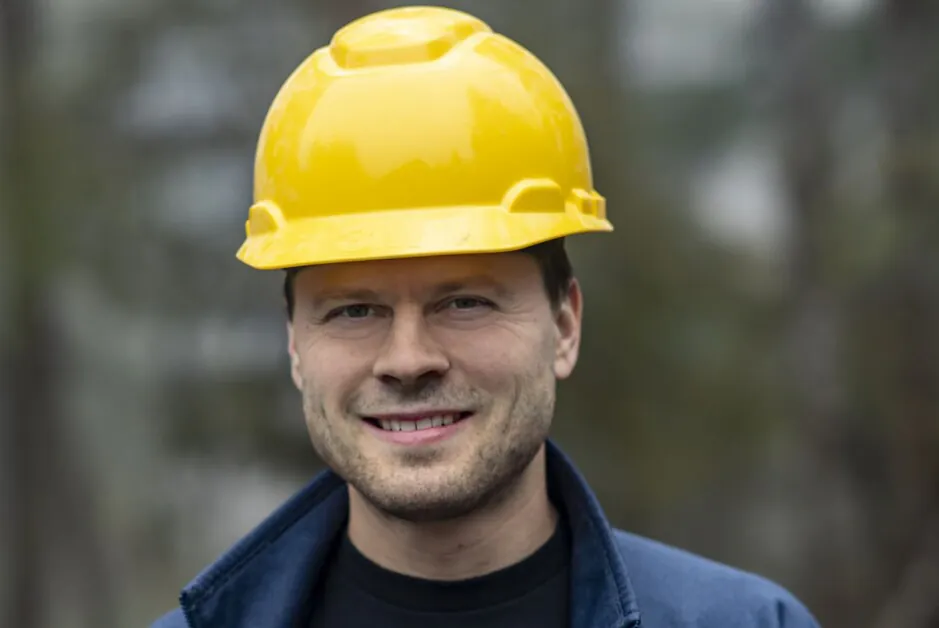
Adam Sadilek is the Founder and CEO of AIM. As a kid, he was obsessed with robotics and automation—driven by a desire to build systems that learn on their own and make physical work smarter, faster, and safer. That early fascination led him to Google (GOOGL ), where he contributed to groundbreaking work on planetary-scale AI and autonomous vehicles, which later evolved into Waymo. Recognizing an untapped opportunity, he founded AIM to bring autonomy to earthmoving — a sector that underpins nearly all human infrastructure yet has seen little automation since the advent of hydraulic machinery.
AIM is pioneering the world’s first AI-powered platform for heavy equipment, transforming how earth is moved at scale. By combining advanced perception, planning, and control systems, AIM automates excavation, grading, and material movement across construction, mining, and climate resilience projects. The company’s technology addresses critical global challenges such as labor shortages, infrastructure modernization, and disaster preparedness—laying the groundwork for a future where autonomous machines can build both on Earth and beyond.
You spent more than a decade at Google[x], working on major AI initiatives including what became Waymo. Which specific experiences during that period convinced you that automating the physical world — not just digital environments — was the right frontier?
I had the privilege to join Google right after getting my PhD in AI. Working at Google[x] and Alphabet (GOOG ) gave me hands-on experience to see the potential of AI in real-world environments. But it wasn’t until I shifted into building physical infrastructure projects that I truly realized how much of a game-changer automation could be in the built world.
Seeing how challenging it was to move earth, soil, and material every day – even for experienced builders – brought me to that lightbulb moment: no one was tackling this essential problem in a scalable way. Autonomous earthmoving would not only radically uplevel the safety of ground staff and accelerate massive industries like mining, construction, and civil works, but could also solve some of our planet’s greatest challenges, like terraforming and undoing the damage historically done to our planet.
So during the pandemic, I started converting manual machines into autonomous ones in my garage, and that’s where AIM was born.
With AIM Intelligent Machines you’ve chosen a sector that has seen little robotics or autonomy since the introduction of hydraulic machinery. Can you describe the pivotal moment or insight when you decided it was time to launch AIM?
Everything that we build, that we rely on day to day, starts with dirt. From the device you are reading this on now to the buildings, roads, and machines we use every day, all of it is either mined or grown, and our ability to move earth is key to all of that.
I realized firsthand working in construction that earthmoving industries like mining and construction have seen little of the technology and automation that had transformed other industries. While warehouses had conveyor systems, factories automated assembly lines, and shipping containerization and tracking systems – the methods that we use to move large amounts of earth haven’t really changed in a long time.
I also began to understand the immense demand to improve earthmoving as well. Operating heavy machinery is one of the most dangerous jobs in the world, leading to both acute and chronic labor shortages for skilled workers (the construction industry must add nearly 1 million workers over the next two years to meet project demand). There is also an incredible need across the globe for autonomous earthmoving to improve everything from material supply chains to constructing superior infrastructure, remediating hazardous waste areas, and reversing the negative impact of climate change on the planet.
All of this led me to the revelation that our civilization needs autonomous earthmoving. We need the vision, speed, and intelligence to reshape the planet with precision and scale to address the planet’s biggest challenges and opportunities. That is what led me to launch AIM and what we are solving.
Autonomy for mining or construction-equipment presents immense complexity: rugged terrain, unpredictable conditions, heavy machines built for decades. What were the key technical breakthroughs that made your platform possible — in sensing, mapping, machine-learning, or integration?
Designing embodied AI to move earth, in some of the hardest conditions on our planet, isn’t easy. Not only did we need to design for environments where there are no roads, street lanes, or other rule structures for AI to follow – we also had to develop systems capable of doing this in places with extreme heat and cold, darkness, poor to nonexistent internet connectivity, and weather events such as snow, hail, or sandstorms.
One of the key technical breakthroughs for AIM was addressing the challenge of sensing and mapping in rugged environments. Sensor technology can be prone to breaking when equipped on machines that experience a lot of vibration and impact. So what we’ve done is eliminate those fragile parts and embedded all of AIM’s compute and critical components into a proprietary armored structure, which is also sealed to prevent debris and sand from getting in. We then also weld sensors within the actual skeleton of the machine to provide even more durability.
This ruggedness, in combination with powerful end-to-end learning on board, is what enables AIM to automate earthmoving tasks in some of the most extreme environments, at real production work sites around the world. There is a huge level of difference between a prototype and a system deployed commercially with some of the world’s largest miners, builders, and branches of the US government, who count on it every day across their sites.
AIM’s strategy is to retrofit existing heavy machines with sensors, LiDAR, and cameras. Why did you opt for leveraging legacy equipment rather than developing entirely new autonomous machinery from the ground up?
The simple answer is we want automation to be accessible to all earthmoving operations today. Site and asset managers have already invested millions to billions in heavy machinery fleets. Just one of these machines often costs more than $1 million and has a long operating life. So it’s just not feasible nor sustainable to replace entire fleets with new machines to go autonomous.
Our retrofit-first approach addresses hundreds of thousands of these legacy machines in operation around the globe. AIM enables organizations, big or small, to instantly turbocharge their capabilities to improve material supply chains, build infrastructure, protect and restore areas threatened or damaged by natural disasters, and beyond. This is unlocking the power of automation for operators at the speed and scale it’s needed for today, not 10 years into the future.
In parallel, we often deploy the same hardware, software, and AI in partnership with channels, distributors, and even OEMs who make the amazing hydraulic machines we turbocharge with the AIM autonomy platform running on top of these fleets. So it’s about maximum safety, value creation, joint customer success, and optionality for the massively important ecosystems.
Your platform uses end-to-end learning so machines can “learn themselves” to dig faster and more efficiently. How precisely does that feedback loop function in the field, and what operational improvements have you observed so far?
Our approach was to put all the AI computation onboard. In combination with our hardened platform that operates even without GPS or internet, we deliver advanced autonomy through end-to-end learning performed at the edge. This enables the machines to get smarter and faster the more they perform the work. In fact, in less than an hour, an AIM-equipped machine learns how to dig really well! The AI robotic control becomes extremely precise as it learns, for example, running at a two-centimeter accuracy even without GPS.
The end-to-end learning is key for AIM machines to reach that commercial-grade level of autonomy to perform earthmoving tasks at production worksites around the world. It also means that all the data, analytics, and performance monitoring is onboard to reduce wear, cut downtime, and extend the working lifespan of machines even further.
In addition, as the system learns, AIM can deliver new operational and CapEx value across fuel savings, duty cycle, fleet utilization, optimal AI site planning, and eliminating rework. On average in mining, AIM generates an additional $13 million worth of ore per machine each year for the top-line, while also saving $633k per machine per year for bottom-line improvements (direct OpEx savings). Completely eliminating any potential of harm to people, since nobody is on or near the machines anymore, of course, brings in a tremendous level of safety that is essential in its own right and goes beyond dollar figures. We’re continuing to expand the additional operational benefits that the system provides.
You argue the application of AI here is critical for infrastructure, climate resilience, even defense. What are the most striking real-world use-cases you’re working on now — and how do you see their societal impact?
Right now, one billion people live less than 10 meters above rising oceans, one-in-six live in areas with significant wildfire risk, and over 3 billion are impacted by degraded land in need of restoration. There is no question that labor shortages are severely impacting the rate at which critical infrastructure is built, repairs are made, and how quickly projects can be completed. These labor shortages are making it harder than ever to not only reverse the negative impacts of climate change but also proactively prevent future challenges.
The only way that we can address these challenges head-on is by bringing more power and autonomy to the worksites – so that operations aren’t limited by labor constraints, weather conditions, or hazardous working environments.
For example, wildfires are increasing in frequency due to the negative impacts of climate change. Rather than reacting to the damage inflicted by these fires, AIM is stopping them before they happen. AIM-equipped dozers can be dropped directly into deep forests to create firebreaks that prevent the wildfires from spreading, all while being operated remotely. Similarly, the way you build a levee or a sea wall is to very intentionally pile up material along the shoreline to lift it up. It’s analogous to the earthworks we do already.
AI will transform how we react to and prevent these natural disasters and climate challenges from happening.
The mining and construction industries often have entrenched practices, heavy regulation, and high risk tolerance but low automation adoption. What non-technical barriers (cultural, regulatory, operational) does AIM face in scaling its solution?
It’s always a challenge when a transformative technology enters the space where practices have been established for decades. AI-powered technology always brings a little bit of skepticism to non-technical industries. But with AIM, we’ve been able to overcome these challenges by physically showing operators how AIM works, how it gives them leverage, and how they move up to safe, more satisfying, and sustainable careers.
These industries are feeling the impact of labor shortages and growing demand firsthand, and when they can see how AIM-equipped vehicles can complete a full shift autonomously with precision, or operate in locations too dangerous for their crew to go, these concerns disappear. Instead of being stuck inside machines, operators are excited to learn they can operate autonomous fleets at a safe distance (and in AC or heating) to boost both output and uptime.
The growing need for operational efficiency outweighs the roadblocks traditionally preventing adoption.
You founded AIM at a time when few were looking to apply AI in heavy-machinery and earth-moving. How did you crystallize the long-term vision for AIM — and how did you balance early experimentation with the larger industry narrative around automation in mining and construction?
When I left Google, I began building heavy-duty physical infrastructure projects that required low latency and extreme speed – this was when I knew that we needed to bring autonomous operations into the physical world.
Automation was always more of a pipedream for the mining and construction industries; everyone was hoping that a solution would appear, but no one was making it. With a technical and industry-specific background, the vision for AIM was clear. I understood the operational gaps that needed to be solved and how AI can be applied in the physical world, and I knew the market for this optimization was there.
Given your work on both planetary-scale AI (at Google/Waymo) and now earth-moving autonomy, how do you compare the potential impact of AI in the physical world versus what we’ve seen in the digital domain?
AI has already transformed how we operate in the digital world, and we’re seeing a similar value proposition in the physical world – but at an even larger scale. Much like how AI is transforming how humans can conduct research, manage tasks, and reduce human oversight, AIM is transforming how physical machines operate, learn from experiences, and adapt to changing environments.
We’re enabling human operators to do their jobs better by equipping them with autonomous machines that can work in locations they physically can’t access, operate in weather conditions that would normally shut down a job site, and maintain continuous productivity. Neither digital nor physical applications of AI are meant to replace humans entirely – it’s about enhancing how humans can work.
You’ve suggested that AIM’s vision extends beyond Earth — into off-planet construction and terraforming. How realistic is that horizon in your view, and what role do you see AIM playing in that future?
Bringing this automation to all corners of the earth is the first step – but as off-planet construction and resource utilization become a reality, the need for autonomous, remote power heavy machinery will become even more critical. We can’t ship a human construction crew to Mars, but we can send AIM-equipped machines that can operate in those extreme weather conditions, all while learning from their own experience on how to operate better for that landscape. We need machines that don’t just operate via remote control; we need machines that can operate entirely autonomously in locations humans can’t.



