
Interviews
Taku Watanabe, VP and Head of US Operations, Matlantis – Interview Series

 Add Unite.AI to your preferred sources on Google
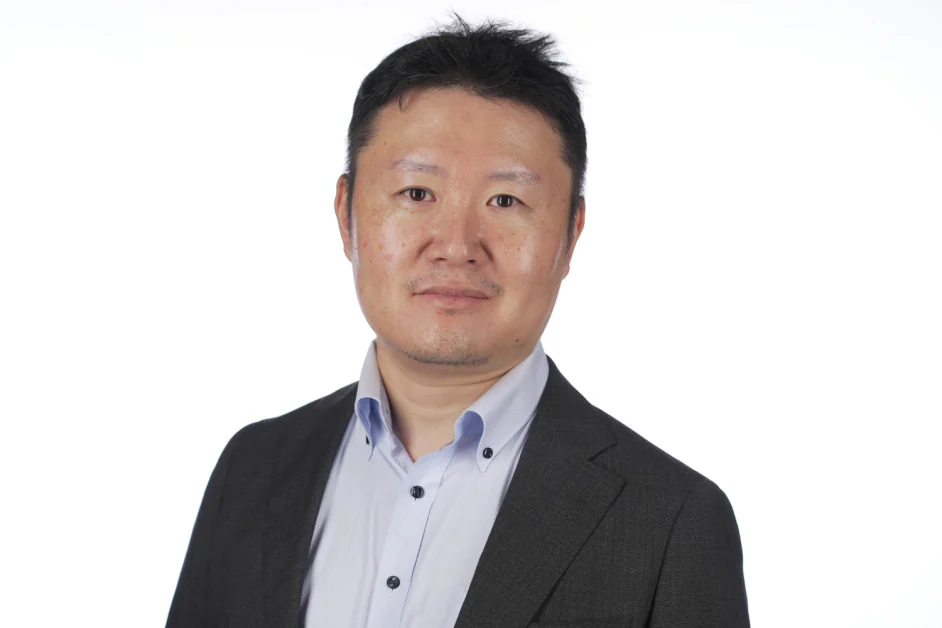
Taku Watanabe, VP and Head of US Operations, Matlantis, is a materials science and AI specialist with a career spanning advanced battery research, computational modeling, and global technology leadership. He currently leads Matlantis’ expansion in the United States from Cambridge, Massachusetts, while also serving as a principal researcher and head of global customer success, connecting advanced materials informatics with real-world industrial use cases. Prior to joining Matlantis, he held senior roles at Samsung R&D Institute Japan focused on all-solid-state battery development, and earlier conducted postdoctoral research at the Georgia Institute of Technology after completing graduate work in simulation software at the University of Florida. His career consistently centers on combining machine learning, physics-based simulation, and materials science to accelerate innovation in energy and advanced materials.
Matlantis is an AI-driven materials informatics company focused on transforming how new materials are discovered and developed through high-speed atomistic simulation. Its cloud-based platform enables researchers to model molecular and crystal behaviors with both high accuracy and speed, reducing processes that once took months to seconds. Built on machine learning interatomic potentials and computational chemistry, the platform allows scientists to explore vast material combinations without traditional experimental constraints, supporting industries such as semiconductors and energy storage. Founded in 2021 through a collaboration between Preferred Networks and ENEOS, Matlantis is positioning itself as a core layer in the shift toward AI-first materials discovery and digital R&D workflows.
You’ve spent your career at the intersection of materials science, simulation, and machine learning, from battery research at Samsung to materials informatics at ENEOS and now leading US operations at Matlantis. What key moments convinced you that AI-driven simulation would fundamentally reshape materials discovery?
The turning point for me was realizing that the real bottleneck in materials discovery was our limited ability to explore enough candidates. In my work on battery materials and later in materials informatics, we could generate high-quality insights using methods like density functional theory (DFT), but only across a small set of possibilities due to cost and time constraints.
What changed was the emergence of machine-learning potentials that could preserve near quantum-level accuracy while dramatically increasing computational throughput. This unlocked two important shifts.
First, it enabled accelerated trial-and-error at high fidelity. Researchers can now run significantly more candidate evaluations per unit time without sacrificing accuracy, fundamentally changing the pace and scope of exploration. Second, it created a new foundation for data science in materials discovery, because that level of throughput generates the volume of high-quality data needed to make machine learning approaches truly effective.
Matlantis recently integrated with NVIDIA’s (NVDA ) ALCHEMI Toolkit to enable industrial-scale simulation throughput. From your perspective, what specific bottlenecks does this integration remove, and how does it change what R&D teams can realistically achieve today?
The integration removes a fundamental mismatch between AI-driven potentials and the infrastructure they rely on. While models like PFP are inherently GPU-accelerated, key parts of the simulation workflow, such as orchestration, have traditionally remained CPU-bound or loosely connected across different tools. This creates inefficiencies in data movement and limits scalability by introducing friction when running large or distributed workloads.
ALCHEMI addresses this by extending GPU acceleration across the full simulation stack, building on earlier integration with NVIDIA Warp-optimized kernels and now moving into ALCHEMI Toolkit-Ops for production-scale execution. The result is faster compute and a more cohesive, AI-native simulation environment that can operate reliably at industrial scale.
What makes this especially important now is that it marks a transition from platform vision to real deployment. With capabilities like LightPFP enabling simulations at the scale of hundreds of thousands of atoms and faster inference, AI-driven atomistic simulation is usable in production workflows.
For R&D teams, that changes the role of simulation entirely. Instead of being applied selectively, it can be embedded into everyday decision-making, shaping which materials are prioritized early in development.
The announcement highlights LightPFP and upcoming PFP integration with ALCHEMI. How do these developments improve scalability and stability compared to traditional atomistic simulation pipelines?
LightPFP addresses a key bottleneck in atomistic simulation: the communication overhead required for neighbor list construction in distributed systems. By replacing this step during inference with NVIDIA ALCHEMI Toolkit-Ops, it reduces inter-nodecommunication. This makes large-scale simulations both faster and more stable.
Combined with its server-based architecture, this allows simulations to scale more efficiently while simplifying infrastructure and reducing operational complexity.
Full PFP integration extends these benefits to a universal model, which is important because traditional pipelines often struggle to scale consistently across different materials systems and computational environments. Together, these developments improve both scalability and reliability, enabling simulation to move from isolated research use cases to continuous, industrial-scale deployment without the typical trade-offs between performance and stability.
Matlantis is built on Preferred Potential (PFP), trained on tens of millions of quantum-level calculations. How does this data-driven approach differ from conventional physics-based simulation, and where does it deliver the biggest performance gains?
Conventional simulation calculates interactions directly from first principles each time, which is accurate but computationally expensive. PFP instead learns from a vast set of quantum calculations and applies that knowledge during inference. The biggest performance gains come in workflows that require repeated evaluation across many candidates, such as screening materials or exploring material composition. Instead of being limited to a handful of systems, researchers can evaluate thousands of candidates while maintaining meaningful accuracy.
One of the most compelling claims is achieving near DFT accuracy at massively accelerated speeds. In practical terms, how does this shift the way companies approach experimentation, prototyping, and time to market?
Traditionally, DFT has been the gold standard for accuracy, but today, its computational cost limits how broadly it can be applied; R&D teams have relied heavily on trial-and-error experimentation and use DFT selectively for validation. Near-DFT accuracy at massively accelerated speeds removes this constraint.
Instead of using DFT to analyze a few candidates after experiments, companies can now immediately approximate that level of insight across thousands of possibilities. This allows them to narrow the computational search space before committing physical resources. The result is fewer failed experiments, more targeted prototyping, and significantly faster iteration cycles, ultimately reducing time to market while increasing confidence in what moves production forward.
We are seeing a transition toward simulation-first discovery across industries like semiconductors, batteries, and chemicals. What does a fully simulation-first R&D workflow look like inside a modern enterprise?
A simulation-first workflow starts by anchoring R&D around desired outcomes rather than predefined materials. Teams identify their goals and challenges, and then screen large numbers of candidate materials at scale by means of optimization, stability, and increasingly, exploration of entire chemical or crystal spaces.
This is an interactive process. Simulation results continuously inform the next set of candidates, rapidly narrowing the design space. By the time materials move into the validation phase, they have already been filtered through multiple computational layers, significantly reducing wasted effort.
The real shift, however, is organizational. Simulation moves beyond a niche capability to becoming a central decision-making layer. It guides which experiments are run, how resources are allocated, and how teams prioritize their priorities. Over time, this creates a closed-loop system where simulation and experimentation reinforce each other, enabling teams to explore more possibilities while staying tightly focused on the most viable paths.
As AI becomes central to materials science, infrastructure such as compute, GPUs, and software stacks is increasingly critical. Why is infrastructure now emerging as the limiting factor rather than model innovation alone?
Because many organizations have strong models, but struggle with fragmented workflows and limited compute access. Treating AI as a tool layered on legacy systems leads to isolated experimentation, and the limiting factor has shifted to infrastructure and how effectively organizations can integrate compute and data simulation into a single, unified system.
Matlantis is already being used across industries ranging from energy to advanced manufacturing. Which use cases are seeing the fastest return on investment today, and where do you see the next wave of breakthroughs emerging?
The fastest ROI is in areas where experimental cycles are expensive and design spaces are large, such as battery materials, catalysts, and semiconductor-related materials. In these domains, eliminating non-viable candidates early creates immediate value.
For example, chemical manufacturer Kuraray once had a verification process that took two to three years but was reduced to just a month and a half using Matlantis. In a single simulation campaign, 13 proposed catalyst improvements were evaluated and all were ruled out as non-viable and saved years of experimental effort on dead-end ideas.
Looking ahead, the next wave of breakthroughs will come from the convergence of simulation and experimentation, not from improving them in isolation. Today, there is still a clear boundary between the two, and they are typically treated as sequential steps rather than a unified strategy.
However, that boundary is beginning to dissolve. With advances in high-throughput simulation and machine learning, we’re seeing the emergence of closed-loop discovery systems where simulation guides experiments in real time, and experimental data consistently feeds back into models. As these systems mature, discovery will become continuous. That convergence, where simulation, AI, and experimentation operate as a unified system, is where the next generation of breakthroughs will be driven.
Your role spans both deep technical research and global customer success. What new skillsets do you believe the next generation of scientists and engineers must develop to stay competitive in AI-driven R&D environments?
The most important skill the next generation needs to reinforce is the ability to operate across disciplines. Scientists require strong domain expertise and the ability to work with data-driven models, scalable simulation platforms, and iterative workflows. Equally important is understanding how simulation and data experimentation connect within a larger discovery process.
The next generation will be defined not just by what they know, but by how effectively they can integrate and apply that knowledge within modern R&D environments.
Looking ahead, as AI-driven simulation approaches real-time materials discovery, how close are we to a world where entire classes of materials are designed, validated, and optimized entirely in silico before any physical experiment takes place, and what does that mean for the future of innovation?
We are approaching that capability in specific domains, but not yet universally. For many systems, simulation can already eliminate large portions of the design space and identify highly promising candidates before any experiment is conducted.
However, fully capturing real-world complexity, such as synthesis conditions and scale-up effects, remains challenging. As a result, the role of experimentation is evolving. Rather than serving as the primary method of exploration, experiments become more targeted and purposeful, focused on validating and refining the most promising computational outcomes. Most of the early-stage efforts of discovery shift into simulation, allowing physical testing to operate with far greater precision and efficiency.
Thank you for the great interview, readers who wish to learn more should visit Matlantis.



