
Thought Leaders
2026: The Year AI Costs Force Every Company to Rethink its Strategy

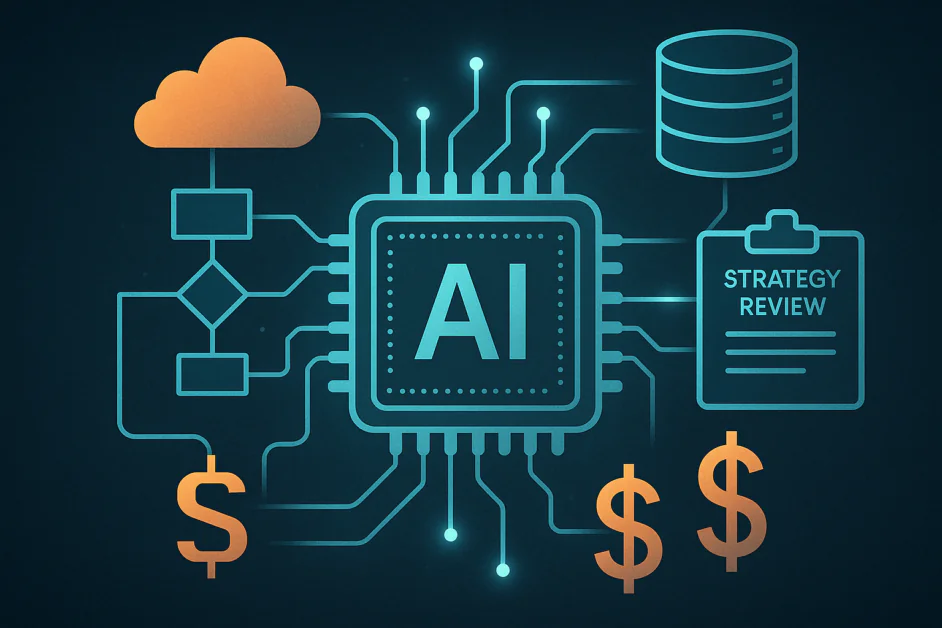
Over the past several years, I have seen firsthand how fast the data and AI landscape is shifting, particularly as enterprises work to modernize complex architectures while still delivering reliable performance on a global scale. The pressure on leaders is growing as expectations around AI accelerate and the gap widens between what organizations want to achieve and what their infrastructure can realistically support. This tension is reshaping industry priorities and setting the stage for what comes next. Based on my industry expertise and experience leading Teradata through multiple transformations, here are my three predictions for what we can expect in 2026.
1. The Agentic AI Production Breakthrough
2026 will mark the year enterprises finally cross the chasm from pilots to production-scale agentic AI. While 2025 saw the AI Paradox, with 92% of enterprises increasing AI investments but only 1% reaching maturity, 2026 will separate the winners from the losers. The AI production bottleneck was never about building models or generating ideas; it was about deploying AI at enterprise scale with trust, context, and economic efficiency.
Next year, we’ll see agent-to-agent interactions go mainstream in at least one major B2B industry, whether that’s procurement, supply chain, or customer service. Organizations that prepare for the massive computational demands of agentic AI will pull so far ahead that competitors will find it nearly impossible to catch up. Unlike traditional applications that make a few queries per minute, agentic AI systems with 24/7 always-on query potential generate 25 times more database requests and consume 50 to 100 times the compute resources as they reason through problems, gather context, and execute tasks.
These aren’t just bigger numbers; they represent a fundamental shift in how enterprise infrastructure must operate. The infrastructure challenge is profound, and it requires massively parallel processing architectures – a computing approach that uses numerous processors to perform computations simultaneously on different parts of a large dataset – that can handle mixed workloads at scale. As enterprises deploy potentially thousands of these agents evaluating millions of relationships across thousands of tables to make a single decision, milliseconds will start to matter. We’re not talking about isolated AI assistants anymore; we’re talking about entire ecosystems of specialized agents working together, each one querying data, reasoning through options, and coordinating with other agents in real time. The companies that figure out how to handle this volume efficiently with predictable costs will dominate, while those caught off guard by spiraling infrastructure costs will struggle.
By the end of 2026, I expect quantifiable ROI stories measured in hundreds of millions, not just hopeful projections. The early production deployments will demonstrate concrete business value that moves beyond productivity gains into true business transformation. These won’t be simple chatbots or document summarizers; they’ll be intelligent systems that fundamentally change how work gets done across entire organizations.
2. The Knowledge Platform Wars: When Milliseconds Become Millions
In 2026, enterprises will discover that their AI agents are only as intelligent as their data infrastructure is fast. When an agentic system makes 10,000 queries to answer a single customer question, the difference between 100ms and 10ms query response time isn’t just user experience: it’s the difference between a $50,000 monthly infrastructure bill and a $5 million one.
The industry data supports this shift. IDC’s FutureScape 2026 predicts that by 2028, 45% of IT product and services interactions will use agents as the primary interface for ongoing operations. McKinsey’s state of AI in 2025 survey revealed that where AI penetration potential is high, agentic systems are rapidly transforming how organizations consume technology. Early production deployments reveal that agentic workflows generate 25x more database queries than traditional applications. A single AI-powered customer service interaction that previously required three API calls now triggers thousands of contextual queries as the agent reasons through options, validates information, and synthesizes responses.
Traditional cloud data warehouses optimized for batch analytics will buckle under these real-time agentic demands. The always-on nature of agentic platforms fundamentally conflicts with dynamic compute environments designed to spin up for scheduled workloads and spin down to save costs. MIT’s NANDA initiative found that 95% of AI pilot programs fail to deliver measurable P&L impact, not because of model quality, but due to a “learning gap” where systems can’t adapt quickly enough to enterprise workflows. When infrastructure latency compounds this gap, even the most sophisticated agents become ineffective. Organizations will realize that query optimization—once considered a solved problem relegated to database administrators—has become the critical bottleneck in AI ROI.
This is where platforms built on massively parallel processing architecture meet the AI future. Systems built from the ground up for mixed workloads (handling operational queries and analytical workloads simultaneously without performance degradation) will separate the winners from the those who fall behind. When every millisecond of query performance directly impacts agent intelligence, response quality, and business outcomes, infrastructure decisions become strategic imperatives.
We’re already seeing this with customers running production AI agents. They’re shocked to discover that their ‘modern’ cloud warehouse adds 2-3 seconds to every agent interaction, making the AI feel sluggish and unresponsive. Multiply that latency across thousands of daily interactions, and the user experience becomes untenable. By year-end 2026, query performance will become the primary evaluation criterion for AI infrastructure decisions, displacing storage costs and scalability as the top concerns.
The power dynamic shifts dramatically when companies can deploy AI directly against optimized data infrastructure with decades of decision analysis experience baked in. Instead of being constrained by vendor architectures that can’t handle agentic query volumes, they have the flexibility to innovate at AI speed, deliver responsive agent experiences, and avoid the performance nightmares that come from infrastructure mismatched to the workload.
This shift will force a reckoning across the data platform landscape. The vendors that survive will be those that can prove their architectures were built for this moment: where subsecond query response times at massive scale aren’t a feature, but the foundation of intelligent automation
3. The Hybrid Renaissance: Data Sovereignty Becomes Strategic
The pendulum swings back toward hybrid environments as enterprises realize it isn’t just about choosing between cloud and on-premises anymore. It’s about effectively operating across both to meet diverse business needs. In 2026, data sovereignty will prove to be not just about compliance but about strategic competitive advantage and increasingly, about economic survival.
The economics are undeniable: as agentic AI drives exponential query volumes, cloud costs are set to skyrocket. Gartner predicts that by 2030, companies that fail to optimize the underlying AI compute environment will pay over 50% more than those that do, while 50% of cloud compute resources will be devoted to AI workloads by 2029, up from less than 10% today – a fivefold increase in AI-related cloud workloads. Organizations are discovering that hybrid isn’t a legacy holdover; it’s the pragmatic path forward. We’re seeing a resurgence of hybrid deployments that reflects a growing understanding of how enterprises can optimize costs while leveraging both on-premises and cloud capabilities strategically.
The math is compelling. When you’re running thousands of AI agents making millions of queries daily, the difference between cloud and on-premises costs becomes staggering. Smart organizations are already modeling these scenarios and realizing that strategic hybrid deployment isn’t just a nice-to-have; it’s essential for sustainable AI operations. As AI becomes the differentiator, organizations will understand that their data strategies and industry knowledge are too valuable to hand over completely to public cloud providers. They will want to control and own their data, know where it is geographically, and manage the economics of AI at scale.
We’ll see this trend most pronounced internationally and in regulated industries like financial services and healthcare, but the cost imperative will drive adoption across all sectors. The companies that offer true deployment flexibility, with consistent data, compute, models, workloads, outcomes and experiences across hybrid environments, will win. Organizations will demand the ability to run cutting-edge AI capabilities, including language models and vector processing, behind their own firewalls while maintaining the same innovation velocity as cloud-native competitors without breaking the bank.
The future belongs to platforms that enable AI speed and scale wherever data resides, whether in public cloud, on-premises or private cloud, allowing organizations to make economically rational decisions about workload placement as agentic AI reshapes cost structures. This isn’t about reverting to old ways of thinking; it’s about embracing a more sophisticated approach that treats infrastructure as a strategic portfolio where different workloads run in the most appropriate environment based on performance, cost, security, and compliance requirements.
2026 is when agentic AI moves from boardroom buzzword to operational reality, fundamentally reshaping how enterprises compete, build software, and manage their infrastructure. The companies that master production-scale deployment, maintain control of their data and context, and architect for hybrid flexibility will establish advantages that become nearly impossible to overcome.



