
Funding
ZyG Raises $60M Series A to Build an AI Operating System for Ecommerce

 Add Unite.AI to your preferred sources on Google
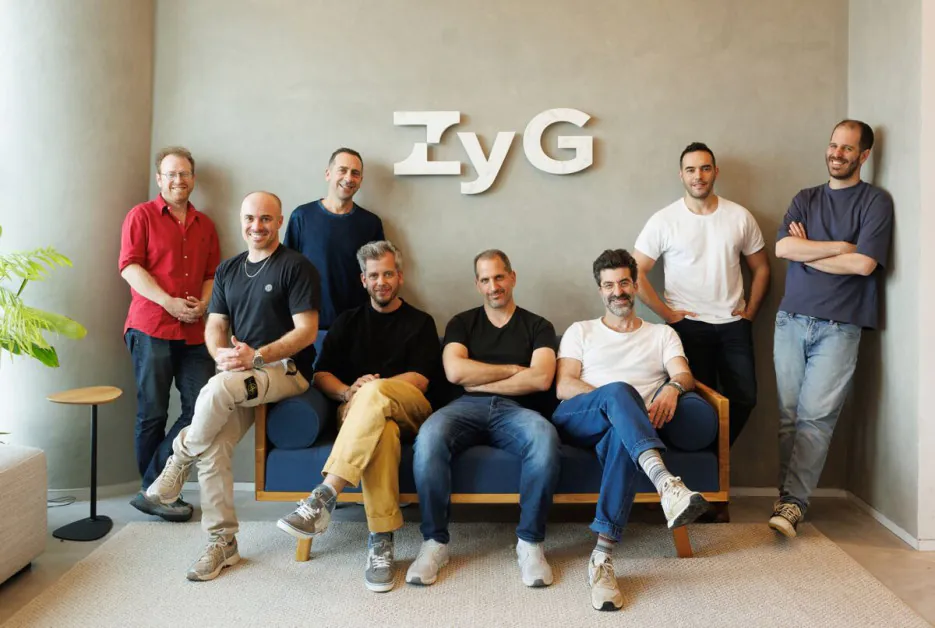
ZyG is targeting one of ecommerce’s biggest inefficiencies: the need to stitch together dozens of tools, agencies, and workflows just to launch and scale a single brand. Rather than improving one part of that process, the company is building an AI-driven operating system designed to handle everything from product discovery to marketing, conversion, and logistics within a single, unified platform.
The company has raised a $60 million Series A round led by Accel, with participation from Felix Capital, Bessemer Venture Partners, and Lightspeed Venture Partners. The round reportedly values the company at $500 million and comes just two months after ZyG emerged from stealth with an earlier $58 million raise, bringing total disclosed funding to $118 million.
A Different Take on Ecommerce Infrastructure
At the center of the raise is ZyG’s core product: an AI-driven operating system for direct-to-consumer brands.
The company is targeting a persistent challenge in ecommerce—scaling a product into a sustainable brand typically requires a fragmented mix of agencies, tools, and internal expertise across marketing, analytics, and logistics. ZyG’s approach is to consolidate that complexity into a single system.
Rather than offering point solutions, the platform operates as an “agentic” system, coordinating multiple business functions simultaneously. This includes everything from customer acquisition to retention and operational workflows.
From Product Idea to Scaled Brand
ZyG positions its platform as more than software. It is designed to identify promising product opportunities, evaluate their potential, and execute growth end-to-end.
Through predictive modeling and a proprietary scoring system, the platform assesses whether a product is likely to scale before significant resources are committed.
Once a product meets that threshold, the system supports:
- Store creation and branding
- Creative generation and ad campaigns
- User acquisition and organic growth
- Conversion and retention optimization
- Logistics and supply chain coordination
This full-stack model replaces the traditional patchwork of tools and service providers typically required to run an ecommerce business.
The “Agentic OS” Shift
ZyG is part of a broader move toward agentic AI systems that don’t just analyze data but act on it.
In ecommerce, this means shifting from dashboards and manual workflows to systems that continuously make decisions across marketing, pricing, inventory, and customer engagement. These platforms rely on integrated data pipelines and closed-loop feedback to optimize outcomes in real time.
Built by a Team That Has Done This Before
The company was founded in 2025 by executives behind ironSource, including CEO Omer Kaplan and chairman Tomer Bar-Zeev. Their background in scaling large digital platforms informs ZyG’s focus on automation, data infrastructure, and performance-driven execution.
The broader team includes engineers and AI specialists with experience in building high-scale systems, reinforcing the company’s emphasis on reliability and operational depth.
The Bigger Picture
The rise of platforms like ZyG points to a shift toward more autonomous ecommerce operations.
Instead of stitching together tools, agencies, and internal teams, businesses may increasingly rely on integrated systems that handle execution across the entire lifecycle—from product testing to customer retention. This could significantly reduce operational complexity while accelerating how quickly new brands are launched and scaled.
It also changes how performance is measured. As decision-making becomes automated, the focus may move toward system-level outcomes such as consistency, adaptability, and the ability to optimize across multiple variables in real time.
At the same time, greater automation introduces new challenges around control and oversight. As AI systems take on responsibilities like budget allocation, creative testing, and inventory decisions, ensuring transparency and reliable guardrails will become critical.
More broadly, this reflects a move toward “operator-light” companies, where fewer people manage increasingly capable systems. The competitive edge may shift from execution itself to how effectively these systems are configured and governed.



