Artificial Intelligence
Windsurf SWE-1: The Future of AI-Powered Software Engineering and No-Code Development

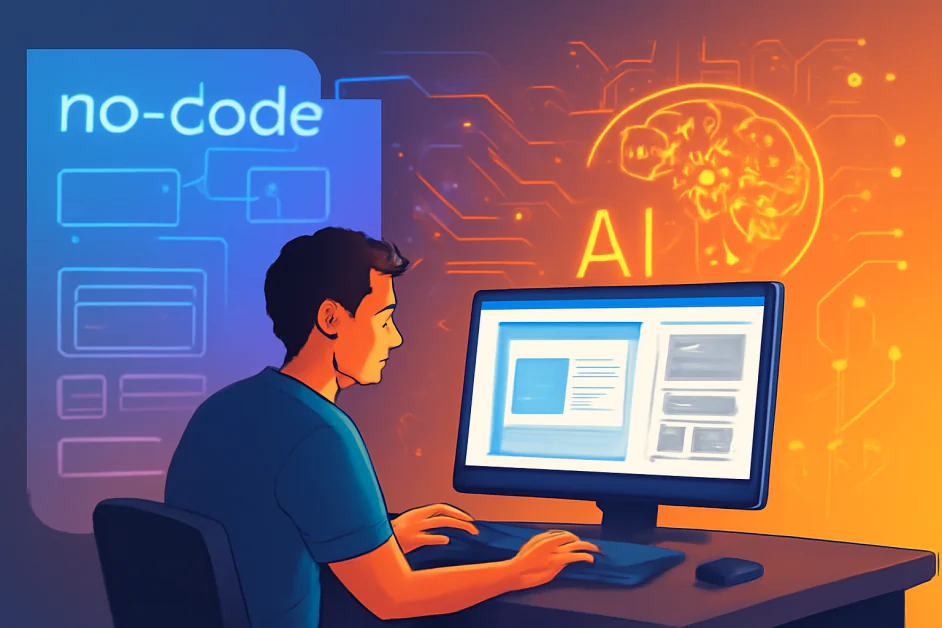
Software engineering has traditionally been about complex code and long development cycles. But things are changing now. Artificial intelligence (AI) and no-code solutions transform application development, making it faster and easier for developers and businesses to create advanced, high-quality software. One of the key innovations leading this change is Windsurf SWE-1.
Windsurf SWE-1 is more than just another developer tool. It represents the future of software engineering. Combining AI with no-code development helps experienced developers, and people with no coding skills build robust applications. Windsurf SWE-1 establishes a new standard by blending speed, accessibility, and innovation, transforming software development.
The Impact of AI on Transforming Software Engineering
Software engineering discipline has changed dramatically in the past decade due to rapid advancements in AI. In the past, software development required developers to write every line of code by hand. While this was essential, it was often slow, repetitive, and prone to mistakes. Early automation tools helped by streamlining tasks like code compilation, bug detection, and testing, which improved productivity but still needed significant human input.
The real shift began with the rise of AI-powered development tools like GitHub Copilot, which use large language models (LLMs) like OpenAI’s GPT-3 and GPT-4. These tools went beyond simple automation by providing intelligent code suggestions, detecting bugs in real-time, and even generating entire functions or modules with minimal input. This allowed developers to focus on more complex tasks, speeding up software delivery.
In 2025, agentic AI has witnessed tremendous growth. Unlike earlier tools, agentic AI models such as Windsurf SWE-1 can now handle entire segments of the software development process independently. These systems can plan, design, create, test, deploy, and maintain codebases while adapting to real-time data and feedback. This new level of automation boosts efficiency and makes it easier for both experienced developers and newcomers to build complex applications quickly and reliably.
The growing influence of AI in software engineering is evident in the market’s rapid growth. According to recent forecasts, the global AI market is projected to reach $900 billion by 2026, up from approximately $515 billion in 2023, representing a compound annual growth rate of around 20.4%. Today, AI is not just changing how we code; it is transforming workflows in areas like customer service, healthcare, and finance, automating complex processes and creating new opportunities for innovation.
Platforms like Windsurf SWE-1 are already helping businesses experience the benefits of this shift. AI-powered software engineering enables teams to work smarter, not harder, bringing creativity, productivity, and the future of digital innovation.
The Growth of No-Code and Low-Code Development
No-code and low-code platforms are reshaping the software development process, offering a new approach that simplifies application development. These platforms allow users to build software without deep coding knowledge, enabling business owners, marketers, and entrepreneurs to develop applications quickly and cost-effectively. Non-technical users can design fully functional apps with visual interfaces. At the same time, developers can speed up their work by using pre-built components and drag-and-drop features in low-code platforms.
This transformation particularly impacts small and medium-sized enterprises (SMEs), often struggling to maintain dedicated development teams. With the help of no-code and low-code solutions, businesses can create essential internal tools and customer-facing applications without the long development cycles and high costs usually involved in custom software creation.
The market for no-code and low-code development platforms continues to grow rapidly, with recent forecasts projecting the global low-code market to reach approximately $44.5 billion by 2026, growing at a compound annual growth rate (CAGR) of around 19%. The broader no-code/low-code market is expected to expand even further, with some estimates forecasting it to hit $65 billion by 2027 and potentially surpass $187 billion by 2030.
Gartner predicts that by 2026, developers outside of traditional IT departments will account for at least 80% of the user base for low-code and no-code development tools. This highlights the growing democratization of software development, where business users and citizen developers increasingly drive application creation to accelerate digital transformation across industries.
While no-code and low-code platforms offer faster development and reduced costs, they empower non-technical users to participate in software creation. However, as reliance on these platforms increases, it is essential to integrate AI capabilities to ensure applications’ robustness, security, and scalability. Solutions like Windsurf SWE-1 are already combining AI with no-code tools to create more intelligent, efficient software development environments.
Transforming Software Development with Windsurf SWE-1
Windsurf SWE-1 is a specialized AI model family that redefines software development. Launched in May 2025, SWE-1 boosts software development speed by up to 99%. It automates key tasks across the development cycle, intelligently managing workflows to enhance efficiency and reduce human error. Unlike general-purpose models like GPT-4.1 or Claude 3.5 Sonnet, SWE-1 is deeply embedded in software development, offering advanced capabilities such as flow awareness and multi-surface contextual understanding.
The SWE-1 Model Family
Windsurf SWE-1 offers three distinct models, each designed for a specific purpose and set of performance needs:
SWE-1 Model: This is the most powerful model in the Windsurf SWE-1 family, designed for advanced reasoning and full lifecycle automation in software engineering. It supports debugging, deployment automation, and project setup, but it is only available to paid users with unlimited access, not temporarily free.
SWE-1-lite: This model replaces the Cascade Base model and is optimized for balanced performance and efficiency. It is available to all users, both free and paid, making it a widely accessible AI assistant for software engineering.
SWE-1-mini: This ultra-low-latency model is designed for real-time, passive code predictions within the Windsurf Tab environment. It is optimized for speed, making it ideal for lightweight devices. However, its accuracy is not explicitly stated as 70% of the flagship model, though it is built for fast code suggestions.
What Makes Windsurf SWE-1 Unique Among AI Coding Assistants
What makes SWE-1 unique is its ability to understand and maintain context across multiple development environments, such as IDEs, terminals, and browsers. This flow awareness allows SWE-1 to:
- Correlate terminal error messages with the relevant source code.
- Automate dependency management by searching and installing necessary packages.
- Maintain state across interrupted coding sessions.
- Integrate with browsers to dynamically fetch documentation or API references.
These features reduce cognitive load, enabling developers to focus on more complex problem-solving tasks instead of switching between different tools. SWE-1 continuously improves through real-user interactions, making it more effective at solving real-world development challenges.
Key Features and Capabilities of SWE-1
Windsurf SWE-1 is more than just a coding assistant. It is a complete development partner that supports every stage of the software engineering process:
- Full Lifecycle Automation: SWE-1 automates essential phases like project planning, architecture design, testing, continuous integration, deployment, and maintenance. Unlike typical AI models, SWE-1 handles a broader range of tasks.
- Tool-Call Reasoning: SWE-1 can interact with external tools such as build scripts, tests, and database queries. This integration makes it easy to work within the developer’s existing environment.
- Performance and Efficiency: SWE-1 matches leading models like GPT-4.1 and Claude 3.5 Sonnet for software engineering tasks in performance tests. It also offers cost-effective solutions suitable for startups and larger companies.
- Seamless Integration: SWE-1 powers the Windsurf Editor, an AI-native IDE. This integration makes the development process smoother by offering context-aware suggestions and real-time debugging.
Key Challenges for Windsurf SWE-1 and AI-Powered Software Engineering
Windsurf SWE-1 is a significant step forward in AI-driven software engineering, but it still faces several challenges that will influence its future growth and adoption. Some critical challenges are listed below:
Handling Complex and Large Codebases
Despite its advanced flow awareness, SWE-1 struggles with large, highly interconnected codebases. Improving its ability to manage these complex systems is vital for broader adoption in large enterprises.
Consistency and Reliability in Real-World Use
AI models, including SWE-1, sometimes show inconsistent performance, especially with legacy or incomplete code. SWE-1 must provide more reliable and consistent outputs across diverse coding environments to build trust and reduce manual intervention.
Integration with Diverse Development Environments
While SWE-1 works well with Windsurf’s IDE, integrating third-party tools, platforms, and CI/CD pipelines is still challenging. Expanding its compatibility and offering APIs for custom workflows is necessary for enterprise-level adoption.
Security, Privacy, and Compliance
As AI models like SWE-1 interact with more code and sensitive data, ensuring security and compliance with industry regulations (such as HIPAA and GDPR) is crucial. Strong security protocols and transparent data handling practices are needed to address these concerns.
Balancing Automation with Human Creativity
SWE-1 automates many tasks in software engineering, but developers must still have control over the creative aspects. Relying too much on automation could lead to losing key skills or reducing innovation. Therefore, it is essential to ensure that human creativity is at the core of the development process, guiding decisions that affect the final product.
The Bottom Line
Windsurf SWE-1 is a significant step in AI-powered software engineering, making it faster and more efficient than ever. Automating much of the development lifecycle enables developers to focus on the creative and complex aspects of building software.
However, the future of SWE-1 and similar tools depends on balancing automation and human input. With careful integration, AI can empower developers, boost productivity, and lead to innovative solutions that were once unimaginable.