
Interviews
Vara Kumar Namburu, Co-Founder and Head of R&D, Whatfix – Interview Series

 Add Unite.AI to your preferred sources on Google
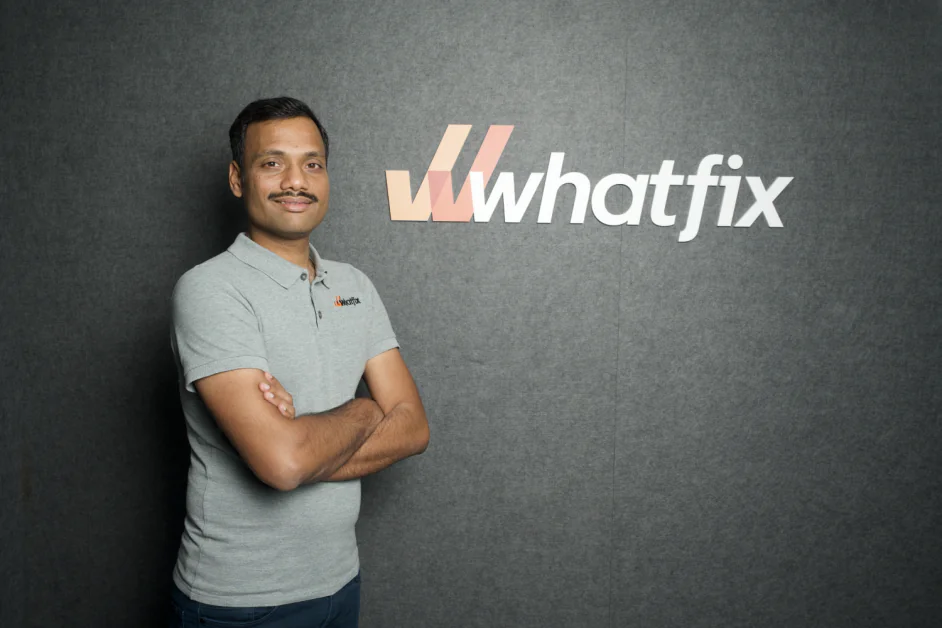
Vara Kumar is the co-founder and Head of R&D and Solutions at Whatfix, driving innovation and strategic growth for the company. He co-founded Whatfix with Khadim Batti in 2014 with the vision of empowering individuals and organizations to work symbiotically with technology to maximize their potential. Based in the U.S., Vara leads the company’s multiproduct strategy and vision for product development and adoptions, technology development, and innovation, helping accelerate successful integrations for customers and partners. Under Vara’s leadership, the company has pioneered ‘userization,’ a groundbreaking approach that shifts the focus to making technology adapt to users, rather than requiring users to adapt to the technology. He is passionate about building technology that users love.
Whatfix is a digital adoption platform that helps organizations improve software adoption and user productivity by embedding in-app guidance, walkthroughs, tooltips, and self-service support directly into enterprise applications. Building on this, Whatfix AI introduces intelligent, contextual agents such as Authoring, Guidance, and Insights that automate content creation, deliver real-time in-app support, and transform usage data into actionable insights. Together, Whatfix and Whatfix AI streamline onboarding, reduce training friction, and optimize workflows while ensuring oversight, accountability, and data privacy.
You co-founded Whatfix more than a decade ago after building your career in enterprise technology. What inspired you to start the company, and how has your original vision evolved with the rise of AI?
My career began at Huawei Technologies, where I worked as a System Architect and met my future co-founder, Khadim Batti. Our first venture together was SearchEnabler, an SEO platform for small and mid-sized businesses. Despite building a solid solution, we discovered a fundamental problem: users couldn’t maximize the platform’s capabilities. Even when we added a “Fix It” button for guidance, we realized the issue wasn’t just about SEO, it was about making any technology truly accessible to users.
This revelation led us to establish Whatfix in 2014. Our core belief was revolutionary for its time: instead of forcing people to adapt to technology, we would make technology adapt to people. We called this “userization”, ensuring software becomes intuitive, drives adoption, and maximizes impact.
AI has amplified this mission exponentially. Starting with our Airim acquisition in 2019, we’ve woven AI into every product we build. Today, we’re not just making software more user-friendly; we’re creating intelligent systems that learn, reason, and act at scale. Our vision has evolved from simple user adaptation to building truly human-centric AI that transforms how work gets done across enterprises.
Many studies show that most AI pilots fail because end-users don’t know how to apply the technology to their daily work. From your perspective, what are the root causes of this adoption gap?
I see two fundamental barriers blocking successful AI adoption. First is what I call the overload, large enterprises are drowning in thousands of applications, each now bundled with its own AI capabilities. Users face decision paralysis about which tool serves which purpose, creating friction that kills momentum and eliminates ROI.
The second barrier is trust. IT leaders and CIOs need assurance that AI systems maintain security standards, comply with regulations, and operate without bias. When organizations worry about data breaches, AI hallucinations, or governance failures, they hesitate to scale beyond pilot programs.
Success requires embedding AI directly where people work. Through our ScreenSense technology, we analyze what users are doing and what they’re trying to achieve, then our Guidance Agent delivers contextual recommendations and next best actions across their existing systems. This approach eliminates guesswork, multiplies engagement rates, and provides immediate value to users who might otherwise resist new technology.
Whatfix’s new AI Agents are built around the concept of “userization.” Can you explain what this means and how it differs from traditional approaches to digital adoption?
Userization represents a fundamental shift in how we think about technology deployment. Instead of training people to conform to software limitations, we engineer solutions that conform to human behavior and needs. Every decision we make prioritizes user experience, aiming to surpass expectations while delivering concrete business value.
Traditional adoption follows a one-size-fits-all model: deploy training, hope for the best, and blame users when adoption stalls. Userization takes the opposite approach. We leverage AI to create personalized, context-sensitive guidance that evolves with each user’s role and situation. Our solutions learn from user interactions and adapt accordingly.
What makes this particularly powerful is our feedback-driven development process. Customer input directly shapes over half of our product roadmap, ensuring we’re solving actual workplace challenges rather than theoretical problems. This creates a human-first philosophy where AI agents eliminate friction so people can focus on strategic, creative, and high-impact work rather than wrestling with technology.
Our comprehensive technology stack—encompassing Digital Adoption Platform (DAP), Product Analytics, and Mirror—drives enterprise-wide technology adoption through intelligent data analysis that speeds deployment of both traditional software and emerging AI solutions. We’ve woven AI functionality throughout the platform, including conversational analytics interfaces and emotion-responsive triggers, enabling organizations to decode user patterns, refine their adoption approaches, and achieve quantifiable business results.
ScreenSense is described as the core of your new AI Agents, interpreting both user context and intent. How does this technology work in practice, and how does it ensure relevance without overwhelming users?
ScreenSense operates like an intelligent interpreter, simultaneously analyzing the application environment (what’s happening on screen) and user objectives (what someone is trying to accomplish). This dual awareness enables real-time recommendations that are both technically accurate and personally relevant.
In practice, our AI Agents—Authoring, Insights, and Guidance—use ScreenSense to deliver accuracy and contextual guidance in their assistance. Rather than bombarding users with generic suggestions or requiring them to learn new interfaces, the system understands their immediate context and provides exactly the right help at exactly the right moment.
The key to avoiding user overload is contextual filtering. ScreenSense doesn’t just collect data; it processes that information to determine when intervention adds value versus when it creates distraction. Users receive guidance that feels intuitive and timely rather than intrusive, because the system understands both their technical environment and their working intentions.
Could you walk us through the three new AI Agents — Authoring, Insights, and Guidance — and share concrete examples of how they improve productivity in real enterprise workflows?
Our Authoring Agent democratizes content creation by converting everyday language into sophisticated in-app experiences. A training manager can simply say “create a tooltip for the dashboard’s new feature”, and the system automatically builds the content, determines targeting rules, and applies appropriate styling. This efficient workflow empowers learning and development teams, product managers, and business stakeholders without coding expertise to build complex in-application support elements, including interactive overlays, step-by-step guides, and situational help content at enterprise scale, essentially eliminating the conventional bottlenecks and technical expertise requirements that typically slow down content development processes. We’re seeing 40% faster content development today, with 70% efficiency gains on the horizon.
The Insights Agent transforms analytics from a specialist function into a conversational tool. Product owners can ask natural questions like “Which features are causing user frustration?” and receive immediate visual analysis with specific friction points and actionable next steps. This methodology allows product managers and diverse team contributors to rapidly discover actionable intelligence regarding user engagement patterns and system effectiveness without requiring advanced data analysis skills, ultimately supporting their ability to pinpoint which functionality demands improvement or would benefit from enhanced adoption initiatives.
Our Guidance Agent delivers instant answers within users’ active workflows. When someone searches for “approval process exceptions” while processing orders, they get precise, contextual information from internal documentation without leaving their current application. This methodology revolutionizes how enterprise employees access information by significantly cutting response times and reducing reliance on help desk resources, enabling them to obtain necessary clarity without disrupting their current tasks, navigating lengthy documentation, or creating support tickets, thereby maintaining their concentration and efficiency within their active workflows.
Over 300 customers are already deploying these agents in production environments, seeing doubled and tripled engagement rates.
From your experience, what best practices separate organizations that succeed with GenAI adoption from those that fail?
Successful GenAI adoption requires two foundational elements: seamless integration and responsible governance. Organizations that succeed embed AI capabilities directly into existing workflows rather than introducing separate tools that create additional complexity.
The most successful organizations focus on immediate user value rather than impressive technology demonstrations. They solve specific workflow problems that people face daily, ensuring AI becomes a productivity amplifier rather than another system to master. These companies also invest in new roles like AI supervisors who maintain human oversight to ensure systems remain accurate, fair, and continuously improve.
Organizations that struggle typically treat AI as a technology project rather than a user experience transformation. They focus on deployment metrics instead of adoption outcomes and fail to address the trust and complexity barriers that prevent scaling.
Enterprises are increasingly investing in AI tools across the software stack. How do you see the role of adoption platforms like Whatfix evolving as this trend accelerates?
As AI proliferation accelerates, adoption platforms become the critical orchestration layer preventing enterprise chaos. Without unified guidance, organizations risk creating multiple overlapping capabilities that confuse users and waste investment.
Whatfix is the intelligence backbone that connects planning, deployment, adoption, and optimization across the entire enterprise software lifecycle. Our platform suite combines Digital Adoption, Product Analytics, and Mirror’s simulation capabilities to create data-driven adoption strategies that work for both traditional software and emerging AI deployments.
We’re expanding beyond our current offerings into AI-native solutions, including Seek, Assistant, and AI Roleplay. These combine intelligent automation with adaptive training to create comprehensive adoption experiences. The goal is to become the unified intelligence layer that maximizes ROI across every technology investment an enterprise makes.
Rather than managing individual tools, organizations need platforms that understand the complete technology ecosystem and can guide users through increasingly complex landscapes with confidence and efficiency.
Looking ahead, Whatfix has spoken about a future where digital solutions self-correct and personalize in real time. What milestones do you see as most critical for reaching that future?
Our roadmap centers on establishing Whatfix as the world’s leading AI platform for userization of enterprise technology. This requires achieving three interconnected milestones over the next five years.
First, we’re scaling our AI Agent deployment from the current 300+ customer base to standard implementation across all Whatfix engagements. These agents will become the default way millions of enterprise users navigate complexity and accelerate their daily workflows.
Second, we’re building comprehensive AI-first product capabilities beyond our current Digital Adoption, Analytics, and Mirror offerings. Solutions like Seek, Assistant, and AI Roleplay will create the unified intelligence infrastructure enterprises need for complete technology lifecycle management.
Third, we’re pursuing global category leadership by redefining what Digital Adoption means in an AI-driven world. Success means being recognized as the company that made enterprise AI truly accessible and practical for everyday users.
Ultimately, the milestone is putting human-centric, context- and intent-aware AI in the hands of every enterprise user. If millions of people across industries work smarter and faster with less friction because of Whatfix, we’ll have achieved our fundamental mission.
With enterprises balancing rapid AI adoption and employee trust, what risks do you foresee if user-centric approaches aren’t taken seriously?
The primary risk is adoption failure at scale. Without user-centric design, enterprises face the same trust challenges we’re seeing today, concerns about data security, AI hallucinations, and governance gaps. These concerns create organizational resistance that prevents scaling beyond pilot programs, effectively wasting AI investments.
The complexity crisis will also intensify. As every application adds AI capabilities without considering user experience, employees will face increasingly fragmented workflows and decision paralysis. This leads to productivity decline rather than the efficiency gains AI promises.
Perhaps most critically, organizations risk creating AI resistance cultures where users actively avoid new capabilities because previous implementations created friction rather than value. Once users lose confidence in AI tools, rebuilding that trust requires significantly more effort and resources.
Finally, how do you personally stay ahead of the curve when it comes to understanding both the technical and human sides of enterprise AI adoption?
Our organizational approach provides a valuable perspective on both dimensions. We’ve integrated AI throughout our entire business operations, from sales teams using AI for prospect enrichment to our intelligent search systems connecting employees with internal knowledge bases. Product teams use AI agents as workflow co-pilots, giving us firsthand experience with the challenges our customers face.
We’ve also implemented comprehensive workforce development through our AI Labs and Zero-Click framework, where every software engineer learns to think like an AI engineer. This creates organization-wide literacy that informs both our technical development and our understanding of user adoption patterns.
Most importantly, our product development process remains deeply rooted in customer feedback, with over half of our roadmap shaped by real-world enterprise challenges. This continuous dialogue ensures we understand not just what’s technically possible, but what actually creates value for the people using these systems daily.



