
Interviews
Vaishnav Anand, Author of Tech Demystified: Cybersecurity – Interview Series

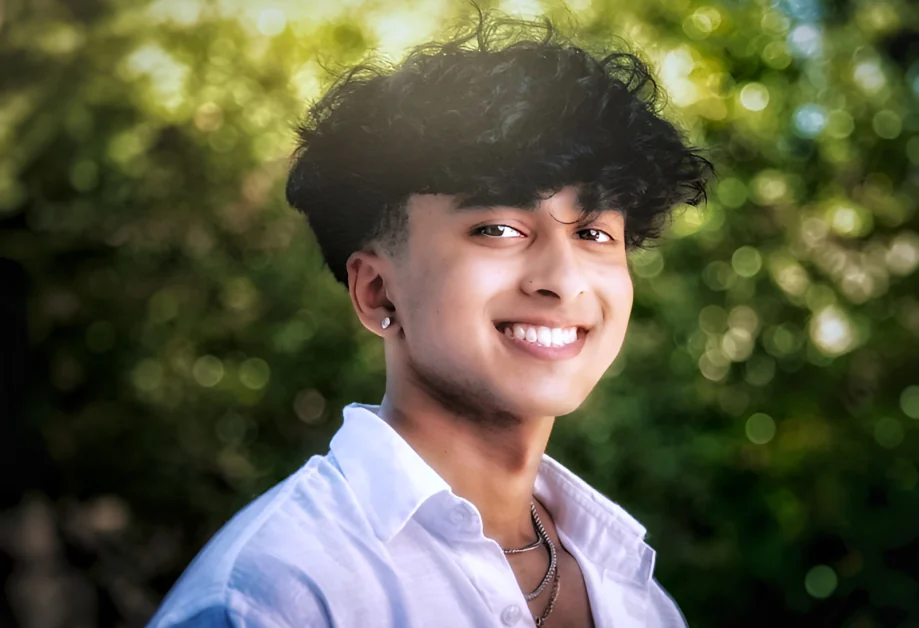
Seventeen-year-old, Athenian School student, Vaishnav Anand, has developed the first AI system capable of detecting “geospatial deepfakes”—AI-manipulated satellite imagery that could conceal military sites, fabricate resource deposits, or distort disaster data, posing risks to national security and global stability. With no public datasets available for this type of detection, Anand generated his own synthetic imagery using Generative Adversarial Networks, trained models from scratch, and is now applying diffusion methods to improve accuracy. His research has already been showcased at the Esri International User Conference and Cambridge University, earning recognition from Esri president Jack Dangermond.
Alongside his work in AI safety, Anand has authored two cybersecurity books adopted by private schools, with his latest title, Tech Demystified: Cybersecurity: Core Principles of Modern Cyber Defense, receiving a 5.0-star rating. The book breaks down complex topics such as phishing, malware, firewalls, and encryption into clear, practical lessons for students, educators, and anyone interested in digital safety. By making cybersecurity accessible and engaging, Anand is establishing himself not only as an innovator in AI but also as an emerging voice in education and technology.
You’re still in high school but already making an impact in AI and cybersecurity. What first drew you into this field, and how did you start developing such advanced projects at a young age?
What drew me into this field was seeing the dual nature of AI. It has incredible potential, but it can also cause harm. I had a direct experience with deepfake technology that changed my perspective. Watching how synthetic media could seriously hurt young people made me realize this was more than a technical curiosity; it was a critical societal issue that needed more understanding.
My entry into research didn’t come from a grand plan but from a deep curiosity. Each question I looked into led me to the next one, creating a cycle of discovery. I found myself interested in increasingly complex problems. I wasn’t seeking recognition; I was genuinely intrigued by the questions.
I transitioned from individual exploration to meaningful research through networking and persistence. I began reaching out to established researchers whose work I admired, mostly through platforms like LinkedIn. While many didn’t respond, I was lucky to connect with two PhD researchers focusing on AI security and deepfake detection. They started me off with small tasks within their larger research projects. As I proved my reliability and insights, these tasks became more substantial.
This mentorship was life-changing. Having experienced researchers guide my development helped me turn my curiosity into rigorous work. My intrinsic motivation, their structured guidance, and consistent effort gradually transformed my casual interest into significant research contributions. It reinforced my belief that real progress often comes not from dramatic breakthroughs, but from continuous engagement with important problems.
Most people think of deepfakes in terms of faces or voices. What inspired you to investigate geospatial deepfakes specifically, and why did you see this as such a critical blind spot?
When most people hear the word “deepfake,” they think of fake celebrity videos or altered voices. I did too at first. But as I learned more, I began wondering where else this technology could be used in ways we might not consider. That’s when I realized that satellite imagery is often treated as completely reliable. Governments, businesses, and even disaster relief teams make significant decisions based on it.
This seemed like a blind spot. If a fake video can harm reputations, a fake map or altered satellite image could disrupt supply chains, mislead rescue efforts, or even lead to poor national security decisions. As defense and warfare become more reliant on AI systems, drones, and automated decision-making, the risks grow. A manipulated satellite feed can deceive not just people, but machines too.
What struck me even more was that geospatial deepfakes receive far less attention than face or voice deepfakes. There are very few public datasets or standard tools to detect them. Plus, spotting fakes in satellite imagery is much more challenging. You’re not only looking for issues like lip sync errors or blurry edges. Satellite data is multi-spectral, highly detailed, and full of patterns that even experts struggle to analyze. That lack of research, combined with the high stakes, made me realize this is an important area to explore.
Can you walk us through your discovery process—how you realized that manipulated satellite imagery could pose national security, economic, and disaster response risks?
My turning point came after I encountered a deepfake that shook my faith in what I was seeing. That moment of doubt revealed something important: humans are naturally wired to trust visual evidence, and when that trust is broken, it changes how we see everything. The experience made me confront how vulnerable we all are to clever deception.
At first, like most people, I focused on the obvious uses—deepfake videos and altered faces. My early detection projects gave me vital insight into how these technologies work, but they also showed me the wider implications I hadn’t considered.
The real eye-opener came when I served as Associate Director of the National 4-H GIS leadership team. Working with geospatial data and satellite imagery, I saw how these seemingly objective sources drive important decisions. I watched as maps guided disaster response, shaped environmental policy, and influenced multi-million-dollar community planning projects. What surprised me the most was the blind trust in this data—it was seen as unquestionable truth.
That’s when everything made sense. If a fake video can cause emotional distress and social unrest, a manipulated satellite image could lead to disastrous real-world outcomes. Think about emergency resources being sent to fake disaster zones, governments making decisions based on incorrect environmental data, or financial markets being affected by altered agricultural reports. The potential for harm was staggering.
This blend of my deepfake research and GIS experience revealed a gap in our collective awareness. While the world discusses face swaps and synthetic media, the much greater threat of geospatial deepfakes remains mostly overlooked. This realization became the driving force behind my research—addressing a serious vulnerability that could change how we understand truth in our data-driven world.
Your research uses Generative Adversarial Networks (GANs) to detect fake satellite imagery. How does your system work, and what makes it different from general-purpose deepfake detectors?
Most detectors today are designed to identify faces or voices. They look for signs like mismatched lip movements or audio issues. Satellite images are very different. They consist of fine textures and spectral patterns across landscapes, farmland, oceans, and cities. These patterns are harder to notice and need a different approach.
In my initial project, I trained a GAN framework using the SpaceNet-7 dataset of real satellite images. The generator creates synthetic images, and the discriminator learns to tell real from fake. By focusing on the discriminator, I trained a model that understands the statistical “signature” of real satellite data. This includes how textures behave in urban areas compared to natural landscapes and how pixel intensity patterns flow across different regions.
Through this training process, the system achieved a high level of accuracy in spotting forgeries. The main difference from general-purpose detectors is that this one is designed specifically for geospatial data. Instead of looking for obvious visual errors, it learns the subtle spectral and textural inconsistencies that reveal synthetic satellite images.
My current research has shifted to exploring diffusion models as generators. These represent a significant improvement over GANs in image quality. Diffusion models like DDPM and DDIM create very realistic satellite images by learning to reverse a noise-adding process. The synthetic images they produce are often clearer and more detailed than those generated by GANs. This presents both an opportunity and a challenge. While these models can provide better training data for detection systems, they also produce more advanced fakes that are harder to spot.
I am now comparing various detection methods to find which ones are most effective against different generation techniques. This includes traditional CNN-based classifiers, transformer-based architectures that can capture long-range spatial relationships in satellite images, and hybrid methods that combine spectral analysis with deep learning. Each method has its own strengths: CNNs are good at detecting local texture issues, transformers can spot larger structural problems across image areas, and spectral analysis can identify subtle frequency signatures that neural networks might overlook.
An interesting aspect is how different generators leave unique forensic fingerprints. GAN-generated images often have specific artifacts in high-frequency details and edges, while diffusion-generated images usually show more subtle inconsistencies in overall coherence and spectral traits. By training detection models on both GAN and diffusion-generated fakes, I am gaining a deeper understanding of synthetic satellite imagery signatures. This helps build detection systems that can adjust as generation technology develops.
This multi-modal approach to detection is essential. As generative models become more advanced, we need detection systems that are not dependent on errors from any one generation method. The aim is to identify the basic statistical features that set real satellite captures apart from any form of synthesis, regardless of the underlying technology used to create them.
In your MIT URTC paper, you mention achieving around 88 percent accuracy in distinguishing authentic satellite imagery from forgeries. What were the key breakthroughs that enabled this performance?
The key breakthrough was realizing that no existing datasets had synthetic satellite imagery for training detection models. This pushed me to create a dual approach, working on both the generation and detection aspects at the same time. I made my own synthetic dataset using GANs and trained discriminators with that data. This enabled me to build a system that really understood the statistical patterns of real geospatial imagery.
Another important insight was recognizing that satellite images come with very different challenges compared to facial deepfakes. While faces generally have consistent anatomical structures, satellite images cover a wide range of terrain types—everything from agricultural patterns to urban designs to natural landscapes. I needed to create a detection system that could identify the authentic features across all these different environments.
This specialized method, instead of relying on general-purpose detectors, allowed the model to pick up the subtle spectral and textural differences that reveal synthetic satellite imagery. However, my current research with diffusion models is showing much better results, achieving higher accuracy rates and being more resilient against advanced generation techniques.
How did you go about generating your own synthetic imagery for training, given that there aren’t public datasets for geospatial deepfake detection?
Creating the synthetic dataset involved building a complex GAN architecture trained on the SpaceNet-7 dataset of real satellite images. The generator learned to change random noise into more realistic satellite images. It captured the complex patterns found in actual geospatial data.
The process resembles a competition between a skilled forger and a trained checker. The generator keeps improving its synthetic images while the discriminator becomes better at spotting subtle signs of forgery. This back-and-forth training creates a cycle where both parts push each other to achieve better performance.
By controlling both the generation and detection processes, I gained essential insights into how synthetic satellite imagery is created. This dual viewpoint was crucial for developing strong detection methods that recognize what real images look like and how synthetic ones differ from those patterns.
What kinds of anomalies—spectral, textural, or otherwise—does your system pick up on when distinguishing between real and manipulated imagery?
Unlike facial deepfakes, where issues like unnatural blinking or lip-sync errors are usually easy to spot, satellite imagery problems are much subtler. My system finds spectral inconsistencies where the interaction patterns between different electromagnetic bands don’t match real Earth observation data. It also spots textural irregularities, such as farmland that looks too uniform, ocean surfaces missing natural wave patterns, or urban textures with artificial repetition.
Contextual anomalies add another layer of detection. These include road networks that don’t follow natural landforms, agricultural layouts that ignore real farming limits, or urban development patterns that don’t align with typical city growth. These issues might escape casual human review but create clear statistical signatures that the model can recognize.
The system does have limitations with complex imagery. Dense urban areas with overlapping structures or satellite images affected by significant atmospheric distortion can reduce detection accuracy. These edge cases point to areas needing further research and model improvement.
Looking ahead, your poster mentions future work like browser extensions for real-time geospatial authentication and multi-dataset frameworks. What do you see as the next big step in this line of research?
While my GAN-based research showed that we can accurately detect satellite imagery forgeries, I’ve learned that good lab results do not ensure success in the real world. Synthetic imagery often does not align with the patterns that detection models have been trained on, and generative technologies are changing quickly.
The next phase focuses on building strong, adaptable systems that work well under varying conditions. This means we need to create better evaluation methods that mimic the unpredictable nature of using synthetic imagery in the real world. We also need to develop practical tools like lightweight browser extensions, real-time APIs, and integration frameworks to aid in important decision-making processes.
My current research direction highlights adaptability and practical use. I’m not just trying to enhance model accuracy in controlled environments. I’m aiming to design detection systems that can stay reliable as generative techniques change. I want to provide accessible tools for governments, businesses, and communities that rely on trustworthy geospatial data.
Beyond geospatial data, your broader research also spans video deepfakes, real-time voice authentication, and AI bias in lending. How do you choose which ethical challenges to tackle next?
My research direction is not shaped by trending topics; it focuses on finding critical vulnerabilities in systems where people place fundamental trust. Every project starts by identifying specific points where trust can be undermined, leading to serious consequences.
The deepfake research began with a personal experience that showed how synthetic media can damage a person’s confidence in visual evidence. Working with the National 4-H GIS leadership team highlighted how much people rely on satellite imagery for disaster response and policy decisions. This connection led to research on geospatial deepfakes, where the stakes are potentially very high.
This pattern also applies to voice authentication. I considered how synthetic emergency calls could overwhelm 911 systems. There is also the issue of AI lending bias, where algorithmic discrimination can deny opportunities to entire communities. Each of these areas reflects a crucial trust relationship between people and technology that needs protection.
I explore where technology meets social vulnerability, concentrating on research that can stop trust breakdowns before they turn into widespread crises.
You’ve also published Tech Demystified: Cybersecurity, which has been adopted in schools. What motivated you to write this book, and how do you make such technical material accessible to students and educators?
The book came directly from my deepfake research experience. It showed me how important digital literacy is for young people as they face a more complicated tech world. Cybersecurity seemed like the right starting point because it influences everyone, no matter their tech skills or career goals.
I aimed my writing at students just a few years younger than me. What would have helped me grasp cyber threats when I first started learning. I organized the content using stories, comparisons, and visuals, along with interactive activities and reflection questions. These tools make difficult ideas easier to understand.
It has been especially meaningful to see high school programs, school libraries, and nonprofits that serve underserved students adopt the book. I wanted to create a resource that opens doors for students who might otherwise feel left out of cybersecurity conversations.
Focusing on cybersecurity laid the groundwork for digital safety before my next book addresses AI and deepfakes, which is my main research interest. Students need to learn basic security principles before diving into the tricky ethical issues surrounding artificial intelligence.
In the book, you cover threats from phishing to ransomware. What do you think is the single most important cybersecurity principle that young people should understand today?
The most important principle is “trust but verify.” It’s vital to develop the habit of questioning digital information before taking action. Most successful cyberattacks take advantage of human trust instead of relying on complex technical flaws. Whether it’s clicking on suspicious links, downloading unknown files, or responding to messages that seem familiar, pausing to verify can stop many attacks.
For young people who spend a lot of time online and quickly switch between platforms, this mindset of verification is especially important. Forming the habit of questioning before clicking builds a defensive approach that guards against various threats.
This principle goes beyond cybersecurity and into broader digital literacy. The same critical thinking skills that protect against malware also help spot misinformation, deepfakes, and other types of digital deception.ble.
Between your academic research, STEM education initiatives, and published work, you’re clearly passionate about tech and ethics. How do you hope to shape the future of AI safety and responsible innovation?
Everything I do focuses on building and maintaining trust in technology. AI can reach its potential only if people believe these systems are safe, fair, and clear. Without that trust, even groundbreaking technologies will struggle to gain acceptance and use.
Through research, I aim to find key vulnerabilities before they become widespread issues. I work on areas like geospatial deepfakes and voice authentication, where risks are not always obvious but can have serious consequences. Through education and writing, I want to help students understand these systems instead of viewing technology as a mysterious black box reserved for experts.
My vision for responsible innovation includes safety and fairness from the earliest stages of development, not as afterthoughts. This means evaluating models not just for their performance, but also for possible failure points, identifying who might be harmed, and creating strategies to reduce those risks.
In the long run, I want to help create a culture where every advancement in AI receives equal focus on safety and responsibility. My work involves research, education, and communication because finding risks is only worthwhile if we can also help others to understand and address them.
If I can help spot critical vulnerabilities while also increasing technological literacy, I believe I will play a role in shaping an AI future that people can truly trust and benefit from.
Thank you or the great interview, readers are urged to read Tech Demystified: Cybersecurity: Core Principles of Modern Cyber Defense.



