
Thought Leaders
Three AI Trends Reshaping the Future of Media & Entertainment

 Add Unite.AI to your preferred sources on Google
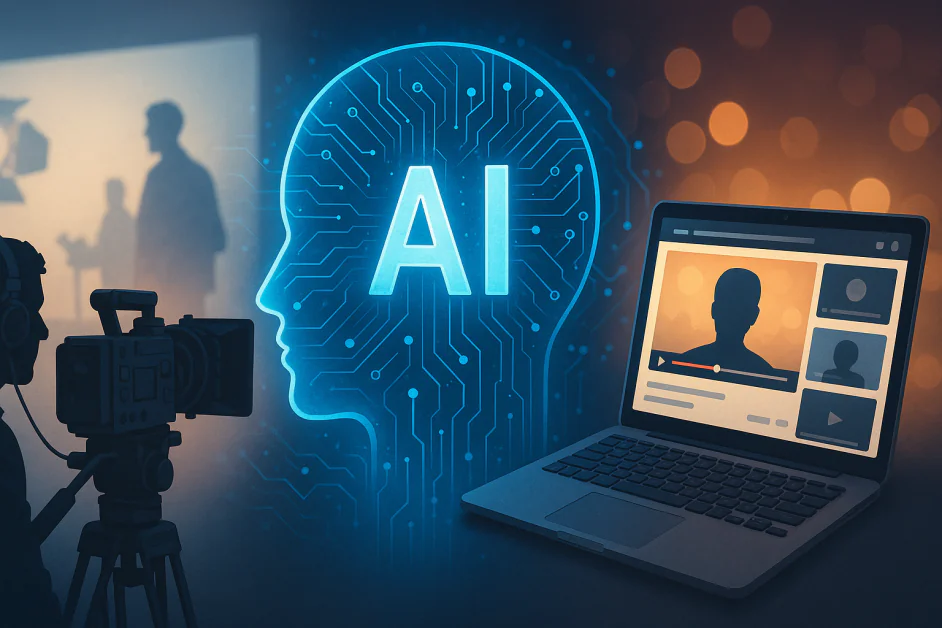
Over the past several months, the exhibition floors at trade shows, product launches, and industry panels have painted a clear picture with regard to the tools, tech, and trends driving the next era of storytelling. AI is no longer a speculative force in media and entertainment – it’s a strategic imperative.
NAB 2025, for example, wasn’t just a display of newfangled tech. The conversations and exhibitions were about redefining how entertainment content is created, localized, and ultimately consumed across the globe.
The key takeaway: storytellers are no longer asking if AI will play a role in the future of content. It’s a question of when, how, and just how much.
That’s not just my speculation. Walking showroom floors for the last several months, I have witnessed AI’s domination as the central theme. It has quickly become clear that we can expect generative and agentic AI-powered technology to be widely embraced, not just as functional enhancements, but as strategic assets for driving scale, creativity, and profitability in the entertainment industry. In fact, the shift is already underway – with studios actively reevaluating production pipelines, budget allocations, and international release strategies through an AI-first lens. The disruption is no longer theoretical; it’s operational.
Tiered Generative AI Adoption
While generative AI is still a widely scrutinized addition to the Hollywood playbook, there is a growing comfort with this technology. The industry is beginning to adopt a more nuanced, tiered approach to integrating GenAI, both in functional workload processes as well as helping creatives bring their visions to life with even more verve and depth.
The basic, lower-level adoption tier is largely functional, where repetitive or resource-intensive production tasks can be outsourced to AI without compromising artistic integrity. At the top, we’re seeing deliberate uses of AI in artistic enhancement processes such as visual effects or color grading – artistic, purposeful, and story-driven.
Consider the 2024 film The Brutalist, which controversially used AI to subtly enhance the Hungarian accents of the lead actors. The choice was ultimately made to serve the director’s wider creative vision, while the actors held full agency over the power and emotion of their performances – AI just helped emphasize the authenticity.
This gradual acceptance isn’t just about the maturation of AI tools. It reflects a shift in mindset, driven largely by the post-COVID pressure placed on studios to produce more content, faster, and at lower costs. By adopting AI-enabled tools, studios can continue to produce content at the speed and standards demanded by viewers amidst growing pressure to compete with social media, user-generated content, and video games.
Agentic AI
Capitalizing on the mass momentum of GenAI, agentic AI has emerged as the next advance in how studios and streaming platforms can redefine post-production, improve localization, and even improve how viewers experience content.
Unlike traditional automation tools, agentic AI systems can adapt dynamically to changing workflows, objectives, or data, all without human prompting. For post-production, this tech can automate tedious tasks like audio leveling or timecode tagging, which is especially useful in unscripted or documentary content where hours of footage need to be parsed and indexed quickly.
For localization, agentic AI can fine-tune dubs or subtitles in real-time based on cultural context, genre, or regional preferences, ensuring a more authentic, resonant experience for viewers worldwide. Agentic AI can also optimize delivery across various platforms, ensuring the right content reaches the right audiences while tailoring recommendations based on user behavior and preferences.
As media companies look to scale content more efficiently, agentic AI is poised to become an indispensable ally. Regardless of how much AI is used in content creation, this powerful tech is empowering creative teams to enhance operational speed and tailor experiences to an increasingly globalized audience.
Real-time Monetization
Some of the most future-forward conversations are centered around monetization and real-time engagement. As live content becomes an increasingly valuable asset, studios and streaming platforms are looking for ways to expand global reach during these high-exposure events.
Live dubbing and real-time language localization are emerging as key solutions.
Powered by advanced AI voice models, these dubbing tools can make global distribution instantaneous. With sporting events, news, and interactive events opened to new markets, broadcasters can unlock new monetization opportunities unhindered by the slow, costly post-production loop that can cause events to lose value soon after they air.
For small and mid-sized studios, especially, these agentic and generative AI innovations represent a pathway to compete at scale and find new audiences without the traditional overhead.
Bringing Content to Life
In the right hands, any innovation, AI or otherwise, can enable storytellers to do what they do best as effectively as possible and meet viewer expectations without compromising on art, quality, or the bottom line. What is clear for me beyond any doubt though, is that AI is already ushering in the next era of how artists bring content to life, pushback be damned.
In the right hands, any innovation, AI or otherwise, can enable storytellers to do what they do best as effectively as possible and meet viewer expectations without compromising on art, quality, or the bottom line. AI’s true potential lies in its ability to enhance, rather than replace, the creative process. By automating the technical aspects and providing new creative possibilities, AI allows creators to push boundaries, think outside traditional frameworks, and focus more on telling impactful stories.
What is clear for me, beyond any doubt, though, is that AI is already ushering in the next era of how artists bring content to life. As the industry continues to embrace AI, the line between technology and artistry will blur even further, unlocking new forms of creativity and storytelling that were once unimaginable, pushback be damned.



