
Artificial Intelligence
The Rise of Multimodal AI: Are These Models Truly Intelligent?

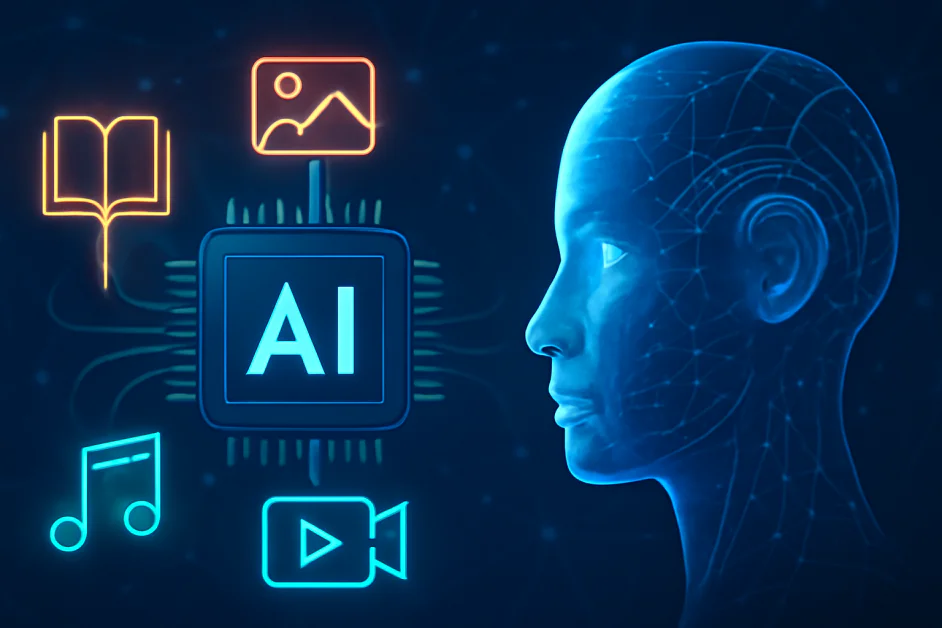
Following the success of LLMs, the AI industry is now evolving with multimodal systems. In 2023, the multimodal AI market reached $1.2 billion, with projections showing rapid growth of over 30% annually through 2032. Unlike traditional LLMs, which process only text, multimodal AI can handle text, images, audio, and video simultaneously. For instance, when a document with both text and charts is uploaded, multimodal AI can synthesize information from both sources to create more comprehensive analyses. This ability to integrate multiple modalities is closer to human cognition than previous AI systems. While multimodal AI has shown remarkable potential for industries like healthcare, education, and creative fields, it raises a fundamental question that challenges our understanding of this development: Do these multimodal models truly comprehend the world, or are they simply remixing multiple modalities?
The Pattern Matching Challenge
The recent advances in multimodal AI have sparked an intense debate within the AI community. Critics argue that despite these advancements, multimodal AI fundamentally remains a pattern recognition system. It can process vast training datasets to identify statistical relationships between different input and output types, but it may not possess a genuine understanding of relationships between different modalities. When a multimodal AI describes an image, it may be matching visual patterns to textual descriptions it has seen thousands of times before, rather than genuinely understanding what it sees. This pattern-matching perspective suggests that multimodal models can interpolate within their training data but struggle with genuine extrapolation or reasoning.
This view is supported by numerous examples where AI systems fail in ways that reveal their limitations. They might correctly identify objects in countless images but fail to understand basic physical relationships or common-sense reasoning that would be obvious to a child. They can generate fluent text about complex topics but may lack genuine understanding of the underlying concepts.
The Architecture Behind Multimodal AI
To evaluate whether multimodal AI truly understands information, we must examine how these systems actually work. Most multimodal models rely on combining several specialized unimodal components. This architecture reveals important insights about the nature of multimodal understanding. These systems do not process information the way humans do, with integrated sensory experiences that build cumulative understanding over time. Instead, they combine separate processing streams that have been trained on different types of data and aligned through various techniques.
The alignment process is crucial but imperfect. When a multimodal AI processes an image and text simultaneously, it must find ways to relate visual features to linguistic concepts. This relationship emerges through exposure to millions of examples, not through genuine understanding of how vision and language connect meaningfully.
This raises a fundamental question: Can this architectural approach ever lead to genuine understanding, or will it always remain a sophisticated form of pattern matching? Some researchers argue that understanding emerges from complexity and that sufficiently advanced pattern matching becomes indistinguishable from understanding. Others maintain that true understanding requires something fundamentally different from current AI architectures.
The Remix Hypothesis
Perhaps the most accurate way to describe multimodal AI capabilities is through the lens of remixing. These systems work by combining existing elements in novel ways. They build connections between content types that may not have been explicitly linked before. This capability is powerful and valuable, but it may not constitute genuine understanding.
When a multimodal AI creates artwork based on a text description, it essentially remixes visual patterns from training data in response to linguistic cues. The result can be creative and surprising, but it stems from sophisticated recombination rather than original thought or understanding.
This remix capability explains both the strengths and limitations of current multimodal AI. These systems can produce content that appears innovative because they combine elements from vastly different domains in ways humans might not have considered. However, they cannot truly innovate beyond the patterns present in their training data.
The remix hypothesis also explains why these systems sometimes fail. They can generate authoritative-sounding text about topics they have never truly understood or create images that violate basic physical laws because they’re combining visual patterns without genuine understanding of underlying reality.
Testing Boundaries of AI Understanding
Recent research has attempted to probe the limits of AI understanding through various experimental approaches. Interestingly, when faced with simple tasks, standard language models often outperform more sophisticated reasoning-focused models. As complexity increases, specialized reasoning models gain an edge by generating detailed thought processes before answering.
These findings suggest that the relationship between complexity and understanding in AI is not straightforward. Simple tasks may be well-served by pattern matching, while more complex challenges require something closer to genuine reasoning. However, even reasoning-focused models may be implementing sophisticated pattern matching rather than true understanding.
Testing multimodal AI understanding faces unique challenges. Unlike text-based systems, multimodal models must demonstrate understanding across different input types simultaneously. This creates opportunities for more sophisticated testing but also introduces new evaluation complexities.
One approach involves testing cross-modal reasoning, where the AI must use information from one modality to answer questions about another. Another involves testing response consistency across different presentations of the same underlying information. These tests often reveal understanding gaps that are not apparent in single-modality evaluations.
The Philosophical Implications
The question of whether multimodal AI truly understands is also linked with fundamental philosophical issues about the nature of understanding itself. What does it mean to understand something? Is understanding purely functional, or does it require subjective experience and consciousness?
From a functionalist perspective, if an AI system can process information, make appropriate responses, and behave in ways that appear to demonstrate understanding, then it may be said to understand in a meaningful sense. The internal mechanisms matter less than the external capabilities.
However, critics argue that understanding requires more than functional capability. They argue that genuine understanding involves meaning, intentionality, and grounding in experience that current AI systems lack. These systems may manipulate symbols effectively without ever truly understanding what those symbols represent.
The question of whether multimodal AI truly understands or merely remixes data is not just an academic debate; it carries significant practical implications for AI development and deployment. The answer to this question affects how we should use multimodal AI systems, what we should expect from them, and how we should prepare for their future development.
The Practical Reality
While the philosophical debate about AI understanding continues, the practical reality is that multimodal AI systems are already transforming how we work, create, and interact with information. Whether these systems truly understand in a philosophical sense may be less important than their practical capabilities and limitations.
The key for users and developers is to understand what these systems can and cannot do in their present form. They excel at pattern recognition, content generation, and cross-modal translation. They struggle with novel reasoning, common sense understanding, and maintaining consistency across complex interactions.
This understanding should inform how we integrate multimodal AI into our workflows and decision-making processes. These systems are powerful tools that can augment human capabilities, but they may not be suitable for tasks that require genuine understanding and reasoning.
The Bottom Line
Multimodal AI systems, despite their impressive ability to process and synthesize multiple types of data, may not truly “understand” the information they handle. These systems excel at pattern recognition and content remixing but fall short in genuine reasoning and common-sense understanding. This distinction matters for how we develop, deploy, and interact with these systems. Understanding their limitations helps us use them more effectively while avoiding overreliance on capabilities they do not possess.



