
Artificial Intelligence
The Impact of Cloudflare’s AI Bot Block

The Impact of Cloudflare’s AI Bot Block
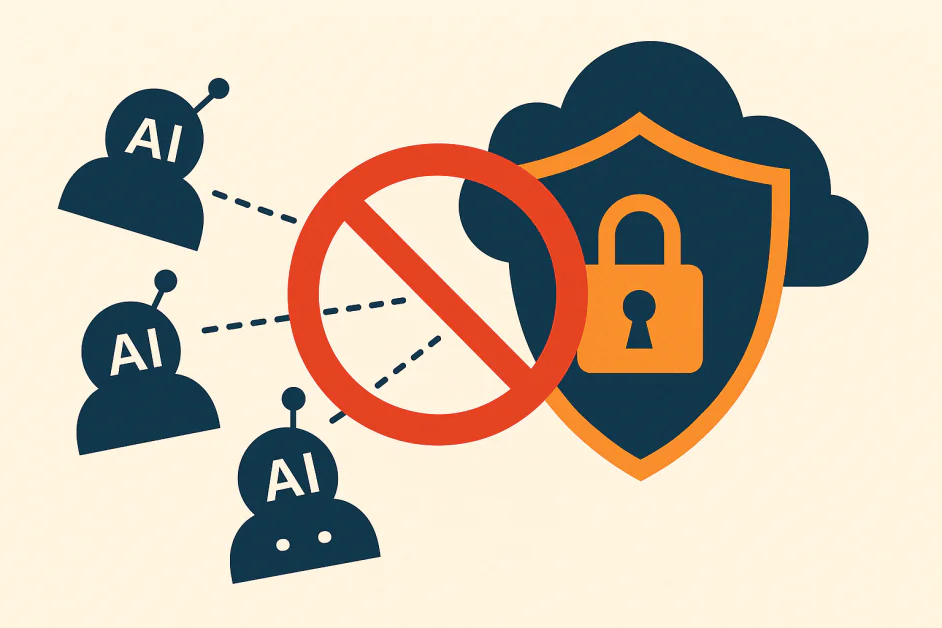
Cloudflare, one of the biggest internet infrastructure providers, has launched a new AI Bot Block feature, heralded as a potential ‘game-changer’ for content creators and the broader web. This innovative system aims to automate the detection and mitigation of unwanted artificial intelligence (AI) crawlers, fundamentally reimagining the relationship between website owners and AI companies.
Cloudflare is now the first Internet infrastructure provider to block AI crawlers accessing content without permission or compensation, by default. This article will investigate how Cloudflare’s new blocking mechanisms operate, examine their profound implications for the websites they cover, and explore the potential ripple effects across the web ecosystem, particularly for news publishers, e-commerce platforms, and the prospect of similar systems emerging from Cloudflare’s rivals.
How Cloudflare’s AI Bot Block Operates
Core Functionality and Default Blocking
Cloudflare has already seen more than 1 million customers activate a similar feature when it became an option in July 2024. But the company has announced that it will now default to blocking AI bots from visiting websites it hosts. The new offering enables site owners to decide if AI crawlers can access their content and how AI firms can use it. This changes content scraping from an opt-out to an opt-in model, and existing customers can enable this feature with a single click in their Cloudflare dashboard.
The feature is available to all customers, including those on free plans, making it accessible to websites of all sizes.
The ‘Pay Per Crawl’ Model
A major feature of Cloudflare’s new bot blocker is to ensure publishers are paid for their content being scraped and used by AI companies. This ‘Pay Per Crawl’ model is aimed at creating a new marketplace where publishers can request compensation from AI companies each time one of their pages is crawled.
Website owners in the experiment can choose to let AI crawlers, on an individual basis, scrape their site at a set rate, a micropayment for every single ‘crawl’. Publishers are granted full control, with three distinct options for each crawler: allow free access, require payment at a configured rate, or deny access entirely. Pricing will be determined by both publishers, who can set rates, and AI companies, who can choose whether to access webpages at those rates.
The system integrates with existing web infrastructure, leveraging HTTP status code 402 (‘Payment Required’). When an AI crawler requests content, it either provides payment intent via request headers or receives a 402 response indicating that payment is required.
Advanced Bot Management Tools
Cloudflare now offers to create and manage a robots.txt file for customers, automatically including directives that signal to popular AI bot operators not to use content for AI model training. This is crucial because robots.txt is an ‘honor system’ that many websites do not effectively utilize. Among the top 10,000 domains where a robots.txt file was found, only about 14% had ‘allow’ or ‘disallow’ directives targeting AI bots in particular.
A new option allows website owners to block AI bots specifically on portions of their site that are monetized through ads. Activating this setting will block verified bots that are classified in AI-related categories such as AI Assistant, AI Crawler, or an Archiver, as well as a number of unverified bots that behave similarly. This comprehensive feature is available to all Cloudflare customers, including those on free plans.
Impact on Sites Covered by Cloudflare
Reclaiming Control and Valuing Content
Cloudflare’s new tools are seen as giving publishers the ‘control they deserve’ over their content, essential for the ‘Internet to survive the age of AI.’ The traditional internet model, where search engines drove traffic and ad revenue, is considered ‘broken’ by some because the scrapers that enabled search engine indexing are what allow AI crawlers collect content like text, articles, and images to generate answers, without sending visitors to the original source, depriving creators of revenue and recognition.
Publishers have celebrated Cloudflare’s new program as a rare, decisive victory and a game-changer in preventing their content from being ransacked for free by millions of unidentified AI bots. Industry leaders describe it as the crucial first step toward rebuilding a viable internet economy, emphasizing that content creators deserve compensation for their work.
Addressing Financial and Operational Challenges
The widespread content scraping by AI bots has significant financial implications, undermining the heavy investments companies make in creating and publishing web content. Unchecked bot activity can also have detrimental effects on website performance, leading to overloaded servers, slowed websites, skewed analytics data, and increased operational costs.
Publishers have reported issues with ‘invalid traffic’ flags, which can lead to major supply-side platforms blocking domains, resulting in significant losses in demand and pricing pressure. Cloudflare’s solution addresses this by effectively locking the door against unauthorized crawlers, a significant improvement over the insufficient robots.txt honor system.
Evidenced Impact and Broad Publisher Adoption
Several large publishers, including Conde Nast, TIME, The Associated Press, The Atlantic, ADWEEK, and Fortune, have signed on with Cloudflare to block AI crawlers by default. The immediate impact has been substantial, with some publishers blocking millions of AI requests from unauthorized companies within hours of activating the feature.
For many publishers, the need for this was clear due to the exploitation of their intellectual property, and the continued escalation of the negative impacts of AI-driven search on site traffic. At the start of 2025, Open AI’s crawlers returned one visitor for every 250 pages it scraped, while by June they were returning one visitor for every 1,500 pages scraped.
Broader Web Ecosystem Ripple Effects and the Future
Implications for AI Developers and Model Training
The decision to block artificial intelligence crawlers from accessing content without website owners’ permission or compensation by default could significantly impact AI developers’ ability to train their models. This is likely to create a short-term impact on AI model training and could, in the long term, affect the viability of some models.
OpenAI declined to participate when Cloudflare previewed its plan to block AI crawlers by default on the grounds that the content delivery network is adding a middleman to the system.
SEO Implications and Search Engine Differentiation
A critical consideration for website owners implementing Cloudflare’s AI bot blocking is understanding the distinction between AI crawlers and traditional search engine bots. Google doesn’t care if you block other crawlers, and AI crawlers serve a whole different purpose: they gather information to train or update language models, unlike search engine bots that index content for rankings. This means blocking AI crawlers through Cloudflare’s system shouldn’t negatively impact SEO or rankings, meaning SEO strategies like backlinking will still be important.
However, the broader SEO landscape is evolving as search engines integrate AI capabilities into their results. Blocking specific bots may impact the visibility of websites in search results, potentially affecting discoverability, particularly as search engines develop AI-powered features. The key advantage of Cloudflare’s approach is its granular control, allowing publishers to maintain SEO benefits from traditional search engines while selectively blocking AI crawlers that provide no direct traffic or ranking benefits.
Sector-Specific Impacts
News Publishers
This system offers a potential and much-needed durable system for news publishers who are grappling with existential questions as Google Search traffic declines and AI chatbots gain popularity. It provides a mechanism for them to monetize their content without striking one-off licensing deals that typically only benefit large publishers.
E-commerce Platforms
The general benefits of Cloudflare’s system, such as reduced server load, prevention of skewed analytics data, and mitigation of content theft, are universally applicable to any website, including e-commerce platforms. These platforms rely heavily on consistent performance, accurate user data, and protection against unauthorized data scraping.
API Services
The core principle of controlled access and monetization of digital assets, though currently focused on web content, could conceptually extend to protecting and monetizing data accessed via APIs in future iterations or related services.
Competitive Landscape and Future Outlook
Cloudflare is used by 20% of the web, and it’s estimated that around 16% of global internet traffic goes directly through Cloudflare, positioning it uniquely to implement such a large-scale system. The vision of a marketplace for content faces challenges, as convincing AI firms to pay for content they currently scrape for free could be difficult.
While welcomed by many, Cloudflare’s tool can be seen as a partial solution rather than a complete one, and the focus should be on the ongoing need for stronger legal protections to prevent content theft by AI companies across the entire internet.
Conclusion
Cloudflare’s AI Bot Block represents a multi-faceted approach to empowering content creators and reshaping the dynamics between web publishers and AI. By providing robust control mechanisms and a new economic model like Pay per Crawl, it seeks to establish a more equitable internet for creators and AI companies alike. While facing challenges and the need for broader industry adaptation, this initiative marks a significant step towards safeguarding the future of content creation on the web.



