Thought Leaders
The Coaching Paradox: Why AI Feedback Sticks—and Human Coaching Inspires

 Add Unite.AI to your preferred sources on Google
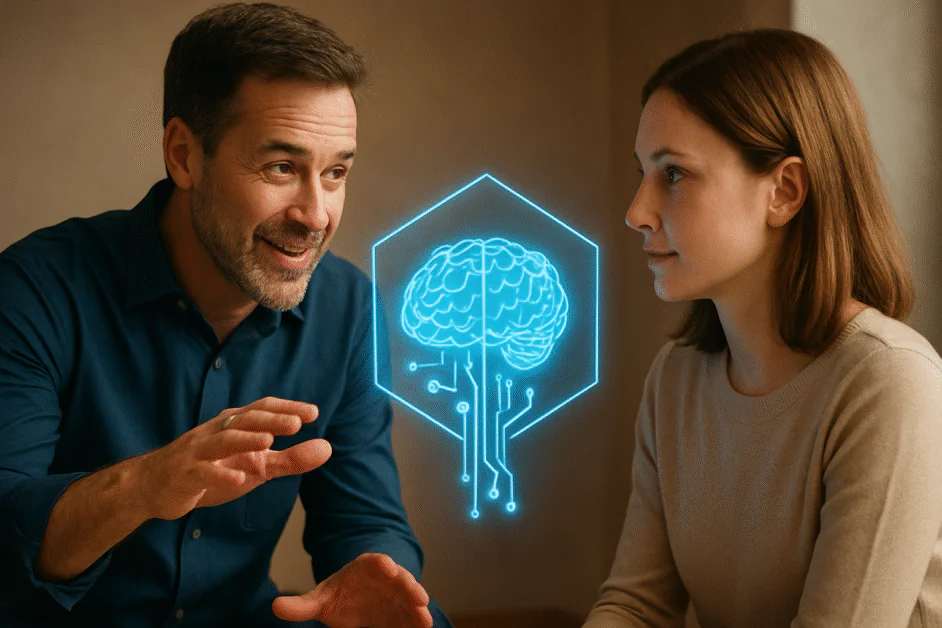
I’ve always believed that great coaching comes from people — empathy, trust, real connection. So when I joined a neuroscience study to find out whether human or AI coaches give better feedback, I was confident that I as the human coach would come out on top.
The study measured the biophysical signals of sales reps — things like brain activity, memory, focus, and emotional engagement — as they received feedback from either a human or AI coach in a simulated sales conversation.
But the data told a different story. While reps felt more motivated after human coaching, they remembered AI coaching better. The emotional spark came from people, but the lessons stuck when delivered by machines.
This paradox reveals something profound about how our brains process emotional human interactions versus AI interactions: emotional connection drives motivation, while AI structure improves retention. Understanding this balance can help sales organizations build coaching programs that don’t just feel good, but create lessons that stick.
The Human Element: Why Coaching Inspires Us
When a manager coaches in a way that offers praise, empathy, or trust, it lights up the brain’s reward networks — think dopamine, oxytocin, and connection — to reinforce feelings of motivation that ignite behavior change. Humans need an emotional connection to spark real improvement and growth.
I saw this play out firsthand with a rep who was on the verge of a performance improvement plan (PIP). They were struggling to find consistency and confidence in their calls. Rather than looking only at metrics, I focused on building trust — acknowledging what they were doing well and showing genuine belief in their potential. Together, we restructured their day, practiced calls, and celebrated small wins along the way. Over time, that encouragement fueled their motivation to improve.
That’s just one example of how people often perform better when they feel seen and valued by someone they respect. The challenge, however, is those same emotions that heighten motivation might impede our ability to retain what is said. With a human coach, we might remember how we felt and the gist of what was said, for instance, but fail to recall specific coaching insights. In neuroscience terms, the limbic system dominates the experience, while memory encoding (hippocampus, prefrontal cortex) takes a backseat.
So, what does this mean in practice? A rep may leave a coaching session feeling energized and ready to crush their sales quota, but two days later, when they sit down for a live call, they can’t remember exactly what their manager told them to improve. The conversation motivated action, but it didn’t encode memory deeply enough to sustain new behavior.
The Science of Retention: Why AI Feedback Sticks
On the flip side, AI-driven feedback tends to be structured, organized, and data-driven. AI cuts through the emotional “noise” of human feedback to offer concrete suggestions for improvement. That neutrality likely engages the brain’s analytical systems — including the prefrontal cortex and hippocampus — more directly. These regions specialize in focus and memory encoding, which helps improve retention.
The same Allego study bears this out: in their coaching simulations, sellers who received AI feedback remembered around 50% more content after 48 hours than those who received my human feedback. The structured nature of this feedback must matter — especially considering written summaries, rubric-based inputs, and clear metrics all reduce cognitive overload and improve recall.
This is why people sometimes recall instructions from an app or software more clearly than what was said in a casual meeting: structure supports focus and memory formation. AI may lack empathy, but it compensates by delivering precision, consistency, and repeatable reinforcement — qualities that make information “stickier” over time.
The Hybrid Advantage: When Humans and AI Work Together
The question, therefore, is where does that leave coaching programs? Neuroscience and data make a strong case for a dual approach.
– Human coaches deliver the emotional spark that motivates change: empathy, accountability, and trust.
– AI systems deliver reinforcement: repetition, consistency, feedback loops, scalability, and retention.
When used together, managers can create a coaching loop that strengthens how people naturally learn — where emotional engagement drives effort, and structured reinforcement drives mastery. In practice, that could mean having AI tools deliver quick-turn feedback, identify skill gaps, and track performance data, while human managers focus on the conversations that require empathy, context, and nuance.
This hybrid approach also reduces burnout for managers, allowing them to rely on AI for scale and analytics while doubling down on high-impact relationship-building. (It’s a partnership, not a competition — try as we may to “beat” AI.)
Designing for Impact: What the Data Shows
Data from across industries reinforces this pattern. According to a recent MITRE-Harris Poll, employees are increasingly open to AI-assisted learning tools, but they still prefer humans when it comes to motivation and leadership. In other words, they want both: AI for clarity and humans for connection. What’s more, in our Allego study, certain generations felt more inclined toward human feedback than others — including Gen Z and Gen X preferring human coaching over AI feedback. Perhaps this is because it provides an extra boost in motivation for burnt-out Gen Xers and a motivating career start for their younger Gen Z colleagues.
This is consistent with research from McKinsey and Gartner, which shows that hybrid coaching models — where human insight and AI feedback are used in tandem — lead to higher learning retention, stronger behavioral change, and improved organizational performance.
The Future of Coaching
As AI becomes increasingly embedded in sales enablement and training platforms, neuroscience offers a grounding principle: people change behavior when their hearts are inspired and their brains are reminded.
The most effective organizations will adopt this hybrid approach. They’ll use human insight to drive motivation, along with AI precision to drive retention and mastery. Combined, they can transform coaching from a motivating-but-forgettable conversation into a measurable performance driver.
For sales leaders, that means designing coaching programs that:
- Blend AI structure with human empathy
- Deliver clear, consistent feedback that reinforces memory
- Foster emotional connection to inspire motivation
- Incorporate reflection and surprise to deepen learning
- Adapt coaching to each seller’s style and experience
- Balance speed, structure, and personalization for impact
Perfecting the coaching loop isn’t about replacing humans with AI. It’s about aligning them so reps don’t just feel coached, but they learn and improve.
Because ultimately, the goal isn’t to make coaching colder or more robotic. It’s to ensure that when motivation fades, memory holds. And that’s where AI can turn a fleeting “aha moment” into lasting mastery.