
Interviews
Ryan Schonfeld, Co-Founder and CEO of HiveWatch – Interview Series

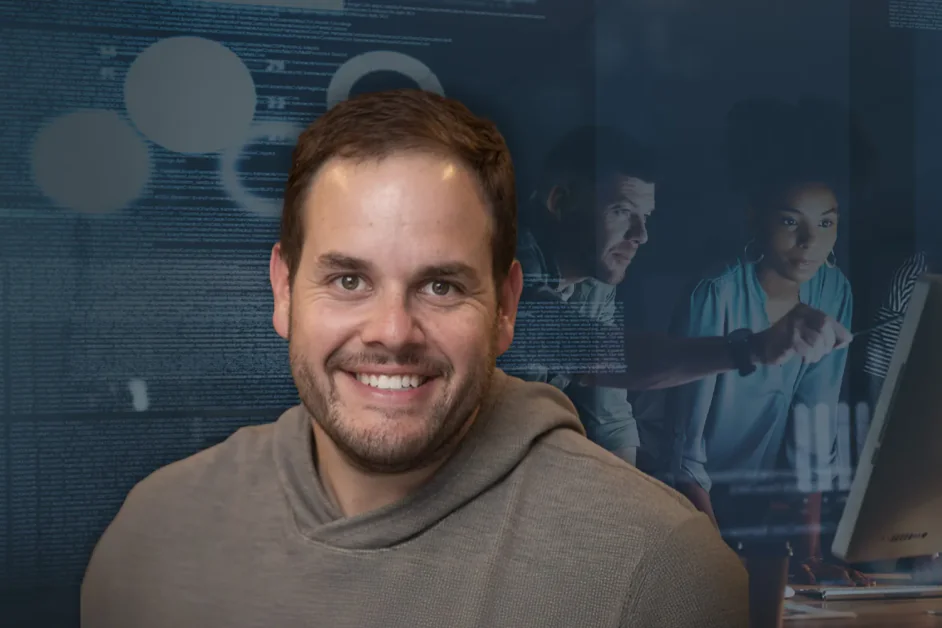
Ryan Schonfeld is the Co-Founder and CEO of HiveWatch, a security technology company focused on improving how organizations manage and respond to physical security threats. With experience as a security consultant, law enforcement officer, and a Fortune 500 end user, he developed a firsthand understanding of the operational challenges security teams face, which ultimately led him to build HiveWatch.
HiveWatch provides a cloud-based platform that brings together tools such as video surveillance, access control, alarms, and incident management into a single operational dashboard. Known as the HiveWatch GSOC Operating System, the platform allows organizations to monitor activity across facilities, investigate incidents, and coordinate responses while using automation and AI-driven analysis to improve efficiency and reduce false alarms.
What led you to co-found HiveWatch, and what limitations in traditional physical security made AI the right foundation from day one?
I spent years running global security & safety technology programs at global organizations and our ability to effectively utilize technology was maddening. Security was top notch but we had to use infrastructure that was fragmented, slow, reactive, and human-centric. So I started RAS Consulting to help organizations modernize their security operations, planning, education, risk and liability management. We built technology-forward programs for rapidly growing companies that needed to scale fast.
But even then, I kept seeing the same problem: my clients’ operators were drowning in alerts, buried under disconnected systems, reacting to everything and anticipating nothing. RAS Consulting customers needed proactive security, but they didn’t have the knowledge or the people to build it themselves. The pandemic made it worse. Suddenly everyone needed to rethink how they protected people and assets, but they were using tools built for a different era.
That’s why we created HiveWatch. We needed a platform that could make our own security teams more aware, connected, predictive, and informed. We wanted all of this in addition to being faster and better at managing incidents. AI wasn’t a feature we tacked on later, it was the only practical way to unify data for the best, most informed decisioning. We can do it no matter what systems our customers have. So now we can easily cut through false alarms and help teams move from reactive to proactive. Anything else is just making the same old problems slightly prettier.
How did your background as a police officer and investigator influence how you designed AI to support real-world security operations?
I sat in the seat when incidents were unfolding in security operations centers and I’ve been on the ground during high-risk incidents, managing threats in real-time. This experience taught me that both people and technology matter in those moments, that exhaustion or burnout can affect decision-making in an emergency. It also taught me what works, what doesn’t, and what gets people hurt when systems fail. It’s through this lens that we built HiveWatch.
Using the experience gleaned from this work, our AI platform wasn’t just from a whiteboard. We designed it from inside security operations centers. The people who built this have spent careers staring at screens full of noise, trying to find the true threats but not having the tools to see clearly or act fast enough.
For too long, the industry sold reactive incident response and called it innovation. What teams actually need is the ability to see what’s coming, and we built for that.
Many organizations still operate reactively. How does AI enable a shift toward proactive and predictive physical security?
Reactive security isn’t a strategy problem, it’s a problem that encompasses managing a fragmented system that can result in a breakdown of communications. It also involves a lack of prioritization when incidents occur. Teams are also drowning in noise created by incessant alarms that are often false and created with zero context. That’s where everything breaks down.
Our customers use a custom AI Operator that actually learns their facilities — the layout, the workflows, how their teams operate. Instead of hundreds to thousands of garbage alerts a day, they see the handful that matter, with video and context showing exactly why.
When you cut the noise and surface real patterns, something shifts. Teams stop chasing yesterday’s problems and start getting ahead of tomorrow’s threats. They’re better able to have the clarity they need to build security programs that actually work.
When you talk about predictive security, what does that actually look like in live enterprise environments?
It’s not a crystal ball. It’s pattern recognition at speed.
This might look like an open door that shouldn’t be open. Or movement on camera that doesn’t match the norm. Or activity that’s never happened in that spot at that time. The AI catches it, flags it, and tells the operator what’s happening, why it matters, and what to do next.
It plugs into the cameras, sensors, and access controls you already have, so nothing slips through because two systems aren’t talking to each other. The result is a security operation that’s sharper, faster, and actually built to protect people at scale.
What types of risk signals, behaviors, or patterns does AI consistently surface that human teams tend to miss?
Humans are great when something obvious goes wrong. AI is great at catching everything that’s quietly going wrong.
We’re talking about subtle deviations. Things that don’t trip a traditional alert but absolutely should. The AI continuously learns what “normal” looks like for each specific environment, so when something shifts, it notices. In high-volume operations where your team is managing thousands of signals, those are the risks that tend to slip through. Adding something like the AI Operator brings a shift toward prioritization of alerts so that the operators responding to incidents know what’s critical (and are guided on how to respond effectively).
How does AI change decision-making inside a security operations center when time and information are limited?
In a live incident, there’s a gap between “what’s happening?” and “what do we do?” That gap is where bad outcomes live.
Using AI closes it. It pulls context from across your integrated systems, such as video, access control, sensors, communications, threat intelligence, and puts it in front of your operator with a recommended next step. They no longer have to toggle between 15 tabs. They don’t have to guess. Your team goes from alert to action in seconds instead of minutes.
The reality is, most SOCs are understaffed and overwhelmed. AI doesn’t fix that by adding headcount; it fixes it by making sure every person in the room is focused on what actually matters, with the information they need to make the right call, right now.
Large-scale events like major sporting events or award shows create extreme complexity. How does AI help coordinate response under pressure?
Big events can break traditional security. The signal volume explodes, the risk surface multiplies, and legacy tools can’t keep up.
I’ve coordinated protection at large-scale events with executive protection teams, venue security, event hosts, local law enforcement, medical, federal agencies. It’s layered security on top of layered security. But here’s what the last few years have taught us: sometimes the threat is already inside the perimeter. A trusted insider. A credentialed guest. Someone who’s already past your checkpoints.
We’ve seen it play out on live TV, too: incidents at awards shows, fans breaching barricades, people jumping fields with political messages. Where we’ve historically drawn our perimeters may need to be completely rethought..
AI gives you additional eyes across the entire environment, not just the entry points. It’s monitoring patterns, movement, and anomalies in real time, so when something emerges inside the wire, the security team knows before it escalates. In these instances, seconds matter and situational awareness isn’t just a “nice to have.”
How important is deep system integration across video, access control, sensors, and communications for AI to deliver real situational awareness?
Non-negotiable. AI is only as smart as the data it can see. In so many instances, these systems are siloed and if they’re not connected, AI might not be getting the whole picture (this is where HiveWatch can make a real difference, by bringing all of these systems together into a single environment).
When everything’s integrated (think: video, access control, sensors, communications, threat intelligence), the AI has full visibility to recommend the right course of action. It’s critical that your security operations platform is built to work with what you already have. You bought good tools. They should be able to work together so you don’t have to rip and replace to get value.
How should executives realistically think about ROI when evaluating AI-driven physical security platforms?
Start with what’s already costing you money, because it’s more than you think.
False alarms eat hours. Disconnected systems mean duplicate work. Operators burning out and turning over means you’re constantly hiring and retraining. That builds heavy costs, and most organizations have never quantified it.
AI-driven platforms like ours can reduce the amount of operators needed across a security operations center and its guarding resources, which can result in significant ROI. Additionally, as the technology cuts false alarms dramatically, fewer people are needed to triage incoming alerts. Secondarily, reducing duplicative technology across a SOC’s tech stack can reduce the amount spent on overlapping systems. Finally, because we integrate with the infrastructure you already own, you’re not ripping out what you’ve spent years building. Instead, you’re finally getting full value from it.
The ROI isn’t just in what you save, although this can be significant when you consider cost reductions in resources needed to support your program (which has historically been hard to quantify for security leaders). It can also be revealed in what your team prevents. One averted incident, one faster response, one threat caught early. To your board, employees, and customers, that’s the math that matters. The teams that get this aren’t buying new tech for the sake of it. They’re fixing a broken program.
Looking ahead, how do you see the relationship between human security teams and AI systems evolving over the next decade?
Let’s beect: in a few years, AI in security won’t be optional. It’ll be the baseline. The teams that treat it like a “nice-to-have” are going to fall behind the ones that already work alongside it.
As systems mature, AI takes on more of the cognitive load — filtering noise, spotting patterns, recommending actions — while humans stay where they belong: in control of judgment and accountability. That partnership is going to define what modern physical security looks like. The teams that figure it out first win.
Thank you for the great interview, readers who wish to learn more should visit HiveWatch.



