Interviews
Romain Sestier (CEO) & Guillaume Lebedel (CTO), Co-Founders of StackOne – Interview Series

 Add Unite.AI to your preferred sources on Google
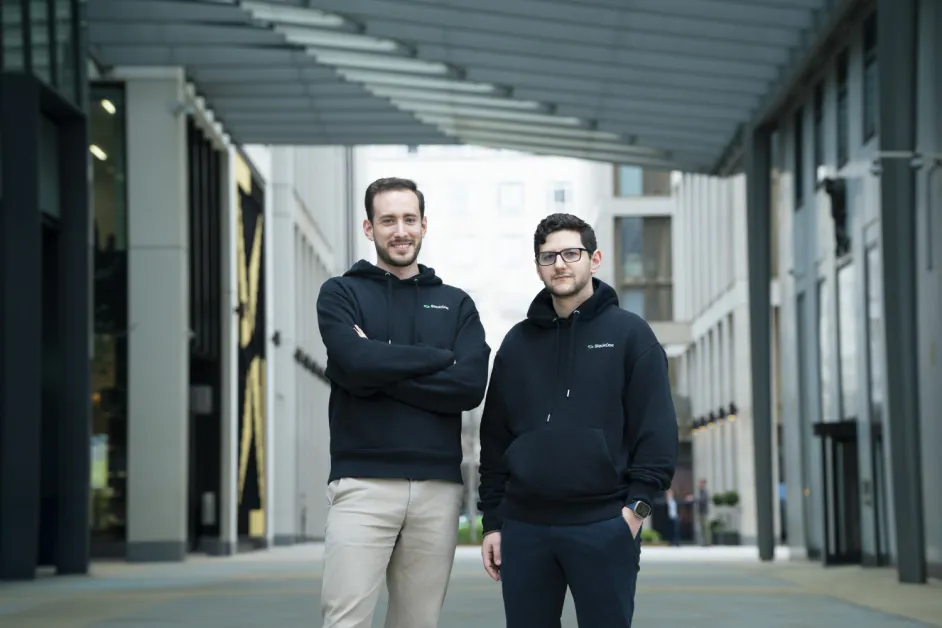
Romain Sestier, the Co-Founder & CEO of StackOne, has built a product from scratch to a $1 billion valuation at Google (GOOGL ) and has also served as the VP of Product & CS at Yieldify, where he managed 70 people globally and led the SaaS integration strategy. Romain also opened the UK office as Head of UK Services at ContentSquare and led integration with A/B testing tools. He has also co-founded a previous startup, Upper.ai, with Guillaume.
Guillaume Lebedel, the Co-Founder & CTO of StackOne, was the VP of Engineering at Yieldify, a company that was acquired by Publicis. Guillaume has led integration teams and built hundreds of integrations with SaaS tools used by more than 1000 SaaS products. He has also built and maintained APIs with over 2 billion hits per month.
StackOne is a privacy-first, AI-powered integration platform that helps B2B SaaS companies and AI agents build real-time, bi-directional integrations across hundreds of enterprise systems through a single unified API. Designed for speed and security, it enables developers to ship integrations in days instead of weeks without storing customer data.
What inspired you to leave Google and co-found StackOne, and what gap in the AI or SaaS integration space did you see that made the opportunity feel urgent?
Romain: “The pain of integration is something I’ve felt at every stage of my career, whether I was at an early-stage startup or working with large-scale systems inside Google. While leading Product at Google, I was building an AI insights tool for retail, and even there — at one of the most technically advanced companies in the world — we ran into huge hurdles just getting clean integration between systems. That’s when it really hit me: this is a wide-spread, systemic problem. And with the rise of LLMs, we saw a new window open. Suddenly, there was an opportunity to completely reimagine the integration layer: one that wasn’t just bolted on, but built from the ground up for AI. Guillaume and I saw it clearly: the timing was right, and the market was hungry for a solution.”
How did your experience leading product and services at Yieldify and your work at Area 120 influence your approach to StackOne’s product strategy?
Romain: “At Yieldify, I led both the Product and Services sides of the business, which taught me the importance of tying the roadmap to actual revenue outcomes; things like faster partner onboarding, higher average order value, or lower churn. At Google, I scaled a data insights product that delivered $1 billion in incremental revenue, and that experience reinforced how critical user experience and adoption metrics are to success. Area 120 was a very different beast—it was all about 10x ideas and speed. That taught me to move fast, experiment constantly, and not be afraid to bet big. All of that has deeply influenced how we build at StackOne: bi-weekly sprints, bold product bets, and a laser focus on making integrations not just easier to scale, but delightful to use.”
StackOne isn’t building a new model—you’re building the connective tissue between models and SaaS systems. Why is this infrastructure layer so critical to the success of AI agents?
Guillaume: “The reality is, AI agents don’t just need brains, they also need hands. A model might be able to reason brilliantly, but unless it can take precise, secure and fast actions in the real world, it’s highly limited. Without a structured infrastructure layer to govern authentication, rate limits and access permissions, they’ll either hallucinate and take the wrong actions or break things. Most companies use over 100 SaaS tools, so without a platform like StackOne abstracting the plumbing, you’re stuck trying to wire up each one individually. Our job is to give the agents safe, scalable access to the tools they need, so teams can focus on logic, not logistics.”
Can you walk us through how StackOne’s Unified API and AI Agent Actions platform works under the hood? What’s technically challenging about it?
Guillaume: “We define a single exhaustively described OpenAPI spec per domain, which maps to hundreds of underlying endpoints. That spec stays up to date centrally, so customers don’t have to manage version changes. Our tool schemas come pre-defined with the right authentication scopes, meaning the agent doesn’t guess or overreach. The hardest part is normalising SaaS data models — tools like Workday let customers define custom objects and relationships, which introduces massive complexity. Our engine handles all that in real time, giving developers a reliable, deterministic execution layer powered by LLM-assisted mapping.”
What makes StackOne’s tool-calling engine faster and more accurate than the capabilities of even leading LLMs?
Guillaume: “The key is structure. Our engine provides typed and exhaustively described function signatures, so models know exactly what arguments to use. Under the hood, StackOne is able to batch and parallelise the tool calls while respecting rate limits to enact the requests as fast as possible with automated retries. And since we manage credentials centrally, there’s no need for re-authentication inside the loop. These optimisations make a huge difference when you’re trying to run agents in real time.”
How is StackOne optimised specifically for AI use cases, such as Retrieval-Augmented Generation (RAG), tool use, or real-time agent execution?
Guillaume: “We offer delta-only endpoints for RAG pipelines, which keeps context windows short and efficient. For real-time agents, we support streaming unified webhooks leveraging native events or creating synthetic events when underlying tools do not provide the events you need. . And our platform enforces fine-grained access control at the tenant and project level, which is essential for orchestrating multiple agents across different users securely.”
What are the most common misconceptions teams have about building integrations internally versus using a platform like StackOne?
Romain: “One big myth is that integrations are just about making an API call. The initial build might look simple, but ongoing maintenance often consumes 20% of engineering time. Teams also underestimate the value of niche connectors: the ones you deprioritise can be where churn risk actually lives. And security is often an afterthought. DIY teams rarely cover things like SOC-2 compliance or tenant isolation, which are non-negotiable for enterprise customers.And then there’s tenant customisation. Every new customer brings its own set of edge cases, configuration quirks and mapping logic, which adds ongoing complexity that’s easy to overlook upfront.”
Everyone’s talking about AI agents, but real-world deployment is still early. What do you believe is holding back mass enterprise adoption — and how is StackOne addressing it?
Romain: “Security and compliance are still the biggest blockers. CIOs worry about agents acting out of scope or creating audit gaps. StackOne solves this by enforcing least-privilege OAuth scopes, enabling tenant-level kill switches and providing a full audit trail. When risk teams see that level of control, they move from being gatekeepers to active supporters.”
What are the biggest technical or security challenges in letting AI agents act on behalf of users across SaaS platforms — and how do you mitigate them?
Guillaume: “You have to manage things like token sprawl and refresh cycles, which we solve with a central encrypted vault. Preventing data leakage at the row level is another challenge, so we enforce deterministic account identifiers in the tool call to ensure agents only access the right data and it’s not up to the LLM. And to avoid agent drift or misuse, we continuously run policy checks and red-team testing. Our platform also allows parameterizing which action should be available for which linked system. Security has to be baked in from the ground up.”
How do you see the future of open-source tools like LangChain and CrewAI blending with proprietary platforms like StackOne?
Guillaume: “We see open-source as the orchestration layer and StackOne as the underlying infrastructure. That’s why we’ve built SDKs for Python and Typescript that plug directly into LangChain and CrewAI workflows. You’ll see a hybrid model emerge, with open-source tools for prototyping and managed platforms for production-grade reliability, similar to how teams use Terraform with AWS. It’s not either-or, it’s both.”
Thank you for the great interview, readers who wish to learn more should visit StackOne.