
Funding
Resolve AI Raises $40M Series A Extension at $1.5B Valuation to Tackle the Hardest Problem in Software: Production

 Add Unite.AI to your preferred sources on Google
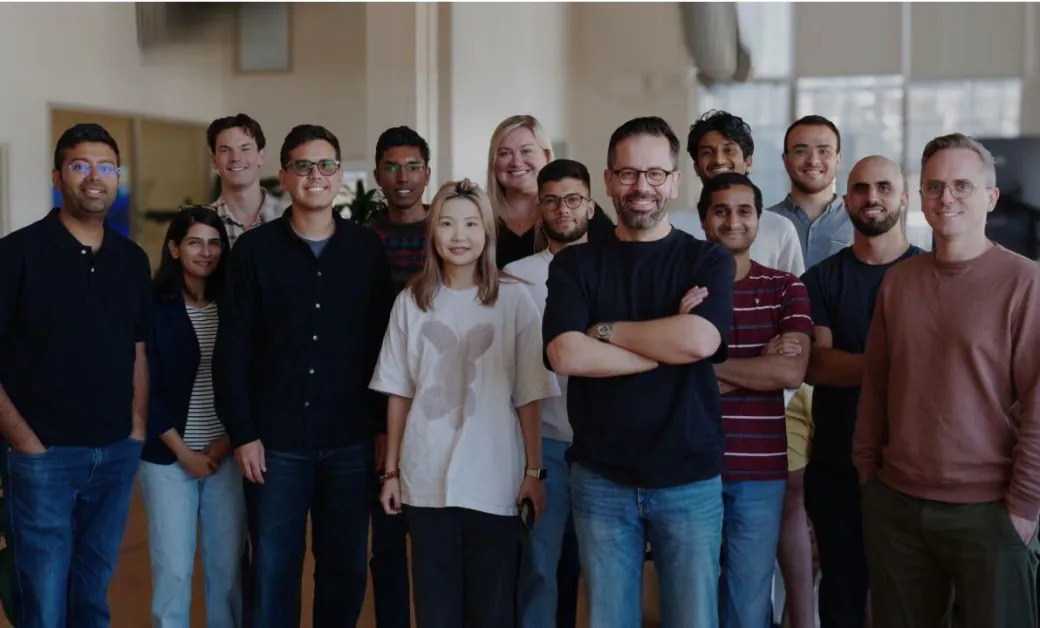
Resolve AI has secured a $40 million Series A extension at a $1.5 billion valuation, led by DST Global and Salesforce Ventures (CRM ). The funding comes at a moment when artificial intelligence has dramatically accelerated how software is built—but not how it is maintained once deployed.
Alongside the raise, the company introduced Resolve AI Labs, a dedicated research initiative aimed at closing what is becoming one of the most critical gaps in the AI stack: the ability to reliably operate software in production environments.
The Bottleneck No One Solved: Production
AI has made writing code faster than ever. Tools powered by large language models can now generate entire applications in minutes. But once that code is deployed, the reality becomes far more complex.
Production environments are fragmented systems made up of infrastructure, telemetry, logs, dependencies, and constantly changing services. Engineers must interpret signals across all of them to diagnose failures, often under time pressure and with incomplete information.
This is where Resolve AI is focused. Its platform connects across code, infrastructure, and telemetry to investigate incidents, identify root causes, and take action—essentially acting as an autonomous production engineer.
The challenge is not just technical complexity. It is also scale. As AI accelerates code generation, organizations are producing more software than their teams can realistically manage. The result is a widening gap between development speed and operational reliability.
Why General AI Models Fall Short
A central thesis behind Resolve AI’s approach is that general-purpose AI models are not designed for production environments.
While foundation models are improving rapidly, they are not optimized for the realities of operational systems. Production requires reasoning across noisy, incomplete, and often conflicting data streams. It also demands high levels of accuracy, reliability, and control, where mistakes can lead to outages, financial loss, or security risks.
Resolve AI addresses this by building domain-specific models and agentic systems tailored to production workflows. These systems can interpret logs, analyze system changes, correlate events, and execute multi-step remediation processes across tools—tasks that traditionally require experienced engineers.
Inside Resolve AI Labs
The newly launched Resolve AI Labs is designed to push this vision forward by building the foundational technology required for AI to operate production systems end-to-end.
The lab will be led by Dhruv Mahajan, formerly of Meta, where he worked on post-training for Llama models.
Rather than focusing narrowly on agents, the lab will take a full-stack approach to operational AI. This includes developing:
- Domain-specific models trained on production data
- Systems that reason across logs, metrics, traces, and infrastructure events
- Evaluation frameworks to measure reliability in real-world workflows
- Simulation environments for testing and improving models
- Governance layers to ensure safe and controlled automation
This reflects a broader shift in AI development: moving beyond raw model capability toward systems that can operate safely in high-stakes, real-world environments.
From Assistance to Autonomy
Resolve AI is part of a growing category often referred to as “AI for production” or AI-powered site reliability engineering (SRE). Unlike coding assistants, these systems are designed to operate live environments—triaging alerts, diagnosing failures, and resolving incidents in real time.
The company’s platform already enables engineering teams to investigate incidents significantly faster, with AI systems capable of analyzing system behavior and identifying root causes across complex dependencies.
Over time, the ambition is to move from assistance to autonomy. Instead of engineers manually responding to alerts, AI systems could handle the majority of operational work, with human oversight applied based on risk and context.
Early Traction with Enterprise Customers
Resolve AI’s rapid funding trajectory reflects strong enterprise demand for this capability. The company has raised more than $190 million in under two years and is already working with organizations such as Coinbase, DoorDash (DASH ), Salesforce, MSCI, and Zscaler.
These are environments where downtime is costly and reliability is critical. Even small improvements in incident response times or system stability can translate into significant business impact.
The emergence of companies like Resolve AI signals a broader evolution in the AI ecosystem.
The first wave of generative AI focused on creation: writing code, generating content, and accelerating workflows. The next phase is about operation—ensuring that what gets built can run reliably at scale.
This shift introduces new technical challenges. It requires systems that can reason over time, handle uncertainty, interact with multiple tools, and operate within strict constraints. It also demands new evaluation methods, since traditional benchmarks do not capture real-world operational performance.
What This Means Going Forward
As AI continues to accelerate software development, production will increasingly become the limiting factor. The ability to operate complex systems reliably may define the next generation of enterprise AI platforms.
Resolve AI’s latest funding and the launch of its research lab suggest that this problem is moving to the forefront. If successful, the company is not just building another AI tool—it is helping redefine how software systems are run.
The long-term implication is a shift toward environments where AI systems and human engineers work in tandem, with machines handling the complexity of production and humans focusing on higher-level design, strategy, and innovation.



