
Technology
Quantum Radar: The Next Frontier of Stealth Detection

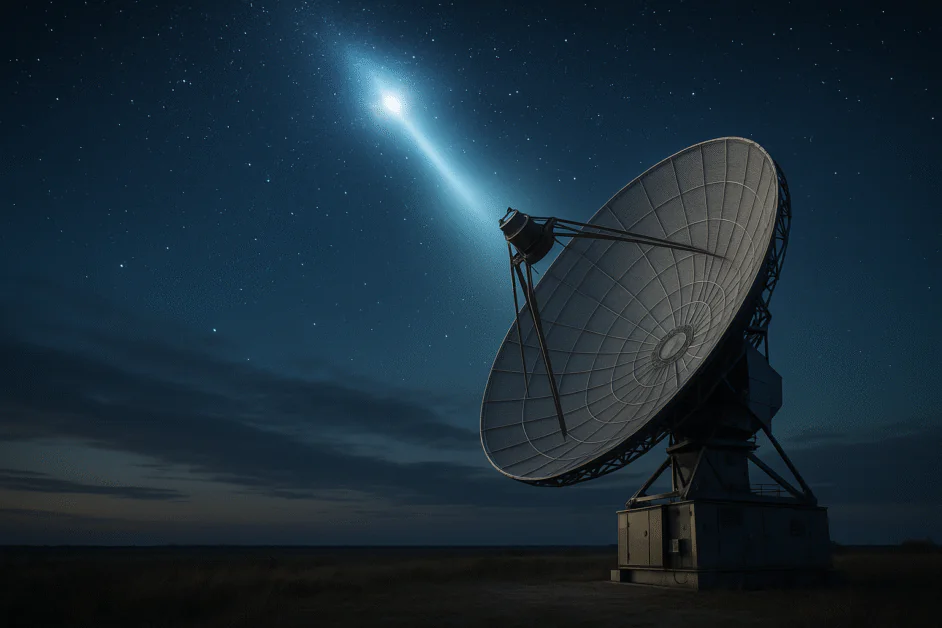
Quantum radar is an emerging technology that exploits the strange phenomenon of quantum entanglement to detect objects that would be invisible to conventional radar systems. By sending out pairs of entangled photons and measuring the subtle correlations between them, a quantum radar can theoretically distinguish a real target’s signal from background noise with unprecedented sensitivity. This has made quantum radar a tantalizing prospect for counter-stealth applications – potentially allowing defenders to spot stealth aircraft, missiles, or other “invisible” targets that absorb or deflect normal radar waves. But how does this quantum trickery work, and how close is it to real-world deployment?
How Quantum Radar Works
Traditional radars emit radio or microwave pulses and detect reflections, but are easily foiled by stealth technology that reduces those reflections. Quantum radar, by contrast, transmits entangled photon pairs – one photon (the “signal”) is sent out, while its twin (the “idler”) is retained. If the signal photon bounces off an object and returns, it will have lost its entanglement, but subtle statistical links between the returning photon and the idler photon can reveal the object’s presence. In essence, the quantum radar labels its outbound photons with a unique quantum signature. Even if only a few entangled photons return, the system knows they must have originated from its own transmitter – allowing it to separate real targets from overwhelming background noise that would blind a classical radar.
This concept, known as quantum illumination, was first theorized in 2008, and it suggests that entangled light can significantly outperform conventional methods in detecting faint, low-reflectivity objects in noisy conditions. In practical terms, a quantum radar might pick up the tiny echoes from a stealth fighter by filtering them out from thermal noise, something impossible for standard radar at similar power levels. The trade-off, however, is that maintaining entanglement over long distances is extremely difficult, and quantum radars typically require sophisticated cryogenic systems to generate and preserve delicate quantum states.
Early Advances and Breakthroughs
Over the past decade, researchers around the world have achieved several milestones proving that quantum radar is more than just theory. In 2018, the Canadian government invested $2.7 million to develop a quantum radar system for Arctic surveillance, partnering with the University of Waterloo’s Institute for Quantum Computing. This effort aimed to move quantum radar from the lab to the field, motivated by the technology’s promise to spot stealth bombers or missiles approaching through the high-noise polar atmosphere.
The following year, Waterloo scientists delivered on a key step: they demonstrated a quantum-enhanced radar that outperformed a classical radar by a factor of ten in controlled experiments. By entangling microwaves at cryogenic temperatures, their prototype was able to detect a test object in a noisy background with far greater accuracy than an equivalent classical system – a landmark proof that quantum illumination works outside of theory.
Around the same time, breakthroughs were also emerging in Europe. In 2020, scientists at the Institute of Science and Technology Austria unveiled a microwave quantum radar prototype operating at millikelvin temperatures. This device used entangled microwave photons to detect low-reflectivity objects at room temperature, showing that quantum radar principles could be realized in practice. The results were published in Science Advances and confirmed that even in a thermal environment where classical radars struggle, entanglement-enabled detection can reveal objects that would otherwise be lost in the noise.
China’s Quantum Radar Push
While Western researchers were doing careful laboratory demonstrations, China aggressively jumped into the quantum radar race with bold claims. As early as 2016, the state-owned defense giant CETC announced it had built a quantum radar prototype purportedly capable of detecting stealth aircraft 100 km away. This entangled-photon radar reportedly flew on a high-altitude balloon, aiming to pick out cruise missiles and fighter jets at long distance. The claim, relying on the spooky effects of quantum entanglement, fed speculation that quantum radar could nullify an opponent’s stealth advantage.
However, many experts greeted the news with skepticism, noting that achieving entanglement over 100 km of atmosphere pushed credulity given known technical limits. Despite the doubts, China’s investment in quantum sensing never slowed. By the late 2010s, Chinese labs were testing various quantum radar setups – including mounting systems on airships – and seeking ways to extend their range and reliability.
Most recently, China announced a major leap on the hardware front. In October 2025, Chinese researchers revealed they have begun mass-producing an ultra-sensitive four-channel “photon catcher” detector for quantum radar and communication. Reported by Science and Technology Daily, this single-photon detector can register individual photons with extremely low noise, which is crucial for entangled signal detection. The device, developed at the Quantum Information Research Centre in Anhui, is expected to dramatically improve the capabilities of future quantum radars – potentially enabling them to track modern stealth fighters like the F-22 by catching the faintest signal returns.
By achieving domestic mass production of this core component, China claims it has attained self-sufficiency and a global lead in quantum radar technology. These advances underscore the country’s determination to harness quantum mechanics for strategic military sensing. Western analysts note that China’s rapid progress is partly due to massive government support and the integration of quantum research into military programs – a sign that the race for quantum radar supremacy is well underway.
Challenges and Future Outlook
For all its promise, quantum radar still faces steep practical challenges before it can revolutionize the battlefield. The pioneering prototypes to date work only at short ranges (on the order of meters to a few kilometers) and often require laboratory conditions. The entangled photon signals are inherently fragile: maintaining quantum coherence over long distances or through turbulent atmosphere is exceedingly difficult. Most experimental quantum radars also require cryogenic cooling to produce entanglement and reduce detector noise, which is not ideal for deployment on aircraft or remote sites.
The engineering complexities mean that classical radar, with decades of refinement, remains far more practical for most applications right now. Despite these challenges, research is forging ahead and confidence is growing that the hurdles can be overcome with time. Incremental improvements in photodetectors, quantum sources, and error correction techniques may steadily extend the range and robustness of quantum radars.
There is also exploration into hybrid approaches – for example, using quantum enhancements to improve conventional radar receivers – that could deliver some benefits sooner. It’s worth noting that even a limited-range quantum radar could have niche uses, such as short-range high-resolution sensors for security scanners or battlefield surveillance drones. And the military significance of eventually countering stealth technology ensures that major powers will continue pouring R&D resources into this field.
Governments and defense contractors worldwide, from DARPA in the U.S. to startup firms in Europe, have made quantum sensing (including radar) a strategic priority. In the coming decade, we can expect further quantum radar demonstrations with steadily increasing range and reliability. If cryogenic systems become more compact or if room-temperature quantum sources are developed, the prospect of field-deployable quantum radars will move closer to reality.
Much like how radar itself was a game-changer in the 20th century, quantum radar holds the potential to redefine detection and stealth in the 21st. For now, it remains a cutting-edge technology under development – one that has proven it can “see the unseen” in principle, even if not yet in practice. The race is on, and the first nation to crack the remaining technical puzzles may gain a decisive edge in military sensing. Quantum radar started as a physics experiment, but it is steadily marching toward the real world of defense and security, promising a future where even the sneakiest objects can no longer hide from view.



