
Funding
Qodo Raises $70M Series B to Bring Governance to AI-Generated Code

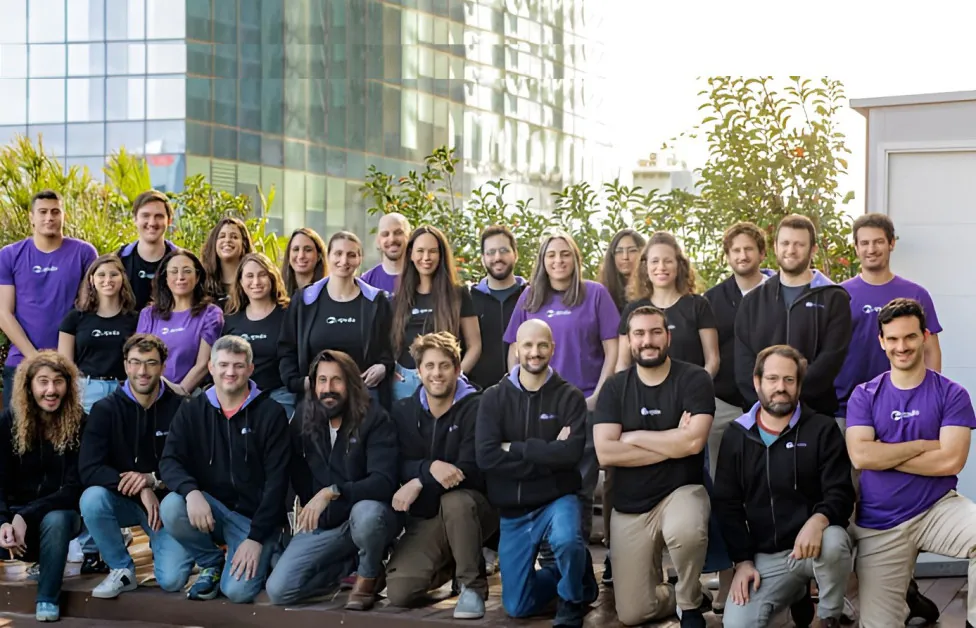
Qodo has secured $70 million in Series B funding, bringing its total capital raised to $120 million, as the company positions itself at the center of a growing problem in software development: how to trust code increasingly written by AI.
The round was led by Qumra Capital, with participation from a mix of venture firms and high-profile individual investors tied to companies like OpenAI and Meta. The funding reflects a broader shift in how enterprises are thinking about AI—not just as a tool for generating code, but as something that requires oversight, validation, and governance at scale.
The Problem: AI Is Writing Code Faster Than Humans Can Verify It
The rise of generative AI has dramatically accelerated how software is produced. Tools can now generate large volumes of code autonomously, but that speed comes with a tradeoff: verification.
Qodo is built around a simple premise—code generation is no longer the bottleneck. Trust is.
Traditional code review processes, which rely heavily on human engineers, are struggling to keep up with the volume and complexity of AI-assisted development. Even developers themselves are adjusting their behavior. According to the company, most engineers now treat AI-generated code differently, often requiring more rigorous validation steps before deployment.
This creates a widening gap between how fast code is created and how confidently it can be shipped.
What Qodo Actually Does
Qodo is not another coding assistant. Instead, it operates as a dedicated review and governance layer across the software development lifecycle.
Its platform integrates into development environments, pull requests, and CI/CD pipelines, applying automated, context-aware analysis to every code change. Unlike traditional tools that focus on isolated diffs, Qodo evaluates how changes ripple across entire codebases, factoring in architectural dependencies and historical decisions.
At the core of its system is a multi-agent architecture introduced in recent versions of the platform. Different specialized agents handle distinct aspects of code review—such as bug detection, compliance checks, and architectural validation—before a coordinating layer filters and prioritizes findings.
This approach reflects a broader evolution in AI systems, where orchestration across multiple agents is becoming more effective than relying on a single model to handle everything.
From Code Generation to Code Governance
The timing of Qodo’s raise is notable. Over the past two years, much of the investment in developer tools has focused on code generation—copilots, autocomplete systems, and AI pair programmers.
Qodo is betting that the next phase is code gvernance.
Its positioning aligns with a growing realization inside large enterprises: AI can accelerate development, but without strong guardrails, it can also introduce hidden risks—security vulnerabilities, logic errors, and inconsistencies across systems.
By acting as a “system of record” for code quality, Qodo aims to standardize how organizations define and enforce engineering standards across teams and repositories.
Enterprise Adoption Is Already Underway
The company counts large enterprise customers across industries, including companies in retail, finance, and automotive. These organizations are increasingly deploying AI-assisted development workflows, but need assurance that code meets internal standards for security, compliance, and performance.
Qodo’s platform addresses this by embedding governanceectly into workflows rather than relying on separate review stages. This reduces friction while still enforcing consistency—a key requirement for large, distributed engineering teams.
The Bigger Shift: From Code Generation to System-Level Verification
As AI systems take on a larger in writing software, the nature of code review is shifting at a technical level. Traditional processes are built around localized diffs, evaluating what changed in a pull request. AI-generated code challenges this model, as changes can span multiple files, introduce hidden dependencies, or conflict with broader architectural patterns despite appearing correct in isolation.
Qodo’s approach points toward system-level verification. Instead of focusing only on individual changes, it evaluates how those changes interact with the full codebase, including historical decisions and structural constraints. This requires treating software as a continuous system rather than a collection of independent updates.
A key part of this shift is the use of multi-agent review architectures. Specialized agents handle different aspects of analysis, such as logic validation or architectural consistency, operating over shared context like repository history and prior decisions. This places increasing importance on context engineering, ensuring the right information is available without overwhelming the system.
The broader implication is a move toward continuous governance embeddedectly into development workflows. As AI accelerates code production, validation is no longer a one-time step but an ongoing process that maintains consistency, reliability, and alignment across evolving systems.



