
Thought Leaders
Physical AI: The Hero of a New Era

 Add Unite.AI to your preferred sources on Google
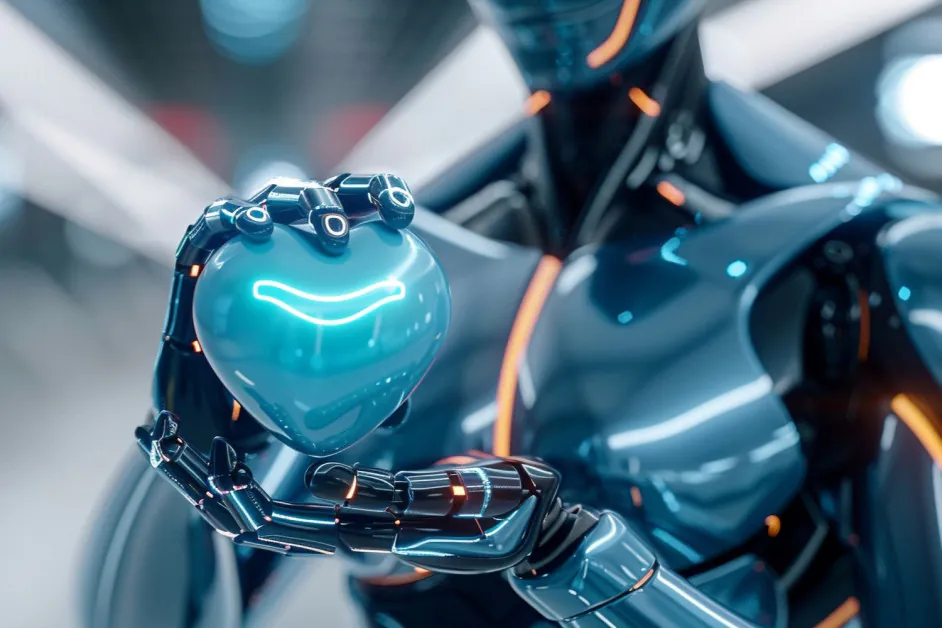
Today, everyone connected to the AI industry is talking about physical AI. The term has rapidly moved from niche discussions into the mainstream agenda. Illustrative example: NVIDIA (NVDA ) has placed physical AI at the center of its strategy – from new robotics models and simulation frameworks to edge computing hardware designed specifically for autonomous machines.
When trillion-dollar infrastructure players start reorganizing their product roadmaps around a concept, it becomes a direction.
So what is physical AI really – a new technology or paradigm? And what exactly stands behind these two words?
Old-new thing
If we think about it globally, physical AI has always existed. Everything related to robotics and autonomous systems essentially falls under this definition. As early as the 1960s, a vehicle appeared that was controlled using elements of artificial intelligence. By today’s standards, these were extremely primitive computer vision systems, but the vehicle could adjust its movement based on what it “saw.” That was one of the first manifestations of physical AI.
Any robotics system that combines autonomy with environmental perception is physical AI. Put simply, it is the application of artificial intelligence to analyze and understand the physical world, and then to make decisions and take action.
That is why we are not talking about a fundamentally new technology. Autonomous machines have existed for a long time. Moreover, spacecraft, including Mars rovers, operate on the same basic principles: they are equipped with computer vision systems, navigate through space, move across surfaces, and collect samples. All of this represents forms of physical AI.
What changed in 2026 is the focus of attention. The term itself became popular.
The market is structured in such a way that it constantly needs a new “hero” – a concept around which discussion and investment interest can form. At one time, that focus was cryptocurrency. Then came smart contracts, essentially a development of the same ideas, but under a new, more investor-friendly name. It was a way to repackage existing technologies and spark a new wave of interest.
Something similar is happening with physical AI. The term itself is not new, but today it has gained renewed relevance, new contours, and a development vector.
We have taught computers to speak, generate text, and even imitate reasoning. Autonomous vehicles have been moving without drivers for years: Tesla’s Full Self-Driving system, Waymo, and Zoox transport passengers; autonomous trucks are being tested and operating in real-world conditions. Many challenges in this field have already been solved or are highly mature.
At the same time, robots still cannot reliably perform simple everyday tasks, like neatly folding clothes or loading a dishwasher. And so the market begins searching for a new point of growth – a domain where unresolved problems remain and where there is still room for scale.
In this context, the term physical AI serves as a convenient framework for describing the next stage of technological development, in which intelligence moves beyond screens and begins acting in the real, physical world.
The logic of tech giants
On a macro-level view, it becomes clear that the growing focus on physical AI is not accidental.
The history of NVIDIA is a telling example. The company began with graphics processors for gaming. Later, its chips became the backbone of cryptocurrency mining during the crypto boom. After that, the same computing power proved essential for training deep neural networks. Each new technological cycle reinforced demand for hardware.
But there is a nuance. As technologies begin to optimize, the demand for excessive computing power gradually declines. LLMs are becoming more efficient. Chinese companies are demonstrating that powerful models can be trained at significantly lower cost. For infrastructure manufacturers, this is a warning signal. If models become more compact and cheaper, if inference shifts to edge devices, and if training becomes more optimized, then the market no longer requires exponential growth in server capacity. Which means a new driver is needed.
Physical AI fits this role perfectly. Unlike purely software-based models, physical AI requires integrating sensors, real-time processing, data stream handling, simulation, and continuous experimentation. A robot cannot “hallucinate” – an error in text is harmless, but an error in a manipulator’s movement can damage equipment or injure a human. This represents an entirely different level of reliability requirements and computational load. For instance, we are working extensively on this at Introspector, fully aware of the importance of high-quality data and edge cases.
In summary, when one technological cycle approaches maturity, capital begins searching for the next – more complex, less structured, and potentially more scalable. World tech giants have the resources to invest in this new cycle and actively promote it, shaping the narrative, the ecosystem, and the standards around it.
The wild frontier of robotics
Looking closely at the technology market over the past decade, it becomes clear that in nearly every major AI domain, a core group of dominant players has already emerged. In LLMs, there are a handful of global platforms that underpin entire ecosystems. In autonomous transportation, a limited circle of companies has invested tens of billions into sensors, maps, fleets, and infrastructure. In smartphones, it is essentially a closed club.
By nature, startups look for areas where the architecture has not yet been cemented. Investors look for markets that have the potential for exponential growth. And as soon as one domain approaches maturity, attention inevitably shifts to where there is no finalized structure, where standards are not yet fixed, and where it is still possible to define the rules of the game.
In this sense, robotics looks like a true wild frontier, with hundreds of potential applications. Home assistants, service robots in retail, warehouse automation, agriculture, construction, medical support, and elderly care. This is not a single market – it is dozens of markets within one broad technological layer.
The key difference is that there is still no single dominant architecture. There is no universal “operating system” for physical AI, no standardized sensor configuration, no established set of models that can simply be fine-tuned and scaled using a template. Each team is, in essence, solving fundamental problems from scratch – perception, navigation, manipulation, balance, and human interaction.
And that is precisely the appeal. Robotics today is a territory where the boundaries have not yet been drawn. That is why it has once again become a large market.
It all starts with B2B
Many of the experts I speak with about robotics today are convinced that the next wave of development will begin in the B2B segment. Industry has always been the first to scale new technologies – the economics are clear, processes are highly repeatable, and results are measurable.
At the same time, it’s important to remember that industrial robotics has existed for a long time. We all know the so-called “dark factories”, facilities where there are almost no people and, therefore, no need for lighting. Production lines are fully automated: robotic manipulators handle assembly, movement, welding, and packaging.
The automotive industry is one of the most striking examples. Companies like Tesla (TSLA ) or Toyota produce millions of vehicles annually. It’s obvious that such a scale would be impossible without deep robotization.
A conveyor belt carries vehicle parts. A robotic arm must lower itself, grab an object, lift it, and place it into a container. You can simply program a fixed sequence of actions: lower, grip, lift, move, release. Even if there is no object, the arm will still execute the predefined cycle. That’s automation.
AI begins where reasoning appears – the ability to evaluate a situation under uncertainty.
For example, an autonomous vehicle sees a person standing by the roadside. It takes into account speed, weather conditions, and the likelihood that the person might slip and step into traffic unexpectedly. Based on these factors, the system may slow down in advance. That is no longer just a reaction to a signal – it is a prediction and risk assessment. I remember how, at Keymakr, we delivered high-precision data solutions to help automotive companies manage the complex 3D labeling of road markings. It was all done to help the models ‘think.’
Now let’s return to the industrial robotic arm. It doesn’t need reasoning. All parameters are predefined, and the system’s task is not adaptation but repeatability and precision. That is why a universal humanoid robot on a production line is often excessive. It is far more efficient to use specialized manipulators optimized for a specific task. But as soon as a task moves beyond a strictly defined scenario, the situation changes.
This is where the core challenge of physical AI lies today – the transition from automation to intelligent adaptability.
Modern intelligent robotic systems remain expensive. In tasks that require flexibility and adaptation, they still fall short of humans. It is important to distinguish: classical automation often outperforms humans, but the intelligent component – at least for now – does not.
A robotic arm on a factory floor works flawlessly precisely because it does not need to interpret context. It repeats a programmed set of actions with high precision and speed. In this sense, it surpasses a human, who cannot endlessly perform monotonous work without a decline in quality. But as soon as the environment becomes unpredictable, the real challenge begins. And it is exactly there that the boundary between automation and true artificial intelligence is drawn today.
Working with matter
And here we arrive at the core idea.
Physical AI is not so much about hardware or trends. It is about transferring intelligence into an environment where mistakes have physical consequences. The next stage in the development of artificial intelligence will be defined by its ability to operate reliably in the real world. This transition is more complex than the previous ones and requires integrating sensors, hardware, local computing, new model architectures, new datasets, and new safety standards. It is a rebuilding of the entire technology stack. In this sense, physical AI truly becomes the hero of a new era.
Every technological cycle follows similar stages: first laboratories, then demonstrations, followed by an investment peak, and only after that real industrialization. Physical AI today stands somewhere between demonstration and industrialization.
And this is where the key question is defined: who will be the first to make it scalable, safe, and economically viable? That is what we will discuss next time.



