Partnerships
Persistent Systems and NVIDIA Partner to Accelerate AI-Driven Drug Discovery


Persistent Systems has announced a new collaboration with NVIDIA aimed at advancing how drugs are discovered, tested, and brought to market. The partnership focuses on combining Persistent’s engineering expertise with NVIDIA’s AI infrastructure to push computational drug discovery beyond experimentation and into production environments.
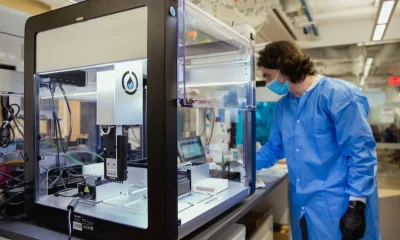
At its core, the initiative targets a longstanding bottleneck in healthcare: early-stage drug discovery. This phase is traditionally slow, expensive, and heavily dependent on physical laboratory work. By shifting more of that process into high-fidelity simulations powered by AI, both companies are aiming to reduce timelines while improving the probability of success downstream.
From Wet Labs to Simulation-Led Discovery
A central component of the collaboration is Persistent’s newly developed Generative Molecules and Virtual Screening (GenMolIVS) solution. Built on NVIDIA’s BioNeMo platform, the system uses generative AI models trained on chemical and biological data to design and evaluate potential drug candidates digitally.
Instead of synthesizing compounds and testing them in a lab from the outset, researchers can simulate molecular behavior such as binding affinity, stability, and chemical interactions before committing resources to physical experiments. This approach allows teams to explore a far larger design space while filtering out low-probability candidates early in the process.
The result is a shift from trial-and-error experimentation to simulation-led decision-making, where AI acts as a first layer of validation.
Agentic AI Enters the Drug Discovery Workflow
One of the more notable aspects of the partnership is the introduction of agentic AI systems into the discovery pipeline. Using NVIDIA’s NeMo framework and agent toolkit, Persistent is developing AI agents that can manage and coordinate different stages of research.
These systems continuously analyze simulation outputs, prioritize promising molecular candidates, and recommend next steps for experimental validation. Rather than functioning as isolated tools, they operate as interconnected decision layers that allow insights from one stage to inform the next. This creates a more dynamic and responsive research workflow, particularly valuable in environments where multiple variables must be evaluated simultaneously.
NVIDIA’s: Infrastructure and Domain-Specific AI
NVIDIA’s contribution extends beyond raw compute power. The company provides a full-stack AI platform tailored for life sciences applications, including BioNeMo for domain-specific model training, Nemotron models for advanced reasoning, and NIM microservices for scalable deployment.
This infrastructure enables real-time simulation and inference at scale while maintaining the level of reliability required in regulated healthcare environments. It also allows AI outputs to be embeddedectly into enterprise systems, making them actionable rather than purely experimental.
Bridging the Gap Between AI Experiments and Production
A recurring challenge in enterprise AI adoption is the gap between pilot projects and real-world deployment. Many organizations successfully experiment with AI models but struggle to integrate them into mission-critical workflows.
This collaboration places a clear emphasis on closing that gap by designing systems that are production-ready from the outset. The goal is to embed AIectly into research pipelines, ensuring that simulations and insights can immediately influence real-world laboratory work.
What This Signals for the Future of Drug Development
The broader implication of this partnership is a shift toward hybrid discovery models where digital simulation and physical experimentation operate together rather than in separate stages. Early-stage research could become significantly faster as simulations replace a large portion of initial lab work, allowing teams to test and refine ideas at a much higher speed.
Reducing the number of failed experiments has the potential to lower costs while improving the efficiency of the entire development pipeline. At the same time, the ability to rapidly iterate on molecular designs opens the door to more targeted and personalized therapies.
More fundamentally, this reflects a deeper transformation in how scientific research is conducted. AI is no longer just a supporting tool but is beginning to shape the structure of discovery itself. As simulation accuracy improves and agentic systems become more capable, the line between computational modeling and real-world experimentation continues to blur, pointing toward a future where much of the early scientific process happens in silico before it ever reaches the lab.