Partnerships
Opentrons & NVIDIA Launch a New Era of AI-Powered Labs, Turning Robots Into Learning Scientists

For much of the past decade, artificial intelligence in the life sciences has focused on prediction. Models suggest drug targets, generate molecular structures, or analyze massive biological datasets. But while insight has advanced rapidly, experimental execution has remained a bottleneck. Translating AI-generated hypotheses into real, reproducible laboratory experiments is still slow, expensive, and fragmented across instruments and workflows.
That gap is now narrowing. Opentrons has announced a deep integration with NVIDIA aimed squarely at solving this problem by bringing physical AI directly into everyday laboratory operations.
A Global Network of Real-World Lab Robots
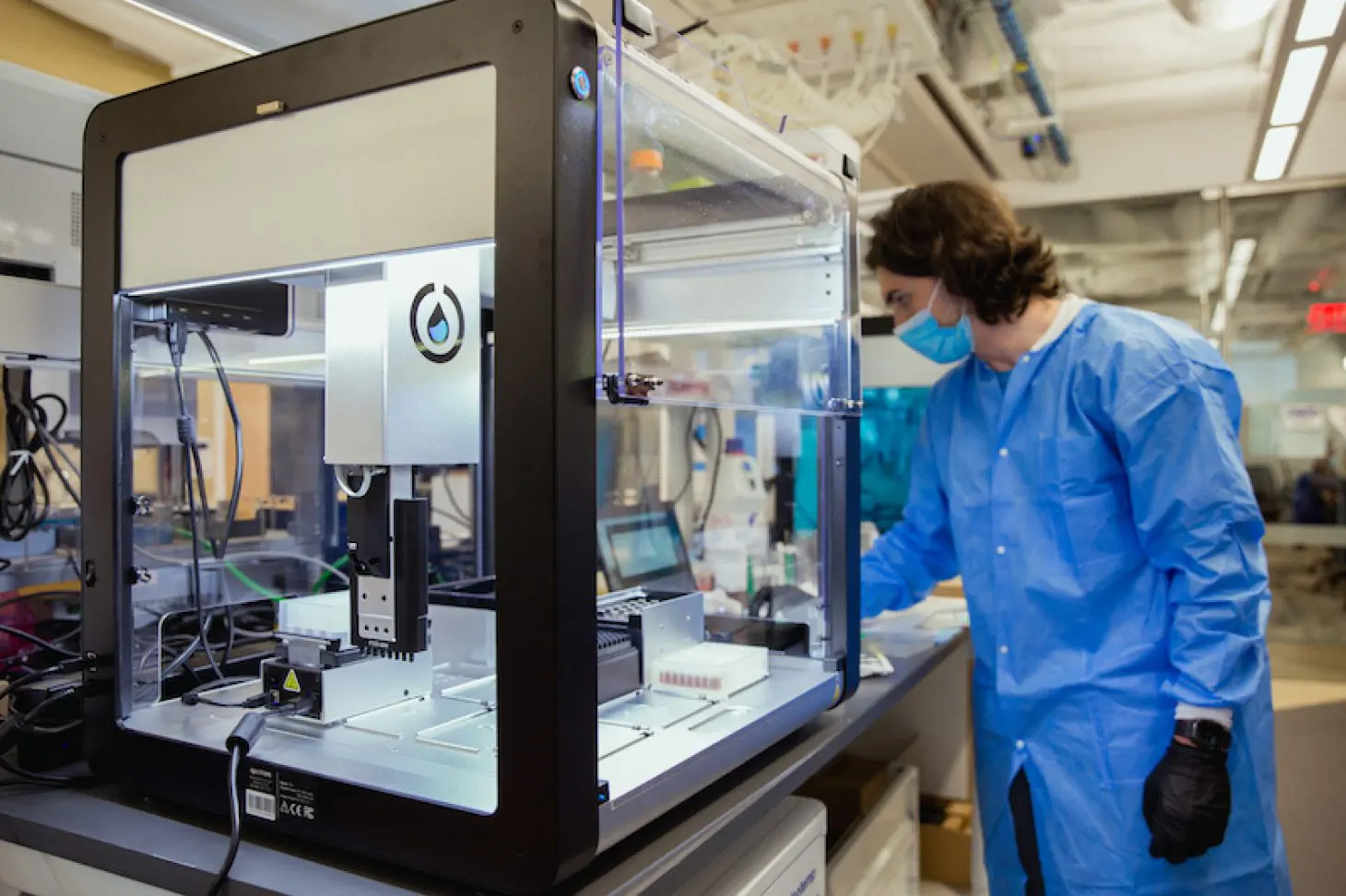
What makes Opentrons uniquely positioned is scale. The company operates a global fleet of more than 10,000 standardized laboratory robots deployed across leading research universities and biopharma organizations. These systems already automate critical workflows in genomics, proteomics, antibody discovery, and diagnostics.
By integrating NVIDIA’s physical AI platforms—NVIDIA Isaac and NVIDIA Cosmos—Opentrons is transforming this installed base into a living training ground for AI systems. Instead of relying primarily on simulated data, physical AI models can now learn directly from real experimental execution in wet labs around the world.
Bridging Simulation and Reality
Simulation has long been essential for robotics and AI development, but laboratories introduce unique complexity. Biological variability, instrument differences, reagent behavior, and environmental conditions all affect outcomes. By pairing simulation with standardized real-world execution, Opentrons and NVIDIA are closing the loop between digital planning and physical results.
In practice, AI systems can propose an experimental design, simulate outcomes, execute the experiment on Opentrons robots, and feed the results back into model training. Over time, this creates AI agents that don’t just predict what should work, but understand what does work in real laboratory environments.
Closing the Loop on Autonomous Science
A key piece of this effort is NVIDIA’s biological AI stack, including BioNeMo, which provides the foundation for training and deploying AI models for biological discovery. Opentrons supplies the missing execution layer—standardized, reproducible, and programmable physical experiments.
Together, this enables a continuous learning cycle. AI models generate hypotheses and experimental plans. Robots carry out those experiments consistently across thousands of labs. Results are captured as high-quality training data and fed back into AI systems to refine the next iteration. When scaled, this feedback loop has the potential to compress discovery timelines from years to weeks.
Why Standardization Matters
Laboratories have historically been heterogeneous environments. Custom automation setups, proprietary instruments, and manual processes make it difficult to compare results or reuse data at scale. Opentrons’ approach flips that dynamic by standardizing execution while remaining open and API-driven.
This standardization is what allows physical AI models to generalize across labs. When experiments are executed the same way in New York, Boston, or Basel, AI systems can learn patterns that hold across environments rather than overfitting to a single setup.
Implications for Drug Discovery and Beyond
The immediate impact is likely to be felt in drug discovery, where experimental throughput and reproducibility directly affect speed and cost. But the implications extend further. Autonomous experimental execution could reshape how diagnostics are developed, how biological research is validated, and how quickly new therapies move from concept to clinic.
More broadly, this partnership signals a shift in how AI is applied to science. Instead of stopping at recommendations, AI systems are beginning to act—running experiments, learning from outcomes, and improving autonomously. This marks an early but meaningful step toward self-driving laboratories where human scientists focus on strategy and interpretation, while AI and robotics handle execution at scale.
A Glimpse of What’s Next
Opentrons and NVIDIA will showcase this vision publicly at the upcoming SLAS International Conference and Exhibition, where they will discuss how AI-driven planning and robotic execution are converging. Attendees will also have opportunities to contribute real experimental execution data to help train the next generation of physical AI models.
As physical AI moves from theory into practice, partnerships like this one highlight a larger trend: the future of AI in science won’t be defined by better predictions alone, but by systems that can design, run, and learn from their own experiments—continuously, autonomously, and at global scale.