
Artificial Intelligence
OpenAI Developing GitHub Rival That Could Challenge Its Biggest Investor

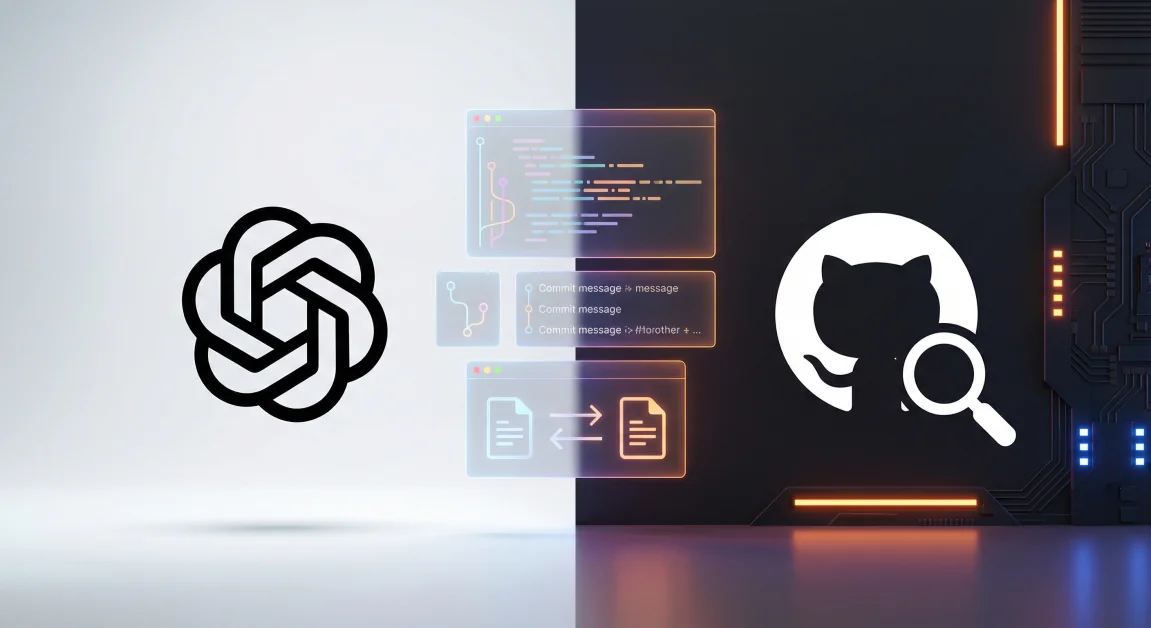
OpenAI is building an internal code-hosting platform that could eventually compete with GitHub, according to The Information, putting the AI company on a collision course with Microsoft — its largest backer and the owner of GitHub since 2018.
The project, still in early stages, was triggered by frustration inside OpenAI with repeated GitHub outages that disrupted engineers’ workflows. Some outages were linked to instability in Microsoft’s Azure infrastructure during an ongoing migration. OpenAI staff have since discussed turning the internal tool into a commercial product that could be sold to outside customers — a move that would transform it from a workaround into a direct competitor to GitHub, the dominant code repository platform with over 100 million developers on its platform.
Microsoft, OpenAI, and GitHub all declined to comment on the reports.
A Partnership Under Strain
The timing is awkward, to put it mildly. Microsoft has poured roughly $13 billion into OpenAI since its initial $1 billion investment in 2019. Under the terms of the partnership, Azure serves as the exclusive cloud provider for OpenAI’s stateless APIs and first-party products including ChatGPT, while Microsoft maintains exclusive licensing rights to OpenAI’s intellectual property. Early deal terms gave Microsoft 75% of OpenAI profits until its investments were recouped, though the partnership was restructured in October 2025 with revised profit-sharing timelines.
That deep financial entanglement makes OpenAI’s code-platform ambitions notable. GitHub, which Microsoft acquired for $7.5 billion in 2018, sits at the center of the global software development ecosystem. It’s not just a code-hosting service — it’s a platform for collaboration, CI/CD pipelines, package management, and increasingly, AI-powered coding via GitHub Copilot, which itself runs on OpenAI models delivered through Azure infrastructure.
OpenAI and Microsoft issued a joint statement earlier this year reaffirming their partnership, noting that the relationship “was designed to give Microsoft and OpenAI room to pursue new opportunities independently, while continuing to collaborate.” But building a product line that competes with a core Microsoft asset tests that language in a meaningful way.
The Developer Tools War
The code-hosting announcement arrives as competition in the AI developer tools space intensifies on multiple fronts. AI code generators have proliferated across the market, with tools from Anthropic, Google, and startups like Cursor all vying for developer mindshare. Apple recently added agentic AI coding to Xcode using Claude and Codex, signaling how broadly the battle has spread beyond dedicated coding tools.
OpenAI itself has been pushing hard into the developer tools space. Its Codex models now power autonomous coding agents capable of handling full pull request cycles, multi-file edits, and repo-scale reasoning. The company’s ChatGPT App Store reflects a broader ambition to become the operating layer for AI-native workflows — and a code repository platform would fit squarely into that strategy.
For context: Google and Meta both maintain internal proprietary code-hosting platforms but have not made them available to outside developers. If OpenAI follows through on commercializing its platform, it would be entering territory neither company has been willing to occupy publicly.
There’s also a structural argument for OpenAI owning more of its development stack. A company building frontier AI models — with hundreds of millions of dollars of compute running daily — has strong incentives to control the infrastructure its engineers depend on. Relying on a platform owned by its most significant commercial partner creates an obvious concentration risk, as the recent outages demonstrated.
OpenAI’s $110 billion funding round gives the company the resources to pursue infrastructure investments at scale. Whether a code-hosting platform becomes a serious commercial product or remains an internal reliability fix is still unclear — the project’s timeline hasn’t been disclosed, and no product details have been confirmed.
What Happens Next
The unanswered questions here carry real weight. Would a commercial OpenAI code platform integrate with its own AI tools natively, giving it a product edge over GitHub that Microsoft can’t easily replicate? How would Microsoft respond — through contract terms, strategic pressure, or simply by accelerating its own AI investments in GitHub? And would enterprise developers, already cautious about vendor lock-in, view OpenAI as a credible infrastructure provider for something as critical as code storage?
OpenAI’s GPT-5.2 and its expanding developer toolkit suggest the company is serious about becoming an essential platform for software engineering teams, not just a model API provider. A code-hosting product would be the most direct step yet toward owning the full developer workflow — and the most direct challenge to a partner that has, until now, provided the infrastructure that makes much of it possible.
The 10 Best Internal Developer Platforms guide reflects how fragmented this market already is. Adding OpenAI to that competitive landscape would further complicate choices for engineering teams — and raise questions about what a Microsoft-OpenAI partnership looks like when both companies are competing for the same developers.



