
Partnerships
OmniOps and Hamsa Partner to Bring Sovereign Arabic Voice AI to Saudi Arabia

 Add Unite.AI to your preferred sources on Google
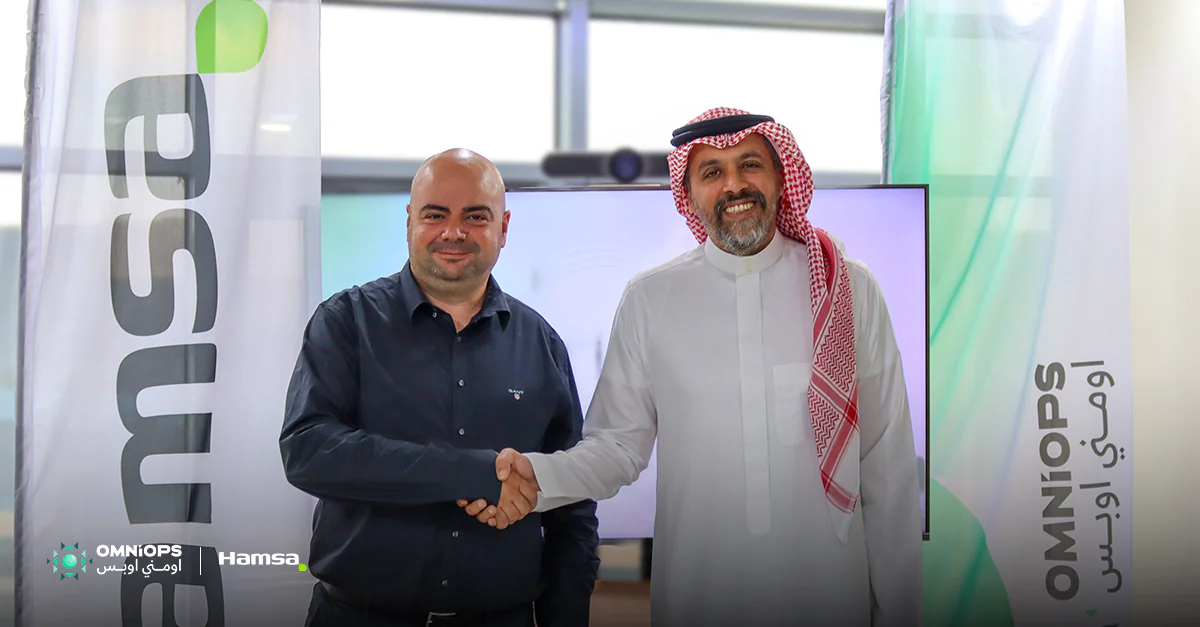
Saudi AI infrastructure company OmniOps has partnered with Arabic-first voice AI developer Hamsa to make locally hosted speech and conversational AI available to organizations across Saudi Arabia.
Announced on July 16, 2026, the partnership combines Hamsa’s Arabic Speech-to-Text, Text-to-Speech and AI agent technologies with Bunyan, OmniOps’ sovereign inference platform. The companies say the resulting services will be operated through infrastructure managed within Saudi Arabia, giving enterprises greater control over how voice recordings, transcripts and AI workloads are processed.
The arrangement targets one of the more persistent gaps in enterprise AI. Although voice assistants and automated call systems have improved considerably in English, deploying comparable systems in Arabic remains complicated by regional dialects, mixed Arabic-English conversations and differences between formal and conversational speech.
Combining Arabic Voice Models With Local AI Infrastructure
Under the partnership, OmniOps will become Hamsa’s infrastructure partner in Saudi Arabia. Hamsa’s models will run through Bunyan, which OmniOps positions as an environment for deploying inference workloads, AI agents and intelligent workflows across public cloud, private cloud, on-premises and air-gapped systems.
OmniOps says Bunyan uses the same underlying codebase across these deployment environments. Its platform is designed to let organizations operate AI applications without sending sensitive data into externally managed infrastructure, while supporting locally hosted, multi-tenant deployments inside the Kingdom. The platform also supports hardware from several AI computing providers, including NVIDIA (NVDA ), AMD, Groq, Qualcomm (QCOM ) and SambaNova.
This infrastructure layer is important because voice AI applications can process considerable volumes of potentially sensitive information. A customer service agent, for example, may encounter names, account details, medical information, payment inquiries or government records during an ordinary conversation.
Hosting the models locally does not automatically make an application compliant. Organizations must still establish appropriate access controls, retention policies, consent procedures and security safeguards. However, keeping inference and data processing inside Saudi Arabia can make it easier to build systems around the Kingdom’s Personal Data Protection Law and national data governance requirements.
Addressing the Complexity of Spoken Arabic
Hamsa has developed its platform specifically for Arabic-language applications rather than adapting a primarily English system after the fact.
Its Speech-to-Text technology is designed to detect different Arabic dialects automatically and handle code-switching, where speakers move between Arabic and English during the same conversation. It also supports colloquial expressions, automatic punctuation, word-level timestamps and speaker diarization, which identifies different participants in recordings containing multiple speakers.
These capabilities can be particularly useful in contact centers, where customers may use regional vocabulary, shift between languages or speak less formally than they would in written communication. Speaker identification and timestamps can also help businesses review calls, create searchable archives and connect specific statements to the correct participant.
Hamsa’s Text-to-Speech models cover Egyptian, Gulf, Levantine, Iraqi and Modern Standard Arabic, alongside English. The system supports mixed Arabic-English text, Arabic diacritical marks and custom voice cloning, allowing organizations to create synthetic voices that remain consistent across different services.
The company’s documentation lists more granular voice options for Saudi, Emirati, Bahraini, Qatari, Kuwaiti, Omani, Palestinian, Jordanian, Lebanese, Syrian and Iraqi Arabic. Hamsa provides both asynchronous application programming interfaces for batch processing and low-latency endpoints for conversational applications that need to generate or transcribe audio in real time.
Moving From Speech Processing to AI Agents
The partnership is not limited to transcription and synthetic voices. Hamsa also provides AI agents designed to conduct phone conversations in Arabic and English.
These agents can be configured for customer support, appointment scheduling, reminders, lead qualification and natural-language Interactive Voice Response systems. Hamsa offers application programming interfaces for developers, as well as web interfaces for creating agents and processing media.
The platform can connect with customer relationship management software, Voice over Internet Protocol systems, calendars and other business tools. Enterprises can also modify an agent’s voice, dialect, tone and responses for a particular workflow or customer group.
Through Bunyan, these agents could be deployed alongside an organization’s internal data and applications while remaining within a controlled environment. Potential uses identified by the companies include automated call centers, virtual assistants, customer support, voice authentication and internal knowledge assistants.
“Organizations across Saudi Arabia are looking to deploy advanced AI while maintaining control over where their data resides and how their workloads operate,” said Mohammed Altassan, CEO of OmniOps. He said the partnership would allow enterprises to focus on service delivery while Bunyan provides the underlying sovereignty and compliance infrastructure.
Hamsa CEO Ibrahim Jabareen described Arabic as a major language that has historically received less attention from AI providers. He said locally managed infrastructure would make it easier for Hamsa to bring its voice models into Saudi enterprise environments at scale.
Building a Saudi Enterprise AI Stack
Founded in Riyadh in 2024, OmniOps focuses on high-performance computing, AI inference and managed infrastructure. The company raised SAR 30 million, approximately $8 million, in late 2024 to expand its operations and research and development activities.
The Hamsa agreement follows other efforts by OmniOps to position Bunyan as an infrastructure layer for locally controlled AI. Earlier in July 2026, Bunyan was used to deploy a conversational AI platform within Newroz Telecom’s on-premises infrastructure in the Kurdistan Region. That implementation kept model workloads and data processing within the telecom provider’s environment while supporting Kurdish, Arabic and English services.
The Hamsa partnership applies a similar infrastructure model to the Saudi market but pairs it with speech technology developed specifically for Arabic-speaking users. This division of responsibilities could reduce the amount of technical work enterprises must complete before launching a voice application. Hamsa supplies the speech and conversational models, while OmniOps manages where those models run and how they connect to local computing resources.
Still, the announcement does not include named customers, pricing, implementation timelines or independently verified accuracy and latency benchmarks. These details will be important for organizations comparing the platform with established cloud voice services or internally developed systems.
Future Implications
Voice AI is likely to become an increasingly important interface for Saudi organizations serving customers who prefer spoken Arabic over websites, mobile applications or text-based chatbots. The opportunity extends beyond replacing conventional call menus. More capable systems could transcribe conversations, identify intent, retrieve information from enterprise systems and complete routine processes during the same interaction.
Success will depend on how consistently the technology performs across Saudi dialects, noisy telephone connections, mixed-language conversations and specialized terminology. Enterprises will also need effective escalation mechanisms so that complex, sensitive or uncertain requests can be transferred to human employees.
By pairing Hamsa’s Arabic-first voice technology with OmniOps’ locally operated Bunyan infrastructure, the companies are attempting to address both sides of the deployment problem: language performance and organizational control. The partnership could make Arabic voice AI more accessible to Saudi enterprises, but its longer-term impact will ultimately be determined by production reliability, integration effort, regulatory governance and the quality of the conversations experienced by users.



