
Funding
Newo’s $25M Series A Raises the Stakes for AI Voice Infrastructure in Small Business

 Add Unite.AI to your preferred sources on Google
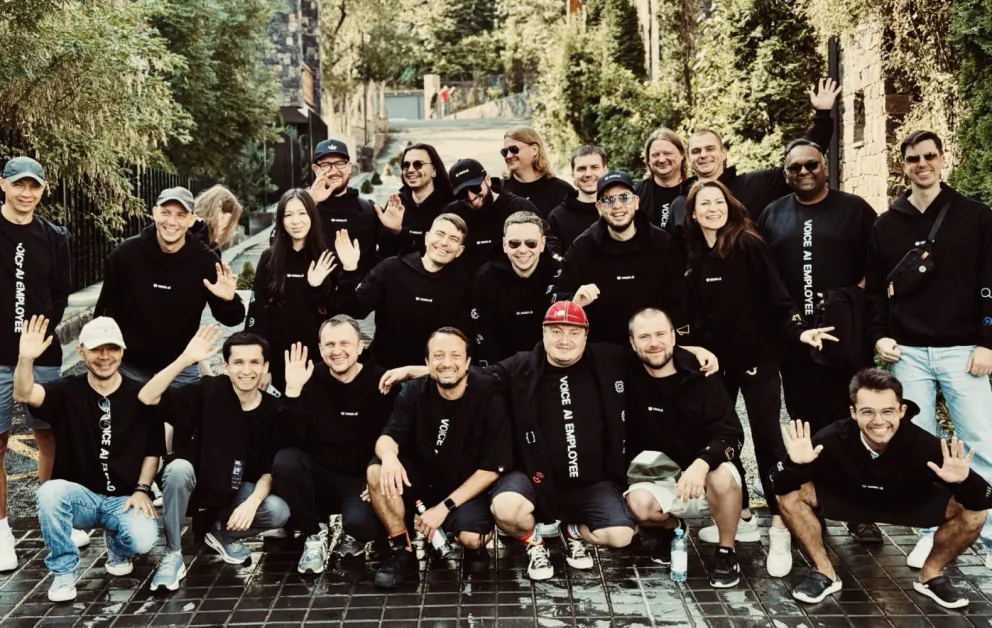
Newo, a San Francisco based company building human-like AI voice and messaging agents for small and medium businesses, has raised $25 million in Series A funding. The round was led by Ratmir Timashev, co-founder of Veeam Software and OH.io, and brings Newo’s total capital raised to approximately $32 million following earlier angel, seed, and SAFE financings.
The financing comes as demand grows for always-on customer communication tools that can operate reliably in real business environments. Participating investors in the round include Aloniq, Constructor, Acrobator, and s16vc, reflecting continued interest in AI systems that move beyond experimentation and into daily operations.
The Cost of Missed Calls
For many small businesses, the phone remains one of the most important customer touchpoints. Yet staffing constraints and after-hours demand mean that a significant share of inbound calls go unanswered. In industries such as dental care, restaurants, home services, and cleaning businesses, missed calls often translate directly into missed bookings and lost revenue.
Newo was built to address this gap. The company’s AI agents function as always-on front desks, handling inbound phone calls, SMS, web chat, and messaging platforms like WhatsApp. Rather than focusing on open-ended conversation alone, the agents are designed around structured workflows for booking appointments, routing calls, qualifying leads, and escalating issues when needed.
When deployed effectively, the result is straightforward: fewer missed calls, faster responses for customers, and recovered revenue without adding staff.
Built for Real-World Voice, Not Demos
While AI reception has become a popular concept, reliably handling live voice interactions remains technically difficult. Real-world calls involve background noise, unclear requests, location-specific routing, and time-sensitive handoffs. Newo’s platform was developed with these constraints in mind, shaped by repeated production deployments rather than theoretical design.
A core element of the system is what the company calls its Zero-Hallucination Architecture, which uses multiple AI agents working in parallel to verify responses before they reach customers. This approach is intended to reduce errors in high-stakes scenarios such as appointment booking or order intake, while maintaining sub-second response times and natural-sounding voice quality.
The focus on reliability reflects the company’s view that voice AI must be treated as infrastructure, not experimentation, especially when it becomes the first point of contact for customers.
Partner-First Distribution
Newo has taken a partner-first approach to scaling. Managed service providers, VoIP companies, software vendors, and agencies can deploy and white-label Newo’s AI reception capabilities for their SMB customers in minutes. This model has helped the platform spread quickly across different verticals without requiring Newo to sell directly to every end business.
To date, more than 15,000 AI agents have been created on the platform, supported by a network of over 200 certified partners. Adoption has been strongest in industries where missed calls are common and customer response time directly affects revenue.
One early customer example includes a multi-location orthodontics practice that discovered it was missing a significant portion of inbound calls during peak and after-hours periods. After deploying Newo’s AI receptionist, the practice captured calls that previously went unanswered, resulting in hundreds of thousands of dollars in incremental revenue within a single quarter.
What This Funding Signals About AI Voice
The Series A points to a broader shift in how AI voice technology is being adopted. Investment is increasingly favoring systems that operate reliably inside everyday workflows, rather than tools designed primarily for demonstration or experimentation.
For small businesses, this reflects a growing mismatch between customer expectations for instant response and the reality of lean staffing. AI voice systems are beginning to fill that gap by ensuring calls are answered, routed, and logged consistently, without changing how businesses are staffed.
Over time, this kind of technology may redefine how availability and front-office operations work for small businesses. Voice, once considered difficult to automate, is starting to follow the same path as chat and email before it — moving quietly from novelty to infrastructure.



