
Funding
Neural Concept Raises $100 Million Series C to Scale AI-Native Engineering

 Add Unite.AI to your preferred sources on Google
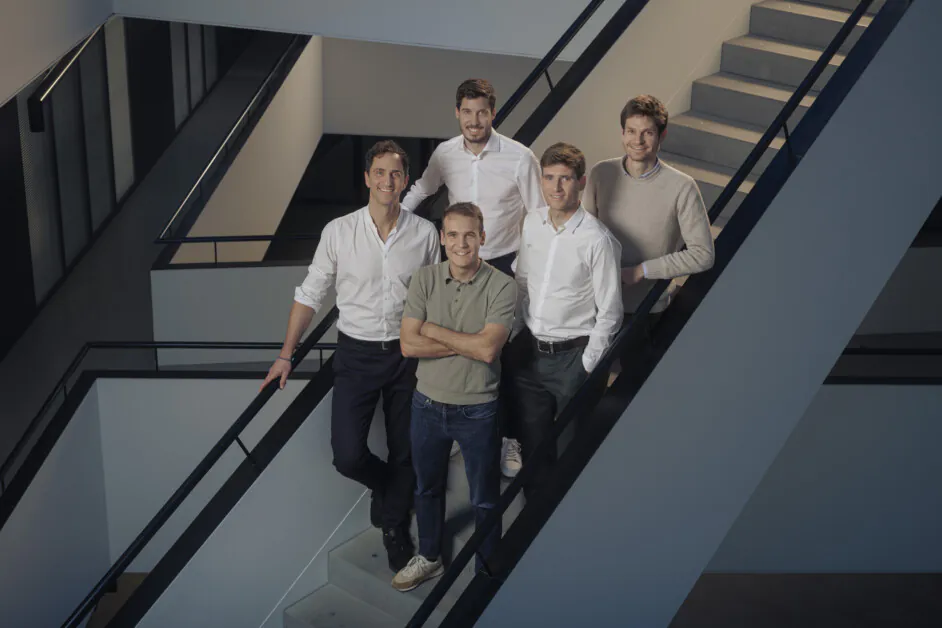
Neural Concept, a Lausanne-based AI company focused on rethinking how complex products are designed and engineered, has announced a $100 million Series C funding round led by Growth Equity at Goldman Sachs (GS ) Alternatives, with participation from existing investors Forestay Capital, Alven, HTGF, D.E. Shaw Ventures, and Aster Capital. The round marks a significant milestone for the company as it scales its AI-native platform across some of the world’s most demanding industrial environments.
Founded as a spin-out from the Swiss Federal Institute of Technology in Lausanne (EPFL), Neural Concept has built its platform around a simple but ambitious premise: engineering AI should understand geometry, physics, and design intent at the same level as the tools engineers already rely on. Rather than positioning AI as an external analytics layer, the company embeds deep learning directly into CAD and simulation workflows, enabling engineers to reason about performance and constraints far earlier in the development process.
Bringing AI Directly Into the Engineering Core
Traditional engineering workflows are often defined by long iteration cycles. Designs are created, simulated, revised, and re-simulated—sometimes over months—before critical issues surface. Neural Concept’s approach aims to shift that timeline forward. By making AI native to CAD and physics-based environments, the platform allows teams to explore large design spaces early, identify trade-offs sooner, and reduce the likelihood of late-stage redesigns that can derail schedules and budgets.
This model has resonated across industries where complexity and time-to-market are constant pressures. Automotive, aerospace, energy, and advanced manufacturing organizations are using the platform to accelerate product development while maintaining rigorous performance and safety standards. The company reports a fourfold increase in enterprise revenue over the past 18 months, with more than 50 global organizations actively deploying its technology across production workflows.
The new capital will be used to accelerate product development—including the planned release of a generative CAD capability in early 2026—expand global go-to-market teams, and deepen integrations with partners across cloud infrastructure, simulation software, and hardware acceleration.
Moving From AI Experiments to Scaled Deployment
Neural Concept’s growth reflects a broader transition underway in enterprise AI adoption. Many industrial organizations have spent the past several years experimenting with machine learning in isolated use cases. What’s changing now is a shift toward platforms that can be deployed at scale, across teams and product lines, without forcing engineers to abandon existing tools or processes.
By positioning itself as an intelligence layer that sits across engineering systems, Neural Concept is aligning with this shift. Its platform is designed to integrate rather than replace, allowing companies to introduce AI into mission-critical workflows incrementally while still delivering measurable impact. This enterprise-first approach has helped move AI in engineering beyond pilot projects and into everyday decision-making.
The Rise of AI as the Intelligence Layer for Engineering Teams
Neural Concept’s Series C also points to a deeper transformation in how engineering itself is evolving. AI is no longer being applied merely to speed up individual tasks; it is increasingly shaping how decisions are made across the entire product lifecycle. As AI systems become capable of reasoning about geometry, physics, and performance constraints together, they begin to function as a continuous source of engineering intelligence rather than a periodic optimization tool.
This shift has meaningful implications for how teams work. Engineers can move away from managing repetitive simulations and fragmented toolchains and toward higher-level judgment—defining objectives, interpreting results, and balancing trade-offs across cost, performance, sustainability, and manufacturability. AI handles the computational exploration at scale, while humans remain responsible for intent, risk, and final decisions.
Over time, this model could compress development cycles, reduce material waste, and enable exploration of designs that were previously impractical due to complexity or cost. More importantly, it reframes engineering as an ongoing dialogue between human expertise and machine reasoning, rather than a sequence of disconnected steps.
Neural Concept’s trajectory suggests that AI-driven engineering is moving from experimentation to infrastructure. As more organizations adopt AI not just to optimize workflows but to guide decision-making itself, this intelligence layer may become as fundamental to engineering teams as CAD and simulation tools are today.



