
Funding
UnifyApps Raises $50 Million Series B to Power the AI-Native Enterprise

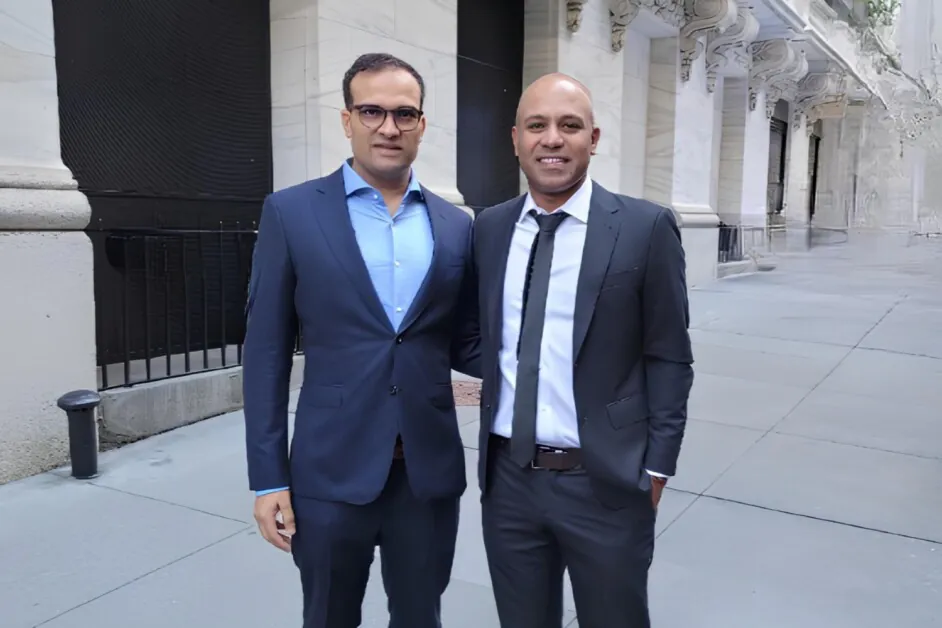
In a major signal of confidence in enterprise artificial intelligence, UnifyApps has raised $50 million in a Series B funding round led by WestBridge Capital, with participation from ICONIQ and other investors. The new capital brings UnifyApps’ total funding to $81 million and marks its transition from a fast-moving startup to a scale-stage enterprise platform.
At the same time, the company announced that enterprise software veteran Ragy Thomas has joined as Chairman and Co-CEO alongside co-founder and CEO Pavitar Singh. With more than 25 years of experience leading enterprise SaaS businesses, Thomas’s appointment underscores UnifyApps’ intent to rapidly expand its global presence and strengthen go-to-market execution.
Addressing the AI Pilot Graveyard
Over the past two years, enterprises have poured billions into generative AI (GenAI) pilots, yet most never reach full-scale deployment. UnifyApps estimates that as many as 95 percent of enterprise AI projects fail to move beyond experimentation. The reasons are rarely about model quality—they stem from architecture.
Large language models remain disconnected from the systems enterprises depend on: CRMs, ERPs, knowledge repositories, and workflow tools. Each isolated AI application creates another integration problem, adding complexity instead of reducing it. Without a platform that connects these systems of record, knowledge, and activity, even the most powerful AI cannot create meaningful impact.
UnifyApps is taking a different approach. Its platform acts as an “Enterprise Operating System for AI,” a unified layer that connects data, models, and workflows. By combining a low-code/no-code builder with deep enterprise integrations, the company enables CIOs to move from scattered pilots to scalable, production-grade AI deployments.
A Unified Architecture for the AI-Native Enterprise
At the heart of UnifyApps’ vision is its Six-Layer Enterprise AI Architecture, which integrates system connectivity, data and ontology management, workflow automation, application experience, and autonomous agent deployment. The result is a closed loop between data, intelligence, and execution—allowing organizations to automate processes, surface insights, and take real-time action within the tools employees already use.
The platform is also LLM-agnostic, meaning enterprises can use whichever language models best suit their needs, from proprietary APIs to open-source variants hosted in-house. UnifyApps connects seamlessly with systems such as Salesforce, Workday, and corporate intranets, bringing structure to previously siloed data.
Major organizations across banking, telecom, retail, travel, and the public sector have already adopted the technology, including Deutsche Telekom, HDFC Bank, WalkMe, and several UAE government departments. One Fortune 50 retailer, for example, implemented UnifyApps’ no-code platform to orchestrate AI across store operations, merchandising, supply chain, finance, and support—cutting deployment cycles from months to days.
Fueling Growth and Global Expansion
The $50 million raise will be used to expand UnifyApps’ European presence, accelerate product development, and deepen integrations across leading enterprise technologies. The company is also building a catalog of pre-built applications that will allow customers to deploy AI use cases faster, with standardized governance and security built in.
Ragy Thomas’s arrival as Co-CEO signals a strong push toward global market leadership. His deep experience in enterprise software, compliance, and CIO engagement positions UnifyApps to strengthen its relationships with large enterprises at a time when demand for operational AI is accelerating.
Co-CEO Pavitar Singh emphasized that the company’s mission extends beyond automation: it’s about enabling organizations to become AI-native—where every workflow is augmented by intelligence and every process can adapt in real time.
Implications for the Future of Enterprise AI
UnifyApps’ funding marks a pivotal moment in the evolution of enterprise AI. It reflects a shift from the question of if AI can be used in the enterprise to how it can be embedded across every process. Just as the rise of cloud computing transformed how software was delivered, the rise of AI-native architecture is redefining how work is executed.
The company’s approach suggests the dawn of a new operational model—one where AI is not an add-on but a foundational layer. By connecting systems of record, knowledge, and activity, UnifyApps helps organizations bridge the gap between decision and action. Instead of relying on siloed automation tools, enterprises can now deploy intelligent systems that learn continuously, adapt to change, and deliver measurable outcomes.
In this vision, the enterprise itself becomes a living, learning system—capable of perceiving its environment, reasoning across data, and responding autonomously. As the line between software and intelligence continues to blur, platforms like UnifyApps are poised to shape the infrastructure of the AI-native era.
The next decade of enterprise transformation won’t be about digitization or migration to the cloud—it will be about embedding cognition directly into the fabric of business operations. UnifyApps’ latest funding and leadership expansion position it at the forefront of that shift, as companies around the world prepare to evolve from digital to truly intelligent enterprises.



