
Thought Leaders
Keeping Original Content Safe in the Age of AI Theft and Impersonation

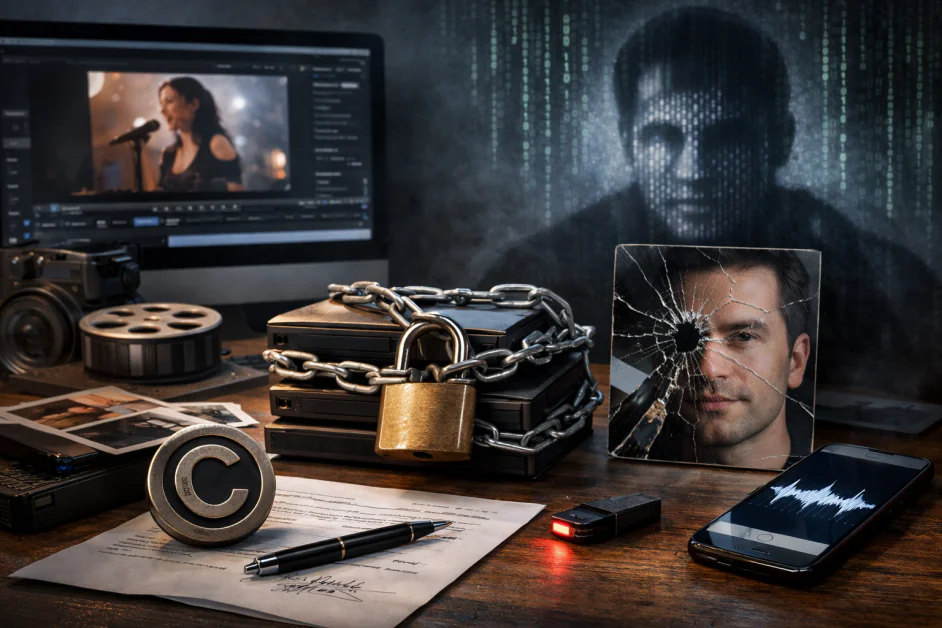
With its knack for mimicry, AI is impersonating voices, cloning faces, stealing creative styles, even appropriating content ideas outright. This thieved and “deepfake” content, which ranges from silly to suspicious to sinister, is then propagated across billions of devices around the world.
The result: deepfake fraud cases surged 1,740% in North America between 2022 and 2023, while the number of deepfakes online increased from about 500,000 in 2023 to roughly 8 million in 2025.
When AI floods platforms with derivative content, it becomes harder for real creators to stand out. Audiences grow skeptical of all content, putting creators’ livelihoods, reputations, and authentic connection with audiences at stake.
Creators deserve better defenses.
The Dual Threat
Threats to creators operate on two primary levels.
The first is that “content pirates” might train their generative models on creator content without offering credit or compensation. Some companies hide behind “fair use” or claim that the content is already out there for anyone to see – tough luck. But these arguments remain legally murky and morally questionable.
The second, deepfakes and synthetic media, are outright impersonations and increasingly uncanny. For instance, voice scammers need only three seconds of audio to clone a voice with 85% accuracy, complete with natural intonation, rhythm, emotion, pauses, and breathing. In early 2025, influencer Dr. Mike Varshavski encountered a deepfake of himself on TikTok promoting a phony “miracle” supplement. His likeness was weaponized to deceive the audience he’d spent over a decade building.
While there is growing recognition of these issues – Anthropic AI recently agreed to a record-setting $1.5 billion settlement against claims that it used pirated books to train its Claude chatbot – creators can’t rely solely on the courts to protect them.
Contractual and Collaborative Shields
The best defense against AI exploitation starts before creators upload content or sign brand deals – they must strike clear contracts that explicitly define licensing rights and how where content will be used.
Contracts should include “no AI training” clauses that prohibit original content’s use in training generative models without consent and which require notification if brands make AI modifications to creator-delivered content. Attribution requirements, which ensure that credit always follows the work, should be non-negotiable. Platforms that prioritize transparent collaboration can help enforce these protections systematically. For platforms that don’t – creators should be wary of using them at all.
If creators want their work used for AI training or derivative commercial applications, they should negotiate royalties or ongoing licensing fees rather than one-time payments. When partnerships are built around transparent records of content usage, it becomes significantly harder for unauthorized AI modifications or training to occur without detection – and easier to enforce violations when they do.
Some platforms are being built to address exactly that – enabling creators to track where their content appears across paid media channels. Then, if brands amplify creator content through social media partnership ads, the creator maintains visibility into distribution and retains proper attribution.
In all instances, reading terms of service carefully is essential. Platforms like YouTube have given creators the option to permit third-party AI companies to train on their videos – millions of creators unknowingly opt in with no promise of compensation – while others have more restrictive default settings that prioritize creator data ownership.
Technical Safeguards and Systemic Change
Beyond mere contracts, creators should be pushing for infrastructure-level protections and leveraging technology to safeguard their work.
Every exported content asset should include embedded metadata using standards like IPTC 2023.1 that allow creators to embed AI mining permissions into the content itself. The Coalition for Content Provenance and Authenticity (C2PA) has also developed standards that create tamper-proof records of content origin.
Digimarc or Google’s SynthID similarly use invisible digital watermarks that hold up even through resizing and compression, while tools like Nightshade can alter image pixels in ways invisible to humans but which trick machine-learning models into seeing images as something different.
Other platforms now integrate performance tracking and analytics for every piece of original content so that creators can identify unauthorized use. By monitoring where content appears and how it performs across channels, creators can spot suspicious activity like when their content is utilized by campaigns or accounts they never authorized.
Infrastructure systems that consolidate campaign management, content approval workflows, and performance measurement into unified platforms are critical. They build protection mechanisms at every stage rather than forcing creators to cobble together disconnected tools that leave gaps for exploitation.
Preserving Creativity
The creator economy’s long-term health depends on preserving authentic voices, distinctive perspectives, and the trust between creators and their communities.
To do so, creators can’t wait around for the silver bullet – they must begin by negotiating more robust contracts, working with creator-first platforms, advocating for consent-based AI training, and documenting their work’s provenance. On the other side of the equation, content platforms must build infrastructure that protects creator rights by default, keeping in mind that sustainable systems must build trust to succeed into the future. Creators should demand nothing less.
AI is only as creative as the real people it learns from. But learning is one thing. Stealing is another.



