
Interviews
Jehee Suh, CEO of Inocras – Interview Series

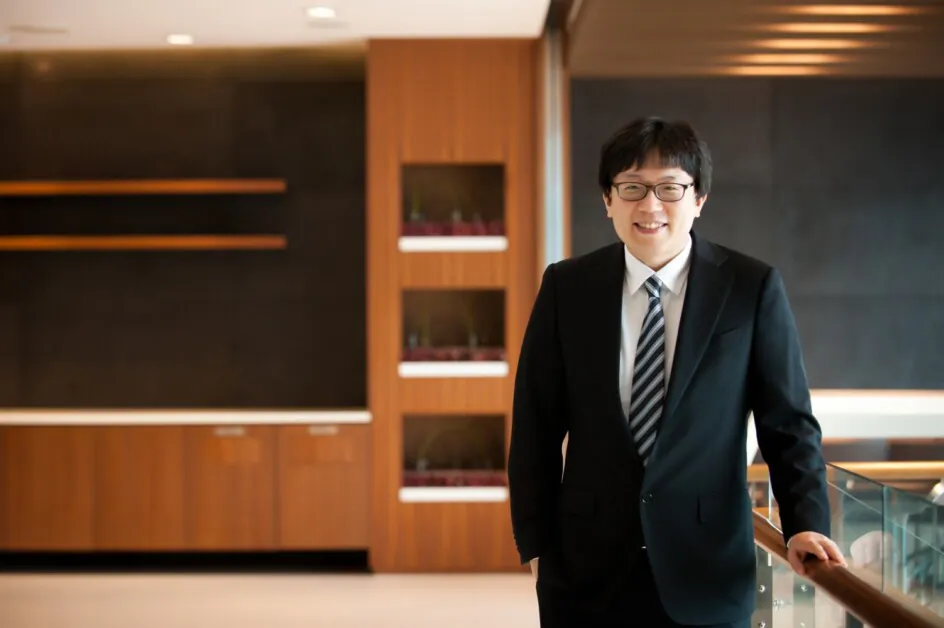
Jehee Suh, CEO of Inocras, brings over two decades of leadership experience in the life sciences sector, combining deep scientific understanding with strategic business insight. Before taking the helm at Inocras, he served as CEO of Cartexell and Executive Director at Helixmith, where he oversaw the development of cell and gene therapies. Earlier in his career, Suh was a Partner at McKinsey & Company, advising global pharmaceutical and biotech firms on growth and innovation strategies, and began his career as a brand manager at Novartis. His diverse background—spanning consulting, biotech entrepreneurship, and pharmaceutical management—positions him to lead Inocras through its next phase of expansion and scientific advancement.
Inocras is a precision medicine company pioneering the next generation of genomic diagnostics and data-driven insights to transform personalized healthcare. The company focuses on delivering high-quality, whole-genome sequencing and advanced bioinformatics solutions that empower clinicians and researchers to identify actionable genetic variants for cancer, rare diseases, and beyond. By combining cutting-edge sequencing technology with proprietary data analysis platforms, Inocras aims to make comprehensive genomic profiling more accessible, accurate, and clinically meaningful for patients worldwide.
You’ve held leadership roles across biotech, consulting, and pharma, from McKinsey and Novartis to Inocras and Cartexell. How has this diverse background shaped your approach to leading innovation in genomics today?
My career has given me a 360-degree view of how innovation moves from idea to impact. At McKinsey, I learned how to tackle complex problems and drive meaningful change. At Novartis, I saw firsthand both the power and the limits of modern medicine, how breakthroughs can transform lives, but also how many patients are still left behind. Those experiences shaped my mission-driven approach at Inocras. We founded the company to make whole genome sequencing a true standard of care in oncology, bringing comprehensive, accessible genomic insights to every patient, not just a privileged few. For me, leading Inocras isn’t just about advancing technology; it’s about ensuring that innovation translates into impact where it matters most: at the point of care.
Inocras is focused on making comprehensive DNA insights more accessible and actionable. Can you share the company’s founding vision and what specific challenges in genomics you set out to solve?
From the start, our vision was simple but ambitious: to place millions of cancer genomes inside a computer so algorithms could uncover insights that could change how patients are diagnosed and treated.Very quickly, we realized that achieving that vision demands more than powerful technology. It requires a sustainable way to gather real, clinical-grade genomes at scale.
That’s why we built Inocras as a diagnostics business first. By helping patients one at a time under full clinical standards, we’re creating a foundation of trust, quality, and accessibility. Our whole-genome test delivers the most complete and accurate picture of a patient’s cancer while remaining cost-efficient enough to reach more people.Inocras is, at its core, a clinical engine. We provide a one-of-a-kind WGS diagnostic today, while building the genomic foundation model of tomorrow. Every genome we sequence serves an individual patient now, and contributes to the genomic intelligence that will serve millions in the near future.
Whole-genome sequencing is often described as the foundation of precision health. What key advancements are enabling its transition from research settings to clinical and even consumer applications?
Whole-genome sequencing (WGS) is increasingly recognized as a cornerstone of precision health. Several key advancements are facilitating its transition from research laboratories to clinical and even consumer applications:
Firstly, the cost of sequencing a person’s whole-genome has fallen dramatically, driven by rapid innovation and new industry competition. We are entering a moment where WGS can be delivered at, or even below, the cost of traditional panels.
Secondly, bioinformatics has advanced to keep up with biology. A single person’s genome is a 100 GB raw file. Turning that into accurate clinical meaning was once nearly impossible. Today, with advanced analysis pipelines and curated databases, we can decode the entire genome with clinical precision.
Lastly, AI is becoming the genome’s universal translator. AI is now enhancing every layer of analysis, from mutation interpretation to real-time clinical guidance. In the future, genomic AI will act as a virtual advisor for doctors, and even consumers – explaining what the genome says, and what it means for health. That is the true enabler for mass adoption.
AI and machine learning are transforming how genomic data is interpreted. How is Inocras leveraging these technologies to improve accuracy and speed in genetic analysis?
Inocras was built by physicians with advanced training in informatics – people who understand both the clinical reality and the computational complexity of the genome. From the beginning, our foundation has been HI (Human Intelligence). We mastered how to interpret the genome before asking AI to scale it.
It’s often said that AI can only replace what humans already understand. That’s why we are positioned to lead in AI. We are among the strongest human interpreters of genomic data, and just as important, we have curated one of the largest collections of high-quality cancer genomes. AI is only as powerful as the data it learns from, and we are generating more real, clinically validated cancer WGS data than anyone else.
Today, AI is already embedded into our variant calling and medical annotation pipelines, automating what once required laborious manual effort. We will continue advancing toward true genomic AI.
One of the major promises of genomics is closing the “diagnostic odyssey” for rare disease and cancer patients. What progress have you seen in this area, and how close are we to delivering truly personalized diagnoses at scale?
It’s not a promise, it’s a reality today. In cancer, whole-genome sequencing is already showing information that regular gene panels miss. Factors such as structural changes, mutational patterns, or hidden repair defects (like HRD) can influence treatment decisions.
The real challenge now is not technology or cost. It is adoption. We need coverage from payers, but even more, we need a change in mindset. In cancer, a disease driven by DNA, a full genome test should be part of every patient’s basic record, just like imaging or pathology. When that shift happens, genome-guided care will become the norm. It will become routine.
Genomic data is highly sensitive. How does Inocras approach privacy, security, and ethical considerations while maintaining the level of data access needed for research and innovation?
Genome data is deeply personal and must be treated with extreme care. We operate under full CAP/CLIA, ISO-15189, and HIPAA standards, but our commitment goes far beyond compliance. We use in-cloud federated architectures to keep raw genomes from ever leaving secure environments, and every access point is fully audit-traceable.
Most importantly, we believe ethical genomics means returning value to the patient, not just using their data. Genomes should empower the individual with answers, guidance, and care – that is the core principle behind every system we build.
The cost of sequencing continues to fall dramatically. How is this shift reshaping the genomics economy and the balance between innovation, accessibility, and healthcare equity?
Cost is no longer the deciding factor in genomics. Whole genome sequencing has reached a level where it can be deployed at scale. The real challenge has shifted to interpretation – how to transform enormous genomic datasets into clinical clarity. As we move forward, equity will depend less on sequencing price and more on who can deliver accurate, AI-driven insight to every patient and health system. The future of genomics won’t be defined by cost, but by access to understanding.
As AI models grow more sophisticated, do you foresee a future where genome-based recommendations become a standard part of preventive healthcare — much like annual checkups today?
Yes. Within this decade, everyone will have their personal genome data available. AI will continuously interpret it – alerting individuals to inherited risks, drug responses, and long-term disease trajectories before symptoms ever appear. We will shift from reactive care to predictive guidance. When every individual carries a digital genomic baseline, updated by AI over time, preventive genomics will become part of everyday healthcare.
Looking ahead, what role do you see genomics playing in the broader AI-driven transformation of medicine over the next decade?
Genomics will be the first real frontier of AI in medicine because the genome is already digital – billions of letters of biological code. AI will use this code to redefine disease classification, predict risk, and guide treatment. We will, once and for all, move from treating cancer by organ to treating it by molecular signature. Genomics will become a baseline test for digital health. The future of medicine will be built where biology meets data, and that begins with the genome.
Finally, what’s next for Inocras? Are there upcoming milestones, partnerships, or technologies you’re most excited about as you continue advancing precision health?
Our mission now is to make whole-genome sequencing the standard of care in cancer. We are securing reimbursement, entering major hospitals, and proving that a full genome should be as routine as pathology or imaging. The next race is scale – being the first to 100,000 cancer genomes, and then to one million. With that foundation, we are building the first true genomic foundation model trained on real clinical cancer genomes. It will power a new era of AI-driven cancer care, where the full genome informs every diagnosis, every treatment decision, and every recurrence check.
Thank you for the great interview, readers who wish to learn more should visit Inocras.



